On 21 February, a protest took place outside the British Museum in central London. The catalyst was a Daily Telegraph story which claimed (misleadingly, as it turned out) the museum had, under pressure from UK Lawyers for Israel (UKLFI), agreed to remove the word “Palestine” from its displays.
In fact, it seems that just two panels in displays about the ancient Levant were amended to replace the word “Palestine” with “Canaan” — but last year, not in response to more recent agitation by UKLFI. It may well be the case that UKLFI has conducted a press campaign seeking to present the museum’s decision as a victory for its own efforts, which some media outlets have then reported at face value.
UKLFI is a right-wing Zionist pressure group, and notoriously litigious. It has previously campaigned for the removal of references to “Palestine” from other public spaces. Against the backdrop of the physical erasure of so much Palestinian life in Gaza, which international public outcry failed to stop, it is perhaps understandable that advocates for Palestinian rights are alert to demands for linguistic erasure, which may feel more within their power to resist. But the British Museum has not conducted a wholesale erasure of the word Palestine. There are surely more effective uses of activist energies.
The interpretation of the ancient history of Palestine-Israel is politically contested terrain. The settler movement which now hegemonises Israeli politics holds that history hostage to its ideology. Modern Jews, they claim, derive a right to rule via descent from ancient Judeans and Israelites, who were rooted in the territory long before Arabisation in the 7th century CE. The waves of Jewish immigration, settlement and colonisation of the 20th century are therefore simply a justified reversal of the exile of large numbers of Jews from their indigenous homeland. Some Zionists have even adopted the language of decoloniality and indigeneity, describing themselves as “decolonised Judeans”, arguing that settlement represents the reestablishment in the territory of the sovereignty of its true indigenous inhabitants.
Criticising these claims does not require inverting them. A banner on the British Museum protest read: “Ancient Palestine vs. New Israel — 3,500 years vs. 77 Years.”
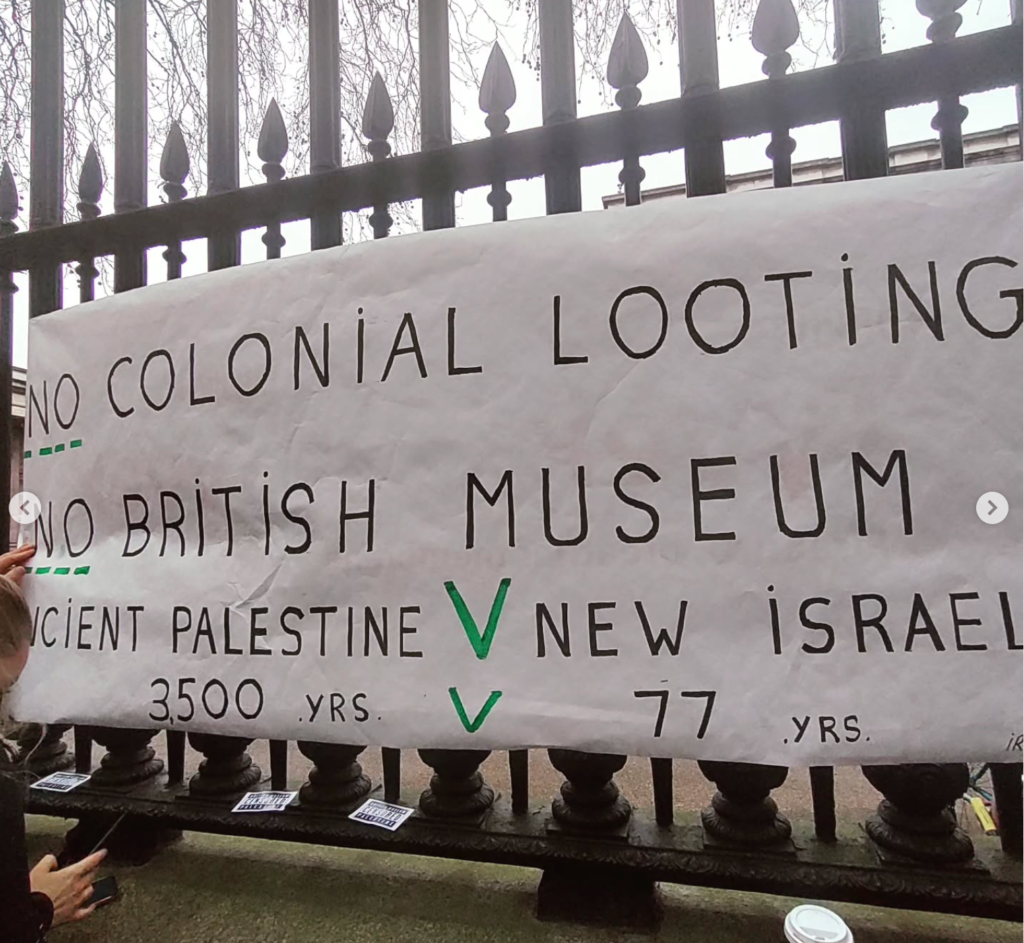
This formulation is false. Pre-1948 Palestine does not correspond to a singular, continuously-existing entity dating back 3,500 years, whose inhabitants would have thought of themselves as “Palestinian”. The banner reflects a tendency to present Palestinian nationhood as anciently rooted and therefore uniquely legitimate, as opposed to Israeli Jewish nationhood, seen as an artificial creation of Zionist settler-colonialism.
To further counter Jewish claims of historic rootedness, some point to genetic studies suggesting many Palestinians descend from the Canaanites, one of the Bronze Age populations in the territory, who predated the emergence of the Kingdoms of Judah and Israel, and were gradually acculturated into incoming waves of Arab settlement. This, it is claimed, proves that Palestinians, not Jews, were there first.
Both the “decolonised Judean” and “ancient Palestine” narratives are products of nationalist myth-making.
The word “Palestine” has considerable antiquity. However, the dominant political and social meaning it connotes has shifted several times, including relatively recently. If one were to ask those outside the British Museum on 21 February whether a member of an organisation called “the League for a Free Palestine” would be welcome at their protest, most, judging simply by the name, would probably assume they would. In fact, “the American League for a Free Palestine” was a right-wing Zionist organisation of the 1940s.
The idea that Palestinian nationhood is real, rooted, and material, whereas Israeli Jewish nationhood is an artificial invention and implantation, is ahistorical. As well as skating close to traditional antisemitic themes about Jewish rootlessness and parasitism, it misunderstands that all nations are in a sense “artificial” — that is, socially constructed.
Scholarly consensus places the emergence of a specifically Palestinian national identity, distinct from wider Arab identity, in the 1800s, under Ottoman rule. Whilst not solely a reaction to them, its development was accelerated by British colonisation, and further by Jewish settlement and colonisation. Both Palestinian and Israeli Jewish national identities are, therefore, products of modernity, not antiquity. Reading modern categories back into ancient history, or seeing modern peoples as expressing unbroken and undiluted continuities with ancient groups, befits romantic-reactionary nationalisms; it should have no place on the internationalist left.
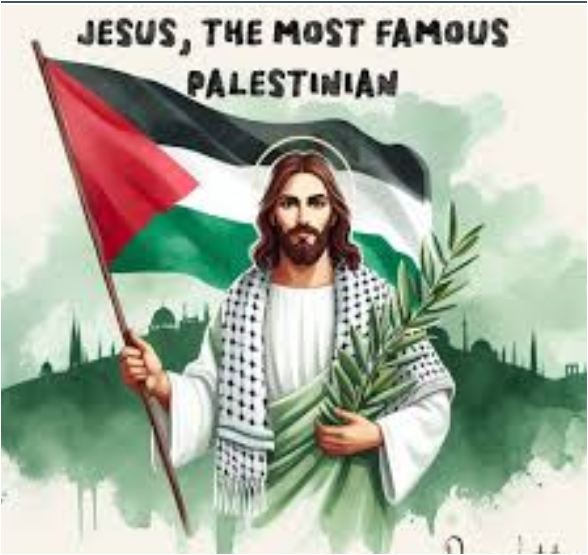
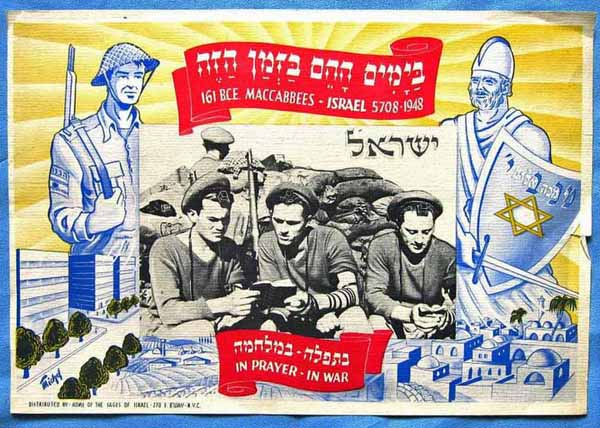
Another product of this discourse are memes sometimes shared in left-wing social-media spaces around Christmas and Easter which claim that “Jesus was a Palestinian”, projecting back onto a Galilean Jew in the 1st-century CE a national category that would not emerge for over 1,500 years after his death. Here, too, there is a Jewish-chauvinist equivalent, in claims that Chanukah is a “Zionist” festival, projecting modern categories of political and national identity onto the resistance of 2nd-century BCE Judeans to the Seleucid Empire.
The Zionist idea of Israel as the homeland of the entire Jewish people, beyond the Israeli Jewish nation now living there, is also a romantic-nationalist myth. Whilst studies show Jewish diaspora populations share ancestral genetic links with the populations of the ancient Levant, where one’s ancestors may have lived many thousands of years ago cannot possibly be the direct basis for determining national rights in the present. A Jew living in London cannot self-determine via a national-territorial entity 3,000 miles away.
Rights must be claimed by living generations, based on their contemporary composition. The Palestinians have a right to self-determination because they are a distinct national community, self-identifying as such, living in a compact territory. They have a right not to live under the colonial subjugation of the Israeli state, or any other power. Their contemporary existence and humanity are the only requirements necessary for these rights, not some particular degree of ancientness.
The Israeli Jews, too, are a nation. 200 years ago, that nation did not exist. Whilst there were pockets of more-or-less continuous Jewish population in historic Palestine, significantly predating Zionism, the emergence of a Jewish community in the region defining itself in national-territorial terms is a product of 20th-century history. It formed because experiences of antisemitism in Europe, and later in some Arab countries, led many Jews to national-separatist conclusions. Many others, who may not have been ideologically committed to the Zionist project, also fled to Palestine simply because it was one of the few places available to them, further contributing to the growth of a Jewish population in the territory.
The Israeli Jewish nation formed in part by displacing preexisting populations, as many nations have done in the process of formation. It would surely have been better if the events which led to these nationalist conclusions had not taken place. When they had, it would have been better if currents within the Jewish national movement advocating binational accommodation with the Arab-Palestinian populations had prevailed over more chauvinist forces. But history took place as it did, and not as socialists wished and fought for. As Maxime Rodinson, the French Marxist scholar who pioneered the analysis of Israel as having been founded via a “settler-colonial” process, put it: “The Jews of Israel too are people like other people. Many went because it was the life preserver thrown to them. They most assuredly did not first engage in scholarly research to find out if they had a right to it according to Kantian morality or existential ethics. It is accordingly useless to reproach them for it.”
Today, the two national communities, Israeli Jewish and Palestinian Arab, live under a regime that violently maintains a gross disparity of rights between them. The Palestinians have been subjected to decades-long military occupation, ongoing ethnic cleansing, and a recent genocidal war. The right of the Israeli Jews to national self-determination, which derives solely from their existence as a nation, not from ancestral links to the territory, does not include the right to suppress the self-determination of another people.
The nationalist myth-making of Itamar Ben Gvir and Bezalel Smotrich is part of the ideological buttressing of the present regime; the (probably mostly vicarious) nationalist myth-making of misguided protesters outside the British Museum is harmful in a much less immediately material sense. Nevertheless, if the international left bases our solidarity with the Palestinians on such myth-making, and the counter-chauvinist politics it inevitably informs, we trap ourselves in political dead ends, betraying what should be foundational democratic and egalitarian principles in the process.
The fight for liberation and equality means levelling up rights for living populations. For sure, that must include acknowledgement, redress, and reparation for historic injustices, especially those within living memory, such as the Nakba of 1948, the legacy of which continues to structure contemporary inequalities. But none of that requires us to read back into antiquity national categories born of modernity, or to collude in claims that rights derive from “ancient” ancestry. The left should concentrate instead on supporting those mobilising Palestinian-Jewish co-resistance to win genuine equality in the present and future.
Daniel Randall is a railway worker, trade union representative, and socialist activist based in London.
This article originally appeared on the website of the Alliance for Workers Liberty.
More content from this blog
- Rethinking Palestinian Public Opinion. Interview with Zayne Abudaka – 9 October 2025
- The Last Safe Space? Taiwan’s Fragile Role in Asia’s Shrinking Civic Space, by Antonio Prokscha – 29 October 2025
- The DSA, Fidel Castro, and Cuba, by Dan La Botz – 21 August 2026
- War and Extractivism – A View from Sudan and Congo – 26 September 2025
- A turning point for Turkey-Kurd peace? by Jürgen Klute – 3 December 2024
Except where noted otherwise, original writing and translations produced by the Left Renewal Blog Collective are published under a Creative Commons Attribution–NonCommercial–ShareAlike 4.0 licence. Republished and translated material remains subject to the licence and terms of its original publication.