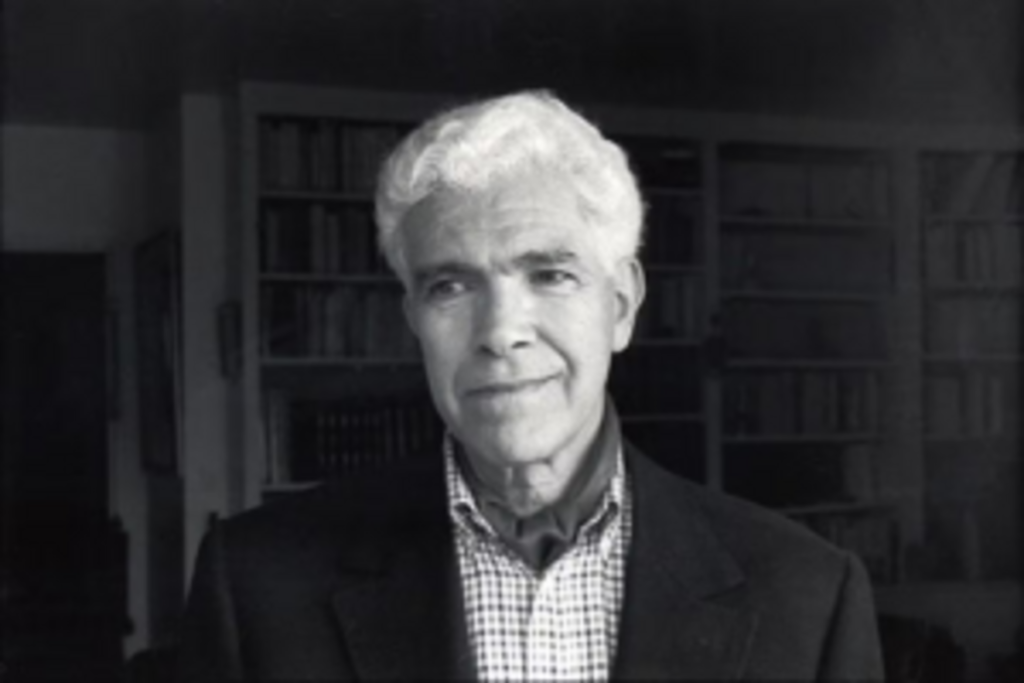
The passing of Mohammed Harbi, which occurred on the first day of this new year, imposes upon us a duty of reflection and introspection.
Beyond the grief that afflicts us, we must express our gratitude and properly honour the memory of one who was a professor, a comrade, or a friend — indeed, all of these at once.
For many of us, Mohammed Harbi embodied a model of moral decency and intellectual rigour, two qualities that characterised him alongside his kindness and generosity. This is why his death constitutes an immeasurable loss for seekers of truth and defenders of just causes alike.
But the stature of such a figure cannot be justly conveyed in a few lines.
Indeed, from his birth in El Harrouch, in the northern Constantine region, to his death in his Parisian exile, Mohammed Harbi was successively an activist for his country’s independence — from the age of 15 — a partisan of self-managing socialism, a meticulous archivist of the anticolonial revolution, a major historian of the Algerian national movement, a professor beloved by his students, and an engaged observer on the international stage.
His works, some of which have been reissued in recent years — such as his “classic”, Le FLN, mirage et réalité (The FLN: Mirage and Reality), originally published in 1980 — represent only a fraction of his important work conducted over several decades.
Reconstructing the impressive scholarly and activist trajectory of Mohammed Harbi — who did not refuse the label of “man of letters” — leads us to consider his entire output: up to his arrest in 1965, following the coup d’état that overthrew Ahmed Ben Bella (1916-2012), the first president of the People’s Democratic Republic of Algeria, as well as his texts published since his escape in 1973, with the help of companions of the Trotskyist leader Michalis Raptis (1911-1996), known as “Pablo”.
It is this “second” period that we wish to emphasise here, since it is not only the longest and richest but also — paradoxically — the most overlooked in certain respects. Yet it reveals what Mohammed Harbi was for nearly half a century: a total postcolonial intellectual and an unrepentant internationalist socialist.
Consider the following.
The declaration dated May 1973 in Rome — a ruse to avoid making his personal situation even more difficult — signed with his comrade Hocine Zahouane (1935-2025), concludes with these lines that still resonate with the same force:
“The struggle of the Palestinian people for their liberation is today the most advanced point of the struggle for national and social liberation in the Arab world. It is ours. Together with all revolutionaries, we consider it our duty to participate in it and to defend it against Zionism, imperialism, and the Arab ruling classes who are its gravediggers.”
Certainly, since this text was disseminated — reproduced in its entirety in the journal Sous le drapeau du socialisme and in part in the weekly Rouge, with an introduction by Edwy Plenel under the pseudonym Joseph Krasny — Mohammed Harbi’s relationship to politics evolved, whether in the forms of his intervention or the content of his commitment.
Yet we can easily discern in him, over the years, the same concern for just speech, far from sterile polemics, as well as the will to break with the isolation — imposed upon him by circumstances, on both sides of the Mediterranean — in order to better demonstrate, through actions, that the path to emancipation will be collective or will not be at all.
This is doubtless how we should understand the meaning of declarations signed jointly with other figures of the independence movement who, like Hocine Aït Ahmed (1926-2015) — who had also joined the Parti du peuple algérien (PPA, Algerian People’s Party) in his youth — continued their legitimate struggle against colonialism by fighting for the triumph of democratic freedoms in an authoritarian Algeria marked by the single-party system.
By way of example, let us mention their communiqué dated 7 April 1982 — published in the weekly Sans frontière — through which the two former leaders of the Front de libération nationale (FLN, National Liberation Front) spoke out against the methods employed by representatives of the Amicale des Algériens en Europe (Friendship Association of Algerians in Europe) who had forcibly prevented Ahmed Ben Bella from speaking at a public meeting in Belfort.
Later, on the occasion of the trial of former Nazi criminal Klaus Barbie (1913-1991), which opened in Lyon in 1987, Mohammed Harbi and Hocine Aït Ahmed protested — in a communiqué reprinted in the journal Sou’al — against the manipulation of morality, history, and law:
“The defence of human rights before French courts during the Algerian war finds its logical continuation in the defence of human rights in newly independent countries, not in the defence of a man, Barbie, whose victory would have meant the extermination of the Jews.”
These positions, repeated throughout the 1980s, express a humanism deeply rooted in this intellectual who was sensitive to the fate of Third World peoples, without however endorsing the most caricatured versions of Third-Worldism that could accommodate authoritarian excesses under the pretext of resistance to Western imperialism.
This exile — and former head of the France Federation of the FLN — also showed himself attentive to the fate of immigrant workers and their descendants, constant victims of racism, as attested by his support for petitions initiated by those who would be called the “Beurs”, such as “Le manifeste des allogènes” (The Manifesto of the Allochthons) — published in 1981 in Sans frontière with the signature, among others, of sociologist Abdelmalek Sayad (1933-1998) — or the appeal to end the campaign of attacks — reprinted in 1986 in Baraka magazine — supported by Hocine Aït Ahmed and former minister Bachir Boumaza (1927-2009).
Despite his permanent settlement in the French capital, Mohammed Harbi followed the evolution of Algerian society and did not hesitate to accompany its aspirations for dignity, peace, and pluralism, which for many were synonymous with the completion of independence.
In the wake of the repression of the Berber Spring in 1980, he demanded in Sans frontière the release of detainees — described as “sowers of hope” — and proclaimed the legitimacy of “the struggle for the teaching of Berber”. Challenged by a reader, he would clarify that his opposition to “Arabo-Islamism” was nothing other than the rejection of “the attitude of those who confuse language, culture, and State, or who believe that the Arabic language and Islam are forever inseparable.”
Far from yielding to the sirens of fundamentalism or political Islam, Mohammed Harbi instead warned, that same year in Jeune Afrique, against the temptation of “mystical populism” — which particularly threatened Ahmed Ben Bella, then deprived of liberty — and refused the interpretive framework that equated “the North-South conflict with a conflict between Islam and the West”.
This intransigence led him, ten years after the Islamic revolution in Iran, to express his support for writer Salman Rushdie — expressed in an editorial in Sou’al reprinted in Les Cahiers d’Article.31 — but also to refuse to defend the wearing of the veil in state schools, through an opinion piece published in the weekly Le Nouvel Observateur and an article published in Critique Communiste, the journal of the Ligue communiste révolutionnaire (LCR, Revolutionary Communist League).
However, these positions should be related to his constant commitment to equality between men and women, from his interview given in 1980 to sociologist Christiane Dufrancatel for Les révoltes logiques — devoted to the role of women in the Algerian revolution — to his foreword for the 1990 reissue of sociologist Mansour Fahmy’s (1886-1959) work, La condition de la femme dans l’islam (The Condition of Women in Islam), which concluded with these words:
“In an impoverished era where the powers that be allow Islamists to shape youth through a kind of persuasive or dissuasive spirit, and demand that intellectuals refrain from touching the religious question, reminding consciences of what is hidden from them or what they have forgotten is the thankless task of thought.”
Let us also be permitted to evoke his declaration issued in 1981 on behalf of the Union de la gauche socialiste (UGS, Union of the Socialist Left) — reprinted nine years later in Cahiers du féminisme — concerning the draft Family Code, in which he admitted “without reservation the autonomy and specificity of the feminist movement”, before adding:
“The UGS firmly condemns any attempt to hierarchise struggles as an obstacle to women’s regrouping, to the broadening and cohesion of their movement. It calls on all democrats and socialists to fight not for the”democratic“amendment of this code of shame, which would be testimony to unavowed hypocrisy, but rather for its pure and simple withdrawal.”
Following the October 1988 riots — bloodily repressed by the security forces — he participated in a debate moderated by philosopher Félix Guattari (1930-1992) and economist Gustave Massiah. His assessment was unequivocal: “The comedy is over. The divorce between the State and society has appeared in broad daylight.” In response to the question of multipartyism posed by the middle classes, Mohammed Harbi again pronounced without detours:
“If these classes truly want to draw closer to the popular classes, they will have to pose the democratic question in terms of water, schools, health, land, housing. Then the debate on democracy, bogged down in declarations of principle, will emerge from the rut.”
The advent of partisan pluralism encouraged him to reconnect with his native country. Back in Paris, he confided his impressions in 1991 to Gilbert Achcar (under the pseudonym Salah Jaber) and Sophie Massouri for Inprecor, the journal of the United Secretariat of the Fourth International. His analysis, hardly cheerful, highlighted an incompatibility between the middle and popular classes divided by economic considerations but also by their lifestyle:
“The popular classes want social change but are ideologically conservative, and it is through ideology that they can be co-opted or neutralised in their aims by the privileged.”
Yet the interruption of the electoral process in January 1992 — which frustrated the Front islamique du salut (FIS, Islamic Salvation Front) of a political victory — and the escalation to extremes tore apart an Algerian society that had entered “the suicidal path of civil war”, as he wrote in an article published in 1994 in Le Monde diplomatique. Faced with this chaotic situation where assassinations followed disappearances and attacks followed atrocities, he saw scarcely any options for emerging from the crisis other than two, as he confided that same year to the Revue d’études palestiniennes:
“The first consists of a serious dialogue that takes account of Islamism. There has not been one until now. The second is to continue applying the military”solution“, with all the dangers this implies, including the decomposition of the State and chaos.”
With sociologist Monique Gadant (1930-1995), he published the following year in Esprit an article that deplored the assassination of “Francophone” intellectuals, refused the deadly polarisation at work in his country, and pointed to the failings of the democratic movement:
“Everything is done to impose silence on those who refuse to put the State and armed gangs on the same level. Under these conditions, the ritual invocation of democracy participates in a corruption of language. Without independence from the State, the unity of democrats will long remain a pious wish.”
After the adoption of the Rome platform in January 1995 by representatives of the opposition, such as Ahmed Ben Bella and Hocine Aït Ahmed, but also by FIS leaders, he signed an appeal by intellectuals — published in 1997 in Libération — in favour of creating an international commission of inquiry into the situation in Algeria. He participated in a meeting to this end on 21 February 1998 in Paris, alongside Hocine Aït Ahmed.
Everyone is free to arrogate the right to distribute good and bad marks. The fact remains that Mohammed Harbi was guided — on this terrain as on others — by a concern for justice and truth, responding thereby to the grievances of his compatriots who had no say. However, the best intentions collided with the concrete difficulties caused by the shock of the “civil war” and the dramatic weakening of forces for social transformation, as he declared in 2000 to Alternative libertaire:
“The Algerian left, formerly dominated by statists, is in complete disarray. Part of it has converted to neoliberalism. Another part defends the public sector and democratic freedoms and opposes Bouteflika. One finds there Trotskyist currents, repentant Stalinists, among others. There is not yet an adequate critical revision of statist socialists and debate around the self-management perspective.”
Alongside his numerous interventions — through opinion pieces, interviews, meetings, petitions… — which marked the period of “maturity” following his settlement in Paris, Mohammed Harbi engaged in several collective ventures of which he could rightly be proud. Such was the case of the journal Sou’al — founded in Paris with Claude Sixou (1931-2011), co-founder in 1956 of the Comité des Algériens israélites pour la négociation (Committee of Israelite Algerians for Negotiation), as well as Mustapha Khayati, former member of the Situationist International — and whose editorial in the first issue (dated December 1981) summarises the intention of this initiative, which deserves to be rediscovered by new readers:
“Create, bring together, confront. These are the main articulations that can give life to the implementation of a field of original reflections and analyses, to the enactment of a rigorous and offensive framework for rallying the most conscious forces of the intelligentsia and all militants of the Arab countries. It is around these tasks and for these objectives that Sou’al will live.”
In the same spirit, he supported the creation, in Algiers, of the journal Naqd — whose first editor was sociologist Saïd Chikhi (1944-1993) — which had set itself the ambition, from its launch in October 1991, of “giving birth to bold thinking”.
If we rightly remember Mohammed Harbi’s personal work — widely evoked in tributes, which is the least one could do — it would nevertheless be unjust to pass over in silence this collective activity, which reflects, beyond the qualities mentioned above, his faithfulness in friendship as well as the depth of his views, which were not limited to Algeria alone nor to the Francophone space. Moreover, towards the end of his life, he returned in particular to the Irish and Mexican cases.
However, it should be recalled for those who may not know, his decisive role in writing the history of the independence movement and the Algerian revolution. His bibliography, which deserves to be rediscussed, disseminated, and translated, speaks for itself: Aux origines du FLN. Le populisme révolutionnaire en Algérie (At the Origins of the FLN: Revolutionary Populism in Algeria, 1975); Le FLN, mirage et réalité. Des origines à la prise du pouvoir (The FLN: Mirage and Reality, 1980); Les archives de la révolution algérienne (Archives of the Algerian Revolution, 1981); 1954, la guerre commence en Algérie (1954: The War Begins in Algeria, 1984); L’Algérie et son destin. Croyants ou citoyens (Algeria and Its Destiny: Believers or Citizens, 1992); Une vie debout. Mémoires politiques (A Life Standing: Political Memoirs, 2001).
Alongside these works, which hold pride of place in the libraries of all connoisseurs, are those published in 2004 in collaboration with other historians, such as Le FLN, documents et histoire (The FLN: Documents and History) with Gilbert Meynier (1942-2017) — whose Histoire intérieure du FLN (Internal History of the FLN, 2002) he had prefaced — and La guerre d’Algérie : 1954-2004. La fin de l’amnésie (The Algerian War: 1954-2004, The End of Amnesia), co-edited with Benjamin Stora — whose Dictionnaire biographique de militants nationalistes algériens (Biographical Dictionary of Algerian Nationalist Militants, 1985) he had prefaced — without forgetting, for the most recent period, the postface to the reissue of Jim House and Neil McMaster’s book, Paris 1961. Les Algériens, la terreur d’État et la mémoire (Paris 1961: Algerians, State Terror and Memory, 2021), that to Ali Guenoun’s thesis, La question kabyle dans le nationalisme algérien (The Kabyle Question in Algerian Nationalism, 2021), or the publication in 2022 of L’Autogestion en Algérie : Une autre révolution ? (Self-Management in Algeria: Another Revolution?), with the collaboration of Robi Morder and Irène Paillard.
An “iconoclastic” historian, Mohammed Harbi undoubtedly was in light of a monolithic narrative that long prevailed in Algeria regarding the national movement and its obscured figures, some of whom were unjustly slandered, like Messali Hadj (1898-1974), “unfortunate pioneer of the Algerian revolution”, to borrow the title of his article published in Les Africains (1977), edited by historian Charles-Robert Ageron (1923-2008). His text opened with these weighty words:
“Few figures in the history of contemporary Algeria have been as discussed as Messali Hadj. This man who had anticipated the future had to spend the rest of his days struggling to clear himself of the accusation of treason. History, which is the judge of the world, has as its first duty to lose respect, wrote Michelet. To lose respect in retracing what Messali’s life was, is to re-establish the truth and restore without pretence or passion the face of the man who presided over the destinies of the organisations that prepared the Algerian revolution.”
Unsurprisingly, he signed a postface to Mémoires de Messali Hadj (Memoirs of Messali Hadj, 1982), whose edition was established by journalist Renaud de Rochebrune (1947-2022). He would be found again at the colloquium on Messali Hadj organised in 2011 by the association Ecolymet in Tlemcen. It is an understatement to say that he was haunted by the “fratricidal” struggle between Algerian nationalists and that he abhorred retrospective justifications of assassination or terrorism to settle political differences.
In recent years, marked by fatigue, health concerns, and some disillusionment, he never ceased honouring the memory of his departed companions, one after another, such as orientalist Maxime Rodinson (1915-2004), whom he eulogised in Le Monde, historian Pierre Vidal-Naquet (1930-2006), whom he saluted in the Revue d’études palestiniennes, or libertarian Daniel Guérin (1904-1988) at a tribute day organised in 2018 in Paris.
A convinced rationalist — he collaborated with the journal Raison présente and presented himself, in an interview given in 2019 to Le Monde, as “non-believer, non-practising, and libertarian Marxist” — Mohammed Harbi was concerned with transmitting, training, and helping rising generations, rendering justice to the marginalised, and relaying the voice of the most vulnerable.
To conclude on a personal note, I retain the memory of our connivances and convergences, numerous and fruitful, which materialised, among other things, in a declaration disseminated on 11 March 2019 under the title “Algeria is on the Verge of Blossoming” and then another, published the following year in Le Monde, entitled “Algeria: Reopening a Future for the Revolution”.
All of Mohammed Harbi’s companions will be committed to keeping alive the abundant work of this man of great sensitivity and rare elegance.
It falls to us to work at this, collectively, with respect, in the image of what our professor, comrade, and friend taught us.
Nedjib Sidi Moussa holds a PhD in political science and is a teacher and author of 6 books, including ‘Histoire algérienne de la France’ & ‘Algérie, une autre histoire de l’indépendance’.
The French original of this obituary first appeared on Le blog de Histoire coloniale et postcoloniale. This English translation, by Adam Novak, first appeared on the website of Europe Solidaire Sans Frontières.
More content from this blog
- Repression and Intimidation Mars Uganda Election, by Nelson Byaruhanga – 14 April 2026
- It Is Time To Rebuild Ties Between Mizrahim and the Arab World, by Almog Behar – 1 March 2016
- The Kremlin’s Perfect Storm, by the Posle Editorial Collective – 19 May 2026
- Russian Imperialism, by Zbigniew Marcin Kowalewski – 27 November 2014
- Q&A: Navigating the Left’s Ukraine Debate, by Bill Fletcher Jr. and Elly Leary – 15 November 2022
Except where noted otherwise, original writing and translations produced by the Left Renewal Blog Collective are published under a Creative Commons Attribution–NonCommercial–ShareAlike 4.0 licence. Republished and translated material remains subject to the licence and terms of its original publication.