This text is written from a position of anarchist critique and offers a view of the existing left parties and movements of the Russian Federation as the ideological enablers and beneficiaries of the colonial wars of contemporary Russia. Plainly, the left are not the only ones serving these purposes, yet they are often the active conduits of Russian imperialism and revanchism, ideologically anchored in the project of the USSR and in nostalgia for the communist regime. They generally manage to evade critique of Russian imperialism and of the pervasive dictatorial character of Bolshevik politics. The present text continues an investigation of the agency of the Russian left inside and outside Russia; their colonial imagination was the subject of the earlier piece.
While this text does not treat all representatives of left movements as enablers of the Putin regime or as victims of Russian political technology, it clarifies the latter’s interest in left movements. It also addresses the danger of the tactical proximity of Kremlin strategy and of much of the left on the territorial and colonial politics of the Russian Federation. Given the long history of Soviet Communist Party influence on world military and revolutionary events, particular attention is paid here to followers of Soviet ideologies — especially in their presence within the orbit of the former Soviet republics. Unreflective, imperialist left perspectives are a welcoming and nourishing environment for the political theatre of contemporary Russia.
The ideas described, with examples of organisations and their public representatives, remain deeply rooted and widespread on the Russian left scene, and the circles of loyalty of younger and older organisations inevitably intersect.
How communist, left movements justify territorial seizures and the destabilisation of power in the EECCA countries (Eastern Europe, the Caucasus and Central Asia) by contemporary, Putin’s Russia.
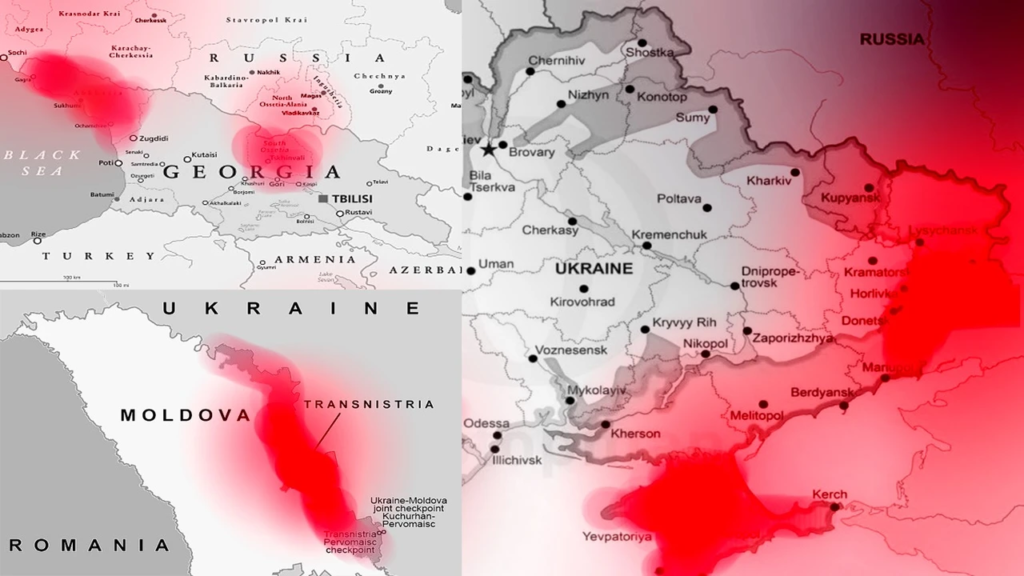
Since the collapse of the Soviet Union, Russia has repeatedly used a tactic of waging proxy wars in the countries that gained independence. The maps show a systematically recurring operation: a “problem” region appears on their territory, demanding “political, cultural autonomy and a revision of borders”. From the Russian perspective this is called a “civil war” or “separatist sentiment”. Then, under the pretext of peacekeeping missions for justice, Russia introduces troops and builds “observation posts” which are in fact military bases of the Russian Federation. The pretexts for intervention are usually as follows: protection of the rights of the Russian-speaking population or stabilisation of political unrest. If we look closely at events in Moldova and Ukraine, we see that political work to destabilise the territorial integrity of these countries was prepared in advance. Russian political technologists [2] with pocket left parties and organisations (“Borot’ba”, “New Crimea”, “Union of Left Forces”, “Antifa-Moldova”, “Left Front” — to be discussed below), created specifically for these tasks, developed and implanted the Kremlin agenda there. The visibility of their supporters at street rallies was inflated, the electorate was bribed, the presence in media oriented towards information warfare and disinformation was strengthened. The conduits into the regions for these organisations were structures that are heirs of the CPSU [3].
Validation of the Russian presence in the region of the former USSR is carried out through left parties and communist slogans.
It is no accident that the “People’s Republics” (“LNR”, “DNR”) [4] on the territory of the Donetsk and Luhansk regions of Ukraine are precisely “People’s”, and not, for instance, libertarian “autonomous transit zones” or liberal “islets of democracy”: the “grounds for secession” of such “republics” are explained from a left perspective.
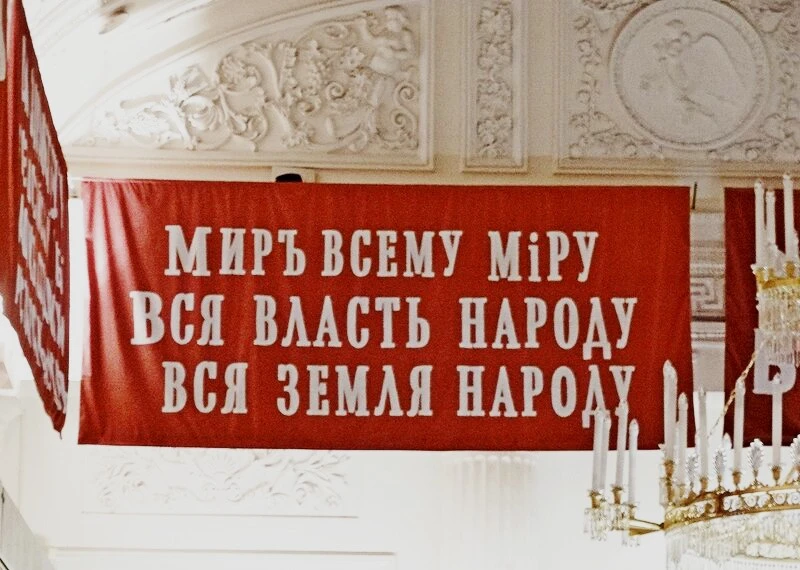
Kremlin myths of popular insurrection, of the defence of the rights of the oppressed against the neo-liberal elite (the oligarchs), or of the right to self-determination and “popular” self-government, fit perfectly into general left values and perspectives. It was precisely these discursive techniques that made it possible to occupy parts of Ukraine, and left forces contributed to the entrenchment of such narratives, opening new party cells there and taking administrative positions in the occupied territories. This tactic extends both to party leftists and to many activists of the left non-systemic opposition.
Political technology: the occupied territories of Ukraine and the destabilisation of power in Moldova
The techniques of intervention in Ukrainian and Moldovan politics often shared common patterns and could be carried out by the same active groups. In 2014, after the occupation by Russian forces of territory in the Donetsk and Luhansk regions of Ukraine and the creation of the “Donetsk and Luhansk People’s Republics”, representatives of the Russian KPRF [5] expressed the following reaction:
“Rank-and-file communists and supporters of the socialist choice were the first to stand on the barricades of the ’Russian Spring’ [6] of 2014, when illegal formations of Ukrainian nationalists were preparing to attack the peaceful population of Donbas. The people of Donbas rose up against the unconstitutional coup in Kiev. Red flags and flags of Russia flew over the buildings of the Luhansk regional state administration and the SBU [7]. Half of the deputies of the 1st parliament of the LNR were communists. From the first days of the creation of the sovereign people’s republics, communists stood in the first ranks of the creators, defenders and builders of our statehood.” [8]
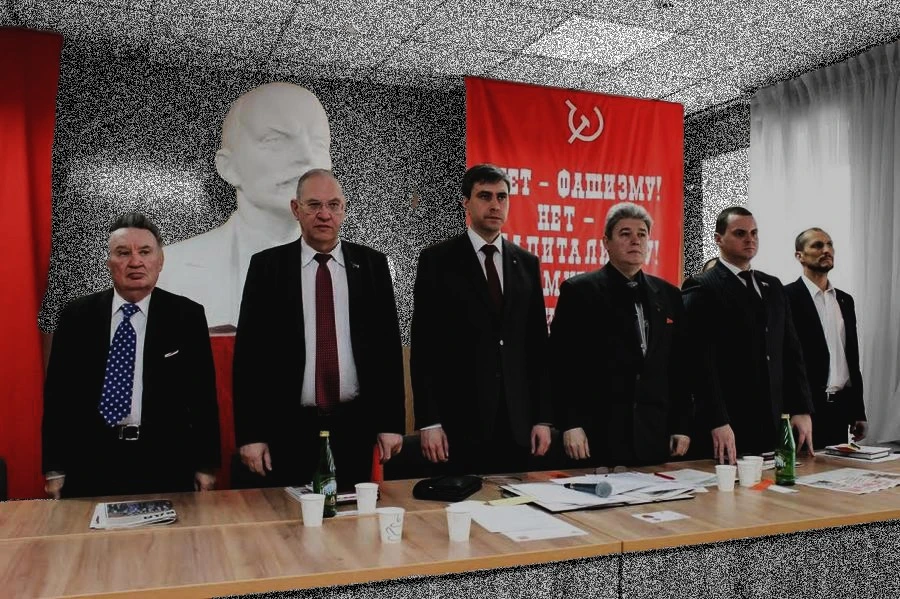
What is the history of the Russian left’s influence on the destabilisation of the political situation in Ukraine?
In Ukraine, from the first years of independence, the influential Leninist KPU [9] under the leadership of Petro Symonenko sought the restoration of the USSR. There is no need to write of the friendly ideological continuity between the Russian KPRF and the Ukrainian KPU. The KPU has been banned in Ukraine since 2015; before that, for a long time, it was a direct conduit for communist ideology, making possible Russian influence and infiltration of the left political scene via the bridge KPRF — KPU — “Union of Left Forces”.
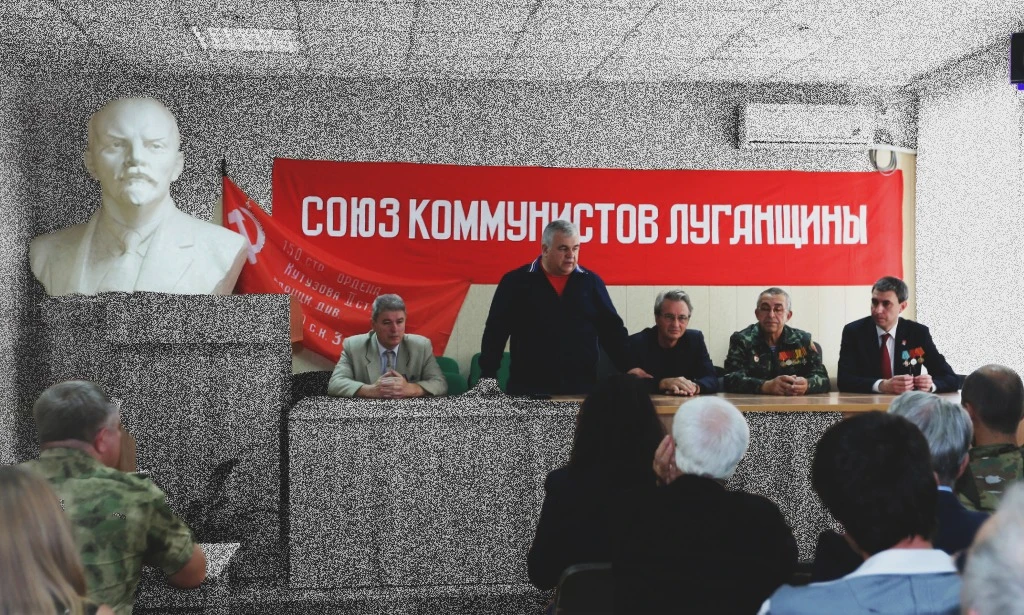
The KPU and its members were actively visible in the events of the annexation of Crimea, in the movements initiating “Anti-Maidan” [10], in the chronicles of the war in eastern Ukraine and in the subsequent division of power and influence in the so-called “DNR” and “LNR”.
Other left organisations followed the party leftists into the occupied territories: the Russian “Left Front” [11] led by Maxim Firsov opened a branch in newly-annexed Crimea in 2015. His Left Front colleague Daria Mitina [12] received the position of head of the Moscow press service of the “DNR Foreign Ministry” in 2014.
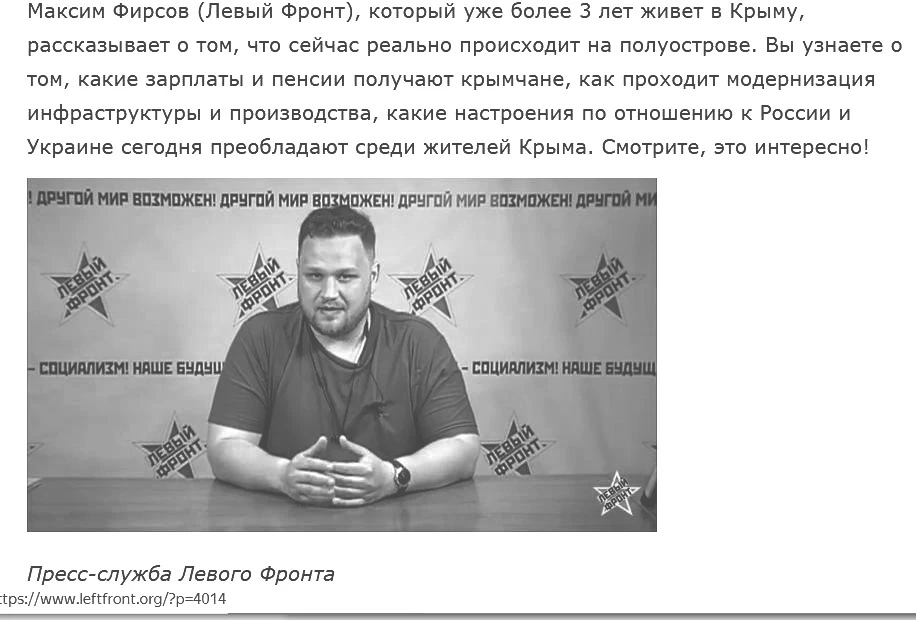
Long before the annexation, in Crimea, beginning in 2008, the presence of pro-Russian politicians running through left unions and parties grew, with the help of PR campaigns by well-known conduits of Russian Federation influence.
The aim of the parties and organisations created by political technologists was not deep work with the local population. Functionaries and “activists” did not seek to influence the formation of opinion among people. It was sufficient to create the appearance of presence in the media — through rallies, forums and internet content. Within such a strategy real supporters are not needed; what is needed is the illustration of pre-formulated statements and ideas. Mass and visibility are achieved by squatting on the actions of nearby political groups and associations doing real work on local agendas.
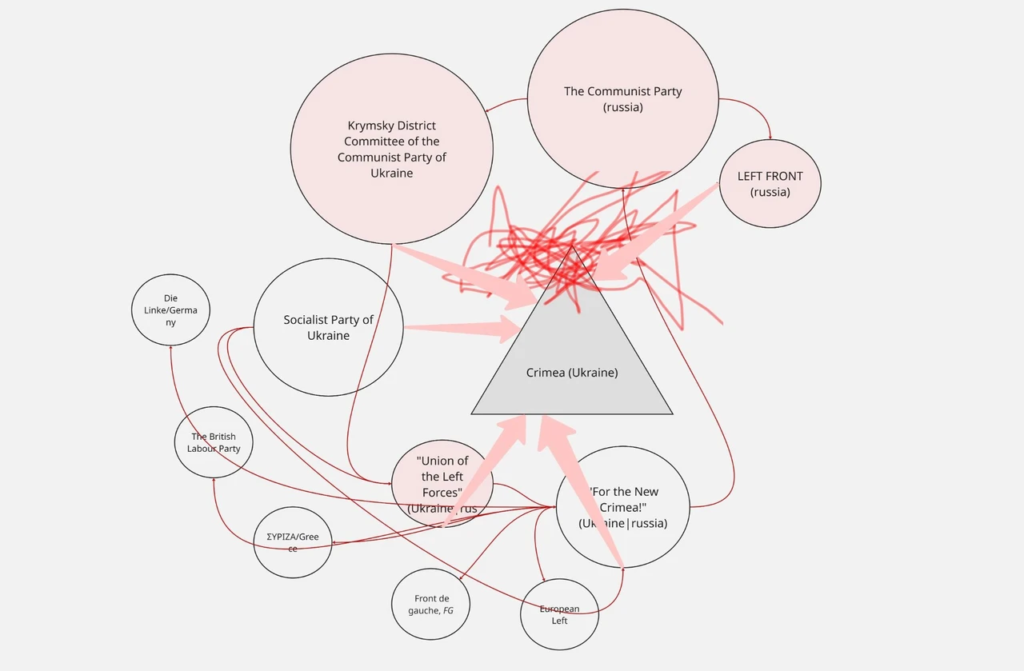
The intermediary for the Russian KPRF’s activity in Crimea was the Ukrainian parties KPU and “Union of Left Forces” led by Vasyl Volha. In September 2008, asked how he felt about his project — the “Union of Left Forces” — being called a Kremlin project, he replied: “For me it is a great honour. If someone considers us a Kremlin project, I accept such a definition with great pleasure.” In 2011 he openly argued that Ukraine should be “the initiator and active participant of a territory of security between Russia and the USA; for the establishment of good-neighbour relations with all neighbouring countries; for the restoration of all-round friendly ties with Russia; for granting Ukraine the status of a neutral state.”
At a rally in Simferopol in 2009, the Crimean republican organisations of the Communist Party and of the “Union of Left Forces” announced the creation of the bloc of Leonid Hrach [13], “For a New Crimea”. One of the slogans with which the bloc intended to win Crimean votes was: “broad use of the Russian language and maximum financial independence of the autonomy from Kyiv, up to and including the transformation of Ukraine into a federal state”. Those gathered at the 2009 rally held placards: “Yes to Crimea. No to NATO”, and speakers from the podium called for the creation of a union with Russia and Belarus.
The “For a New Crimea” organisation foreshadowed the subsequent annexation of Crimea in 2014. Its aim was to create the appearance of anti-European and anti-Ukrainian sentiment among the population, in order to justify the appearance of the “little green men” [14] in Crimea and the holding of a referendum on the “secession” of Crimea from Ukraine.
On the basis of a local KPU cell, the bloc “For a New Crimea” was launched with the help of the Russian political technologist Aleksandr Bludyshev. According to the Crimean newspaper “Sobytiya” of 12 June 2009: “According to employees of the Crimean republican committee of the KPU, the Russians were given a separate office in the building on Kirov Avenue, where they develop scenarios for PR actions and campaign materials.”
The name Bludyshev will recur in the chronicles of the destabilisation of power in Ukraine and Moldova, carried out by means of the creation of pro-Russian left organisations supporting “separatism” in Ukraine or pro-Russian sentiment in Moldova. Bludyshev was connected with Maxim Firsov mentioned above (“Left Front” — later “Borot’ba”) and with Viktor Shapinov (“Organisation of Marxists”), whom we will see later, after the Maidan [15], already in Moldova with the same aim — destabilisation of central power on the orders of the Office of the President of the Russian Federation. The latter is one of the future ideologues of the separatist organisation “Borot’ba” [16] in Ukraine and the author of the book The Sunset of the American World Order: The War in Ukraine. An Experiment in Marxist Geopolitics.
The Russian political technologists Dmitry Kozak and Vladislav Surkov were structurally engaged at this time in implementing Russia’s foreign policy and interests in Moldova and Ukraine, working in the Russian Presidential Administration. V. Putin appointed Surkov in 2013 as an aide in the Presidential Administration with responsibilities relating to Abkhazia, South Ossetia and Ukraine. V. Surkov’s work immediately concentrated on events in Ukraine during the Euromaidan in November 2013 and the Revolution of Dignity in February 2014. Dmitry Kozak is a close associate of V. Putin. After Russia’s intervention in Crimea, Kozak was appointed responsible for strengthening Crimea’s social, political and economic ties with Russia.
The Ukrainian left organisation “Borot’ba” pursued the same goals as the organisations named above, but acted as an instrument of grassroots influence, mimicking a youth-based, street-level, protest movement from below.
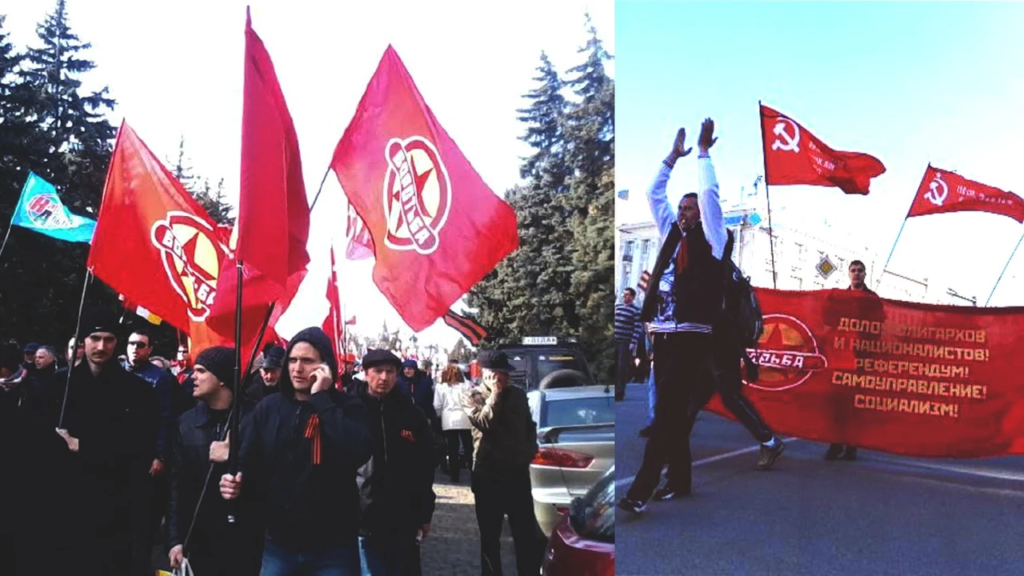
“Borot’ba” was infrastructurally and ideologically linked to the Russian “Left Front”. Both organisations included Stalinists, Marxists, Trotskyists and socialists, and explained their oppositional stance through a critique of the workings of capital — social inequality. Outside their field of vision were the problems of Russian imperialism, Russia’s neocolonialism in relation to the EECCA countries, the distribution of power, gender inequality and the accompanying discriminatory logics. “Borot’ba” was an openly homophobic association full of internal violence, and their public and street actions were also aggressive and provocative.
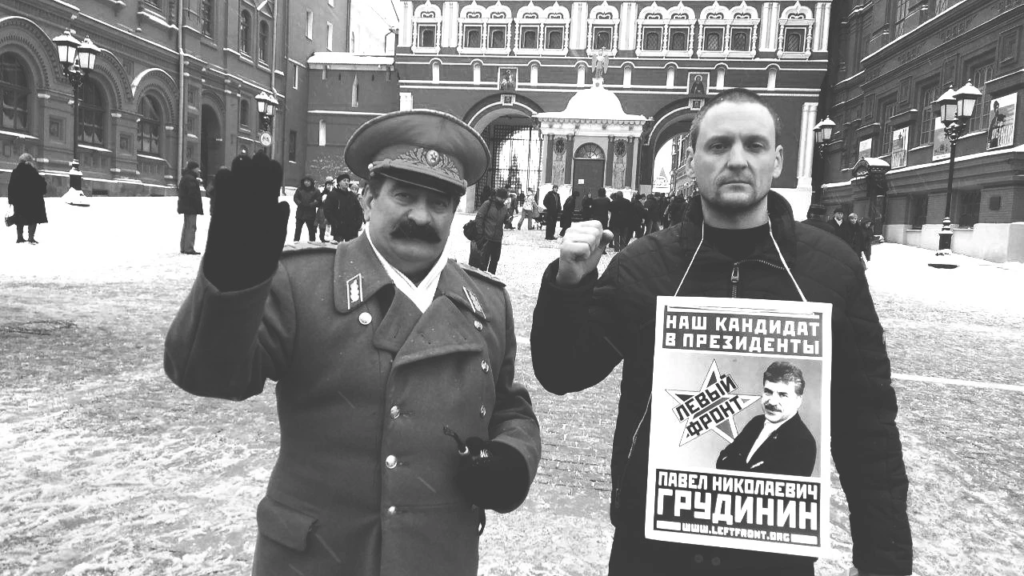
A focus solely on the class question during a full-scale war is a convenient, moderate and in many ways conformist position. The problems of inequality under capitalist regimes are endless, and so one can point to discontent over this question under any ruling order without posing any real threat to the authorities. Liberals (B. Nemtsov [17], V. Novodvorskaya) of an anti-imperialist disposition represented a more serious threat than red flags justifying neocolonial wars while demanding a return to the idea of (post-)Soviet socialism.
At the core of both parties were common political technologists who worked with “United Russia”: directly with Vladislav Surkov and with the Russian security services. Bringing together Stalinists, Marxists, socialists, Trotskyists and others, “Borot’ba” called for separatism, the restoration of the USSR, and the introduction of Russian troops. Notable participants in the movement included KPU functionaries and party workers and members of the “Organisation of Marxists”.
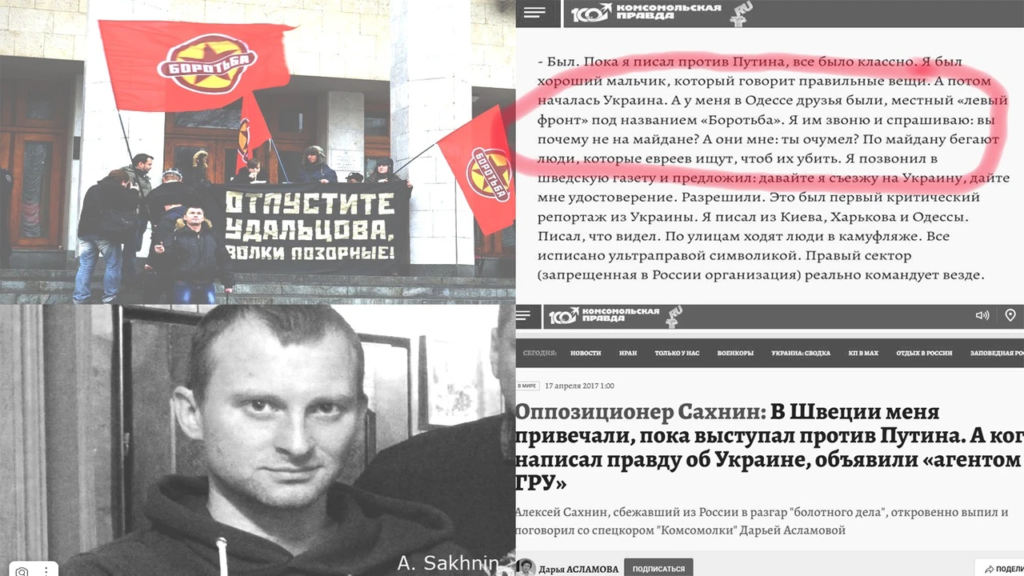
Following acts of sabotage during the Revolution of Dignity, “Borot’ba”, which had been actively organising the Anti-Maidan movement, saw some of its members join the “Prizrak” [18] combat battalion fighting on the side of the Russian Federation in the occupied territories, whilst others emigrated.
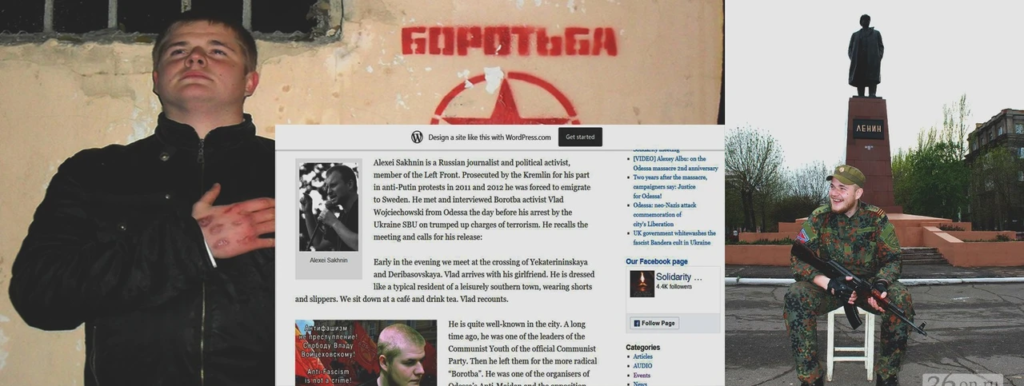
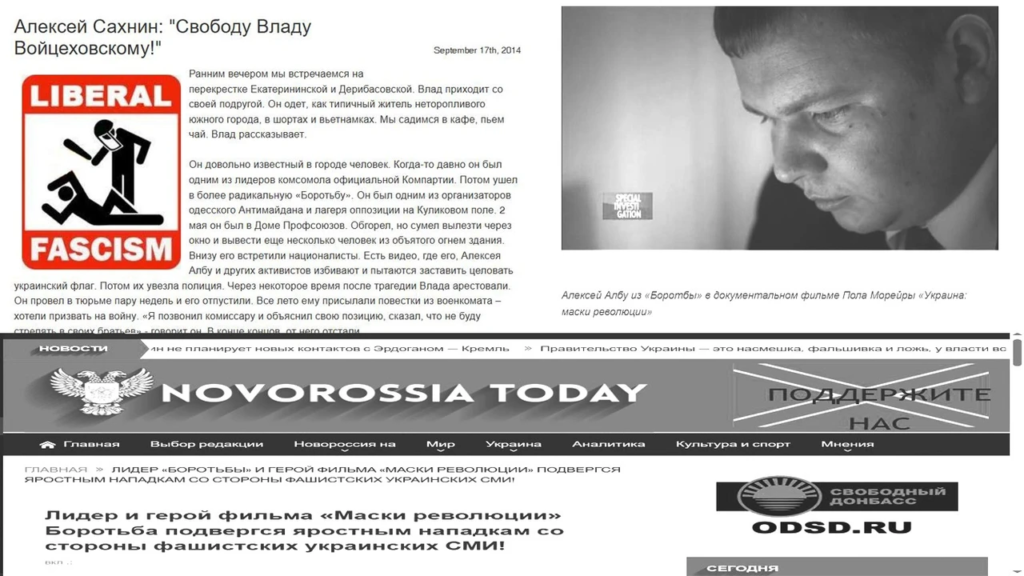
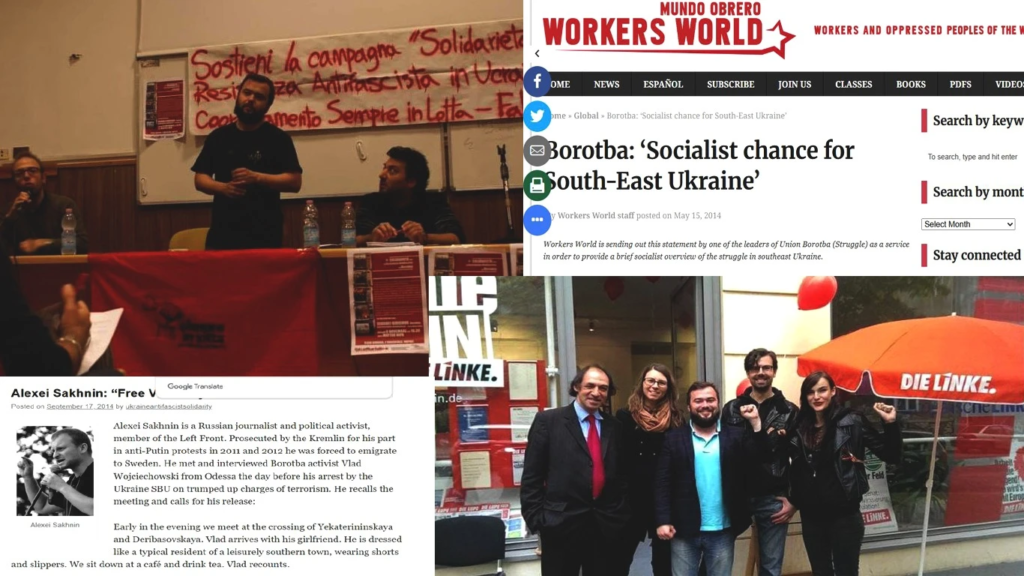
Public figures from “Left Front”, such as Alexei Sakhnin [19], took the side of the defenders of “Novorossiya”, of Anti-Maidan participants and of members of “Borot’ba”. Moreover, A. Sakhnin also published on pro-Kremlin media outlets. These details are important for understanding the situation after the full-scale invasion and the ideological foundations of new “antiwar” coalitions such as “Peace From Below” (A. Sakhnin, L. Smirnova).
The Prizrak Battalion, consisting largely of communists and positioning itself as such, openly declared that it accepted aid from the Russian KPRF. The left reputation of the battalion attracted international leftists to take direct part in the war or to collect international funding. Volunteers from France, Italy and Spain went to fight in the interests of the “People’s Republics”. Some of them consistently supported the Russian occupiers with humanitarian aid. Spanish volunteers who fought in Donbas explained: “Half of them [battalion fighters] are communists and the other half are Nazis. We fought together, communists and Nazis alike […]. We all want the same: social justice and the liberation of Russia from the Ukrainian invasion.”
The Spanish volunteers were telling the truth. The battalion was “left” only from the perspective of Kremlin political technologists and of some pro-communist fighters in its ranks. The Prizrak Battalion included (in 2014) the assault detachment “Rusich” — neo-Nazis, continuators of RNE [20]. The leader and commander of Prizrak, Alexei Mozgovoi [21], in addition to using the image of “Che Guevara of Donbas”, was fond of the uniform of Russia’s White officers and dedicated verses to them.
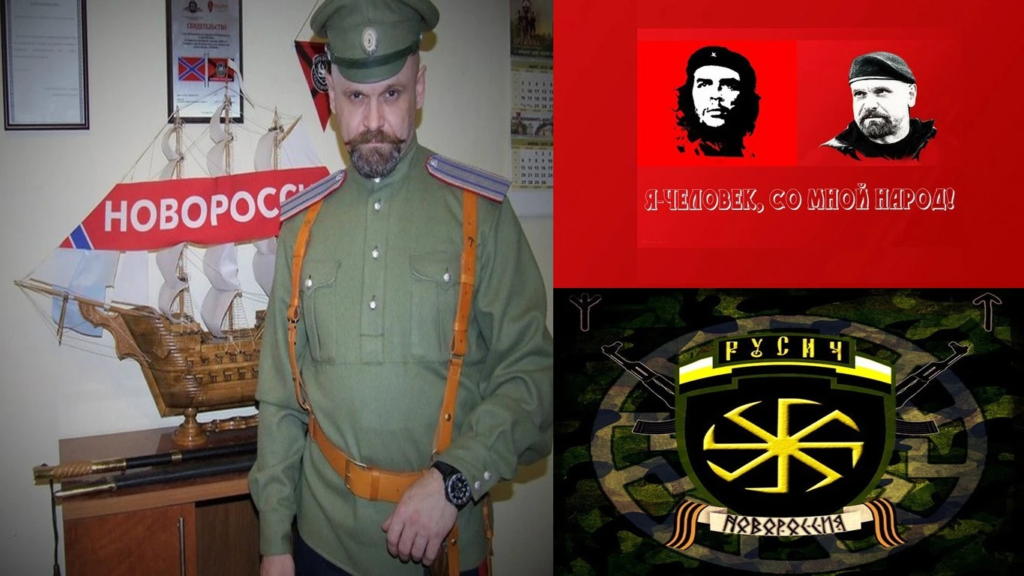
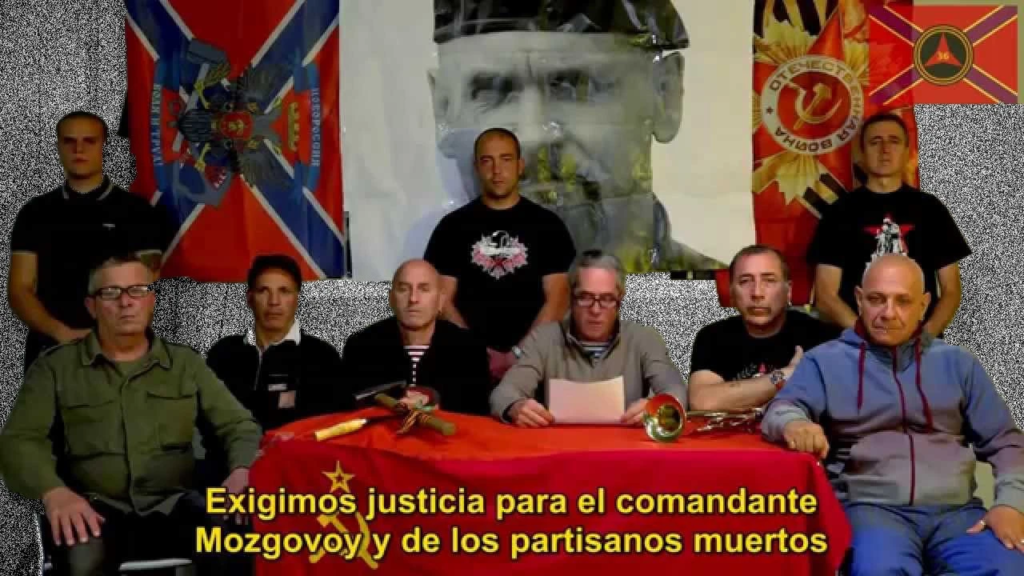
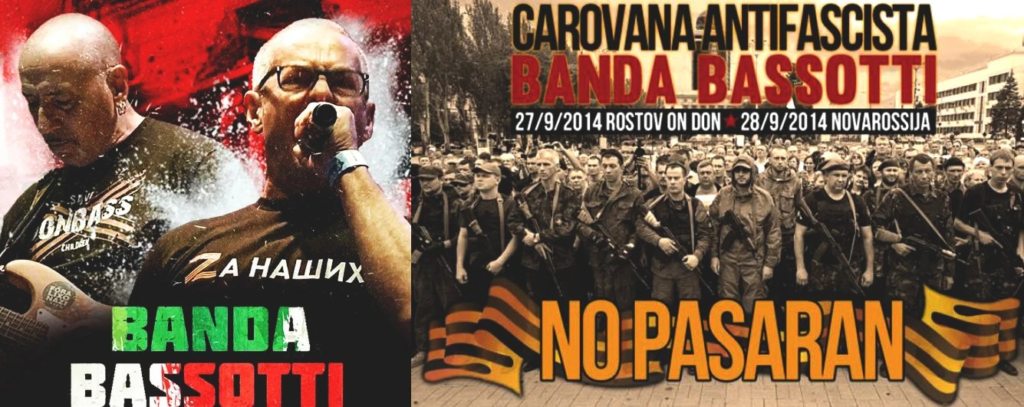
Some collectives approached supporting the Kremlin left creatively. The Italian communist rock group “Banda Bassotti” [22] systematically performed and collected money in support of “Russian Donbas” and “Novorossiya”. They even organised an international group, the “Antifascist Caravan”, which has been transporting humanitarian cargoes to the occupied territories since 2014.
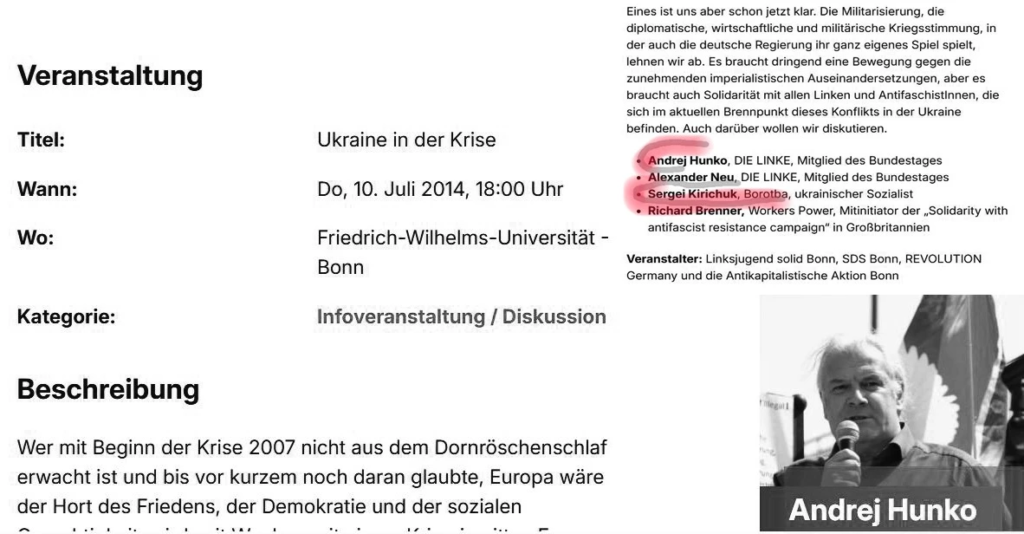
The political technologists returned from Ukraine and Moldova to work in the Russian Federation (Alexei Albu [23], Viktor Shapinov); some of them sabotaged elections in Moldova (V. Shapinov, M. Firsov). Other “Borot’ba” leaders went to Germany, where at international political gatherings they continued to agitate on the themes of “Ukrainian fascism” and the country’s victorious oligarchic class, calling themselves political victims of the struggle against the regime.
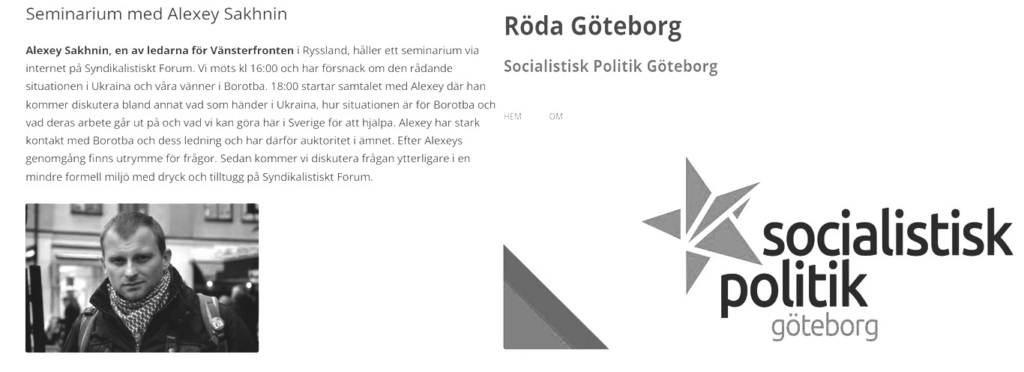
The Russian Left Front in its turn supported and validated the speech of “Borot’ba” representatives on international stages. In Sweden they jointly collected money for the armed struggle of the “militiamen”; in Germany they legitimised the occupation of Crimea, support for the “separatists” and the restoration of Soviet ideas.
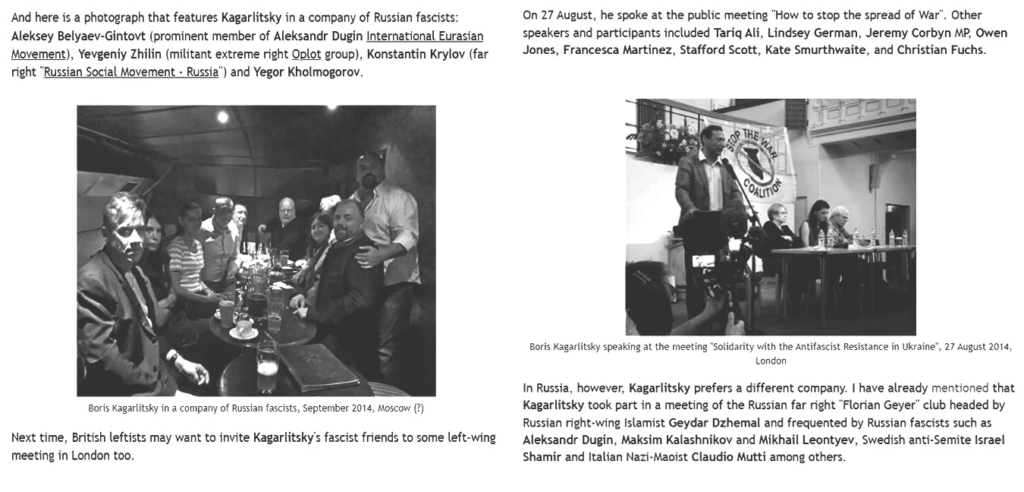
The spread of pro-Russian narratives in Russia and abroad did not bypass “Rabkor” — the largest left media platform in Russia under the editorship of Boris Kagarlitsky [24]. Both Rabkor and B. Kagarlitsky in particular actively supported and promoted the ideas of “Novorossiya”, participating in propaganda gatherings and conferences, and ideologically and structurally strengthening “Borot’ba”.
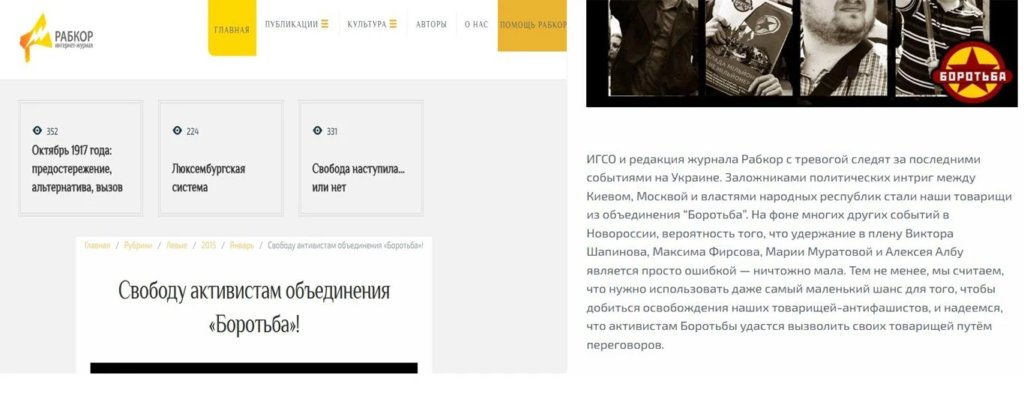
Rabkor published the ideological principles of the Prizrak battalion and also provided information support to “IGSO” [25] and the “New Rus” coordination centre in running a school for activists from Ukraine and “Novorossiya” in Belgorod.
Moldova 2014
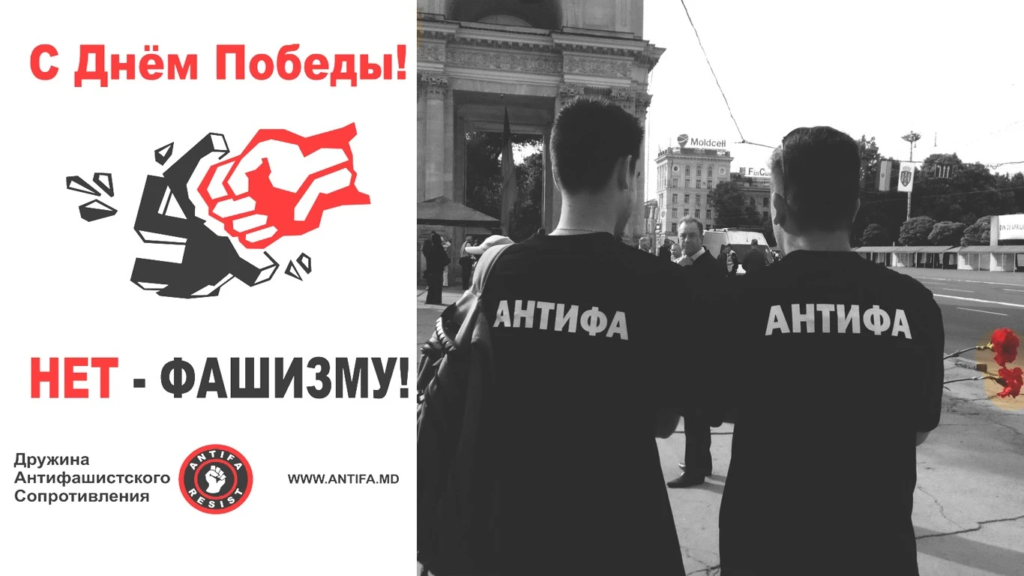
In 2014, ahead of the parliamentary elections in Moldova, the project “Antifa-Moldova” was launched with the aim of influencing street politics and provoking incidents under the cover of urban activism. The organisation was created as left-wing and pro-Russian. It was supported by Igor Dodon [26] (the future president of Moldova 2016–2020) and developed by the political technologist already mentioned above from the Russian Federation, Aleksandr Bludyshev.
The influence on Igor Dodon, who was overseen by SVR (Russian foreign intelligence) [27] General Vladimir Chernov and by the representative of the Office of the President of the Russian Federation Dmitry Kozak, should be recalled here, as should Russia’s subsequent attempts to sabotage elections in Moldova. The task of the handlers was to control the country’s foreign policy course, shifting it towards deals with Russia.
The development of “Antifa-Moldova”, by analogy with the Ukrainian “Borot’ba”, was the task of Viktor Shapinov and Maxim Firsov. Mark Tkachuk, Grigorii Petrenko, Pavel Grigorchuk (organiser of the “Social Forum of Moldova”) and Alexandr Roshko — leader of the international youth organisation of European Left (ENGYL) — were linked to the Central Committee of the PCRM (Party of Communists of the Republic of Moldova) [28]. In autumn 2014 the main aim of the “Social Forum” was to organise small sabotage groups and to conduct actions that escalated into mass disorder. The role of Pavel Grigorchuk was the recruitment of young people who, for a small fee, agreed to take part in marches and pickets. To organise more daring incursions, the leaders and activists of “Borot’ba” and Left Front came to Chișinău: Viktor Shapinov, Maxim Firsov, Dmitri Kaminski, Oles Diky and Vladimir Khrachev. They did not stay long, being detained and expelled from Moldova. The prosecutor’s ruling noted:
“[…to] direct measures for destabilising the socio-political situation during the election campaign,” citizens of the RF arrived: the head of the “radical organisation ‘Left Front’” Maxim Firsov, the head of the “separatist organisation ‘Borot’ba’” from Ukraine Viktor Shapinov, as well as Ukrainian citizens Alexei Dikiy, Dmitry Kaminsky, Vladimir Grachev, Alexander Semenets.
“Through the civic movement ‘Social Forum of Moldova,’ citizens of the RF and Ukraine, in complicity with Pavel Grigorchuk, Boris Tkachenko, Mikhail Amberg and Olesya Vedi (recruited by Mikhail Amberg), initiated actions to prepare for mass riots.”
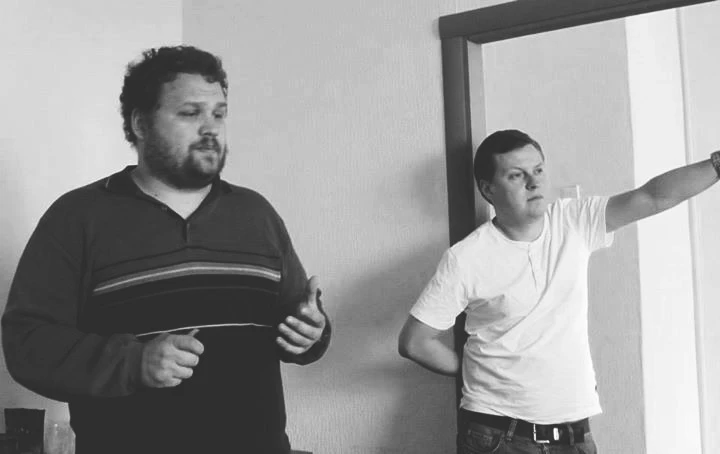
This and the sabotage attempts were organised by the same persons on commission from the Presidential Administration of the RF: the Russian political technologist Alexander Bludyshev, Viktor Shapinov and the activist Maxim Firsov. The tasks were the same — the creation of external networks of influence to destabilise parliamentary elections in the EECCA countries. They work through leftist ideas, parasitising on the infrastructure of the Soviet past.
On the international connections and influence of the “Union of Left Forces of Ukraine”, “Borot’ba” and Left Front on the European left
The political device of using the ideas of socialism, Trotskyism, Marxism and communism is a simple and intelligible springboard for an appeal to sympathetic Western party and non-party leftists, allowing influence to be expanded outside Russia. In addition to destabilising the internal situation and creating visibility in street politics, these organisations establish ties with Western leftists, participating in gatherings, conferences, making publications and campaigns of support for “repressed” comrades in Ukraine and Moldova.
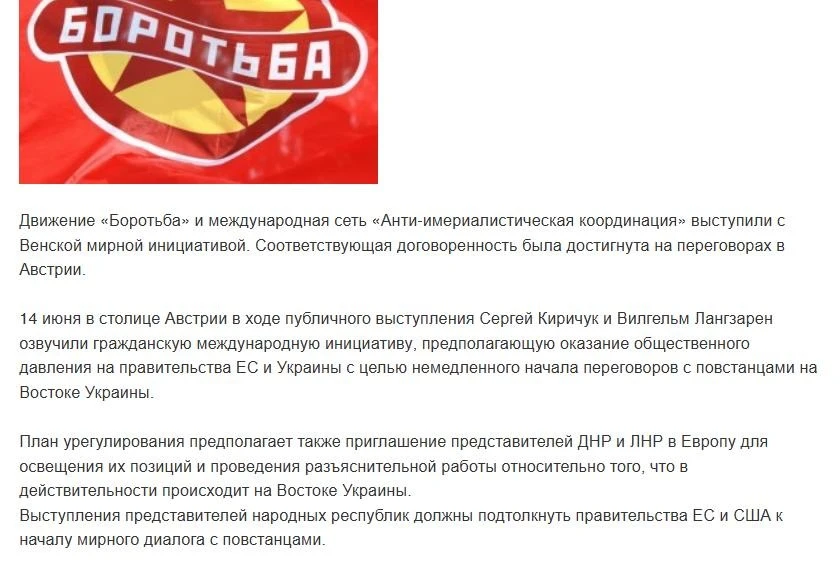
If inside Russian politics party leftists create the illusion of a safe pseudo-competition with central power (e.g. the KPRF), then on the external foreign-policy stage of Russian influence they play out the scenarios of Kremlin political technologists in left political circles, hiding behind the ideas of socialism, equality, revolution and support for the Russian-speaking population of the “People’s Republics”.
Many international left organisations take such gestures for protest politics from below. Often their delusions are caused by loyalty and a lack of critical perspective on the mythologised project of the USSR. [29] [30].
For various reasons, left media and groups, both after 2014 and after 2022, disseminate narratives convenient to the Kremlin. It is difficult to imagine more loyal enablers in the validation and legitimisation of contemporary Russian policy than such left groups and parties.
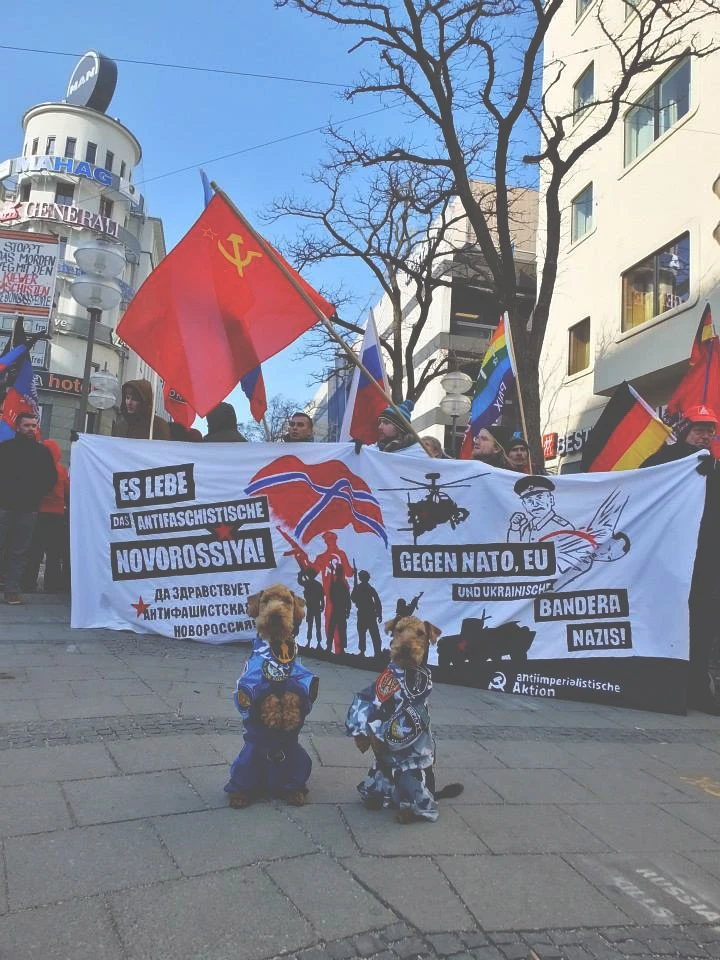
Vasyl Volha noted the enormous volume of work done connected with “forging links with the European left political class” as early as 2009: “This is SYRIZA (Greece), and Die Linke (Germany). Die Linke is not in power but has representation in the European Parliament and the Bundestag. This is the socialists of France, this is the Labour Party of Great Britain. Before we began our public events, we tied ourselves down with contacts and mutual agreements of mutual support and assistance.”
By 2026 international loyalists and enablers remain current. The parties listed continue to provide support to pro-Russian leftists.
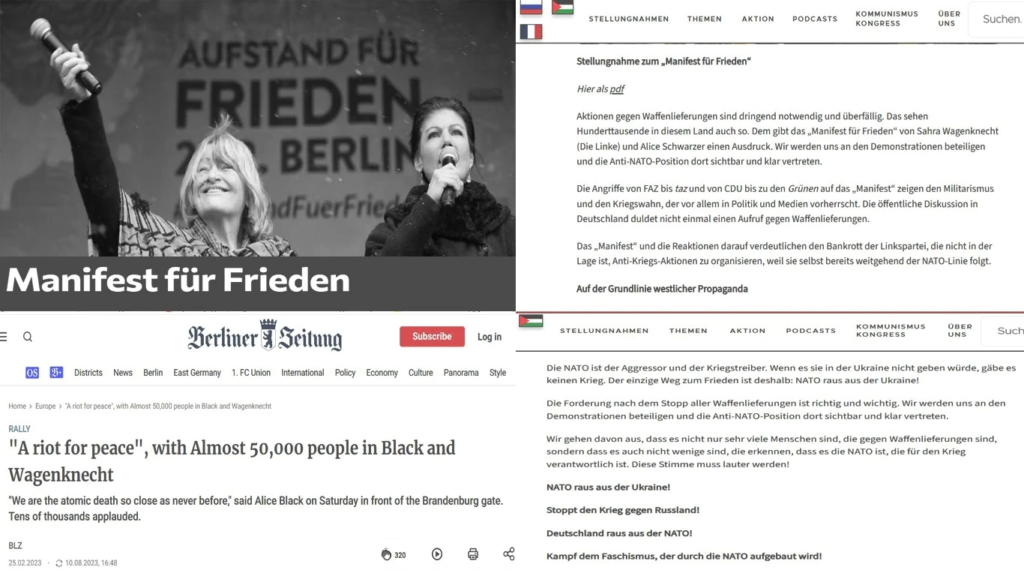
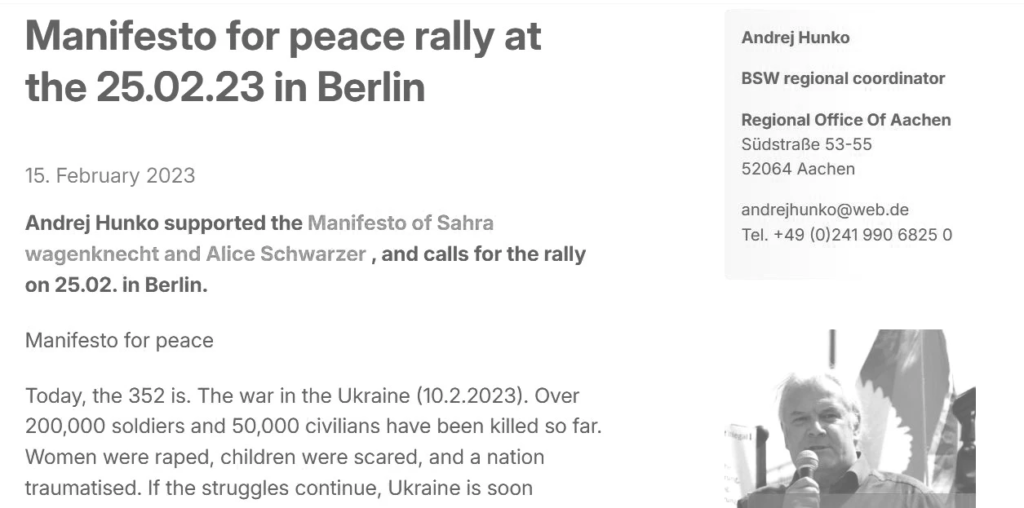
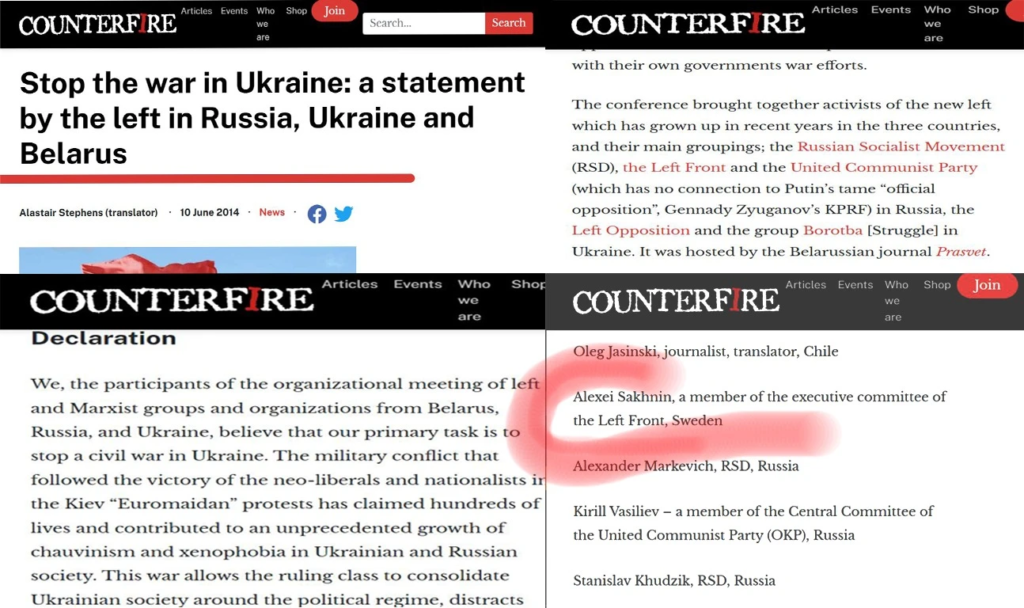
Sahra Wagenknecht [31], although she has left Die Linke and founded her own “Sahra Wagenknecht Alliance”, retains influence with the support of Andrej Hunko [32], whose consistently anti-Ukrainian positions continue to carry weight in the left political circles of the Bundestag. In October 2024, A. Hunko was with representatives of the Council of Europe (PACE) in Georgia (Sakartvelo), after which he made the following statement: “Against the background of the war in Ukraine, the EU and the United States are exerting increasing pressure on the country, demanding that it join the course of confrontation with Russia. This puts Georgia before a serious test. Giving the country recommendations on elections and promising punishment for a ’wrong’ choice is improper and undemocratic.” By this he was justifying in advance the falsification of the voting procedure in favour of the hegemony of the pro-Russian “Georgian Dream” party. The joint statement of the chairs of the foreign and European affairs committees of Germany, Lithuania, Estonia, Latvia, Ireland, Ukraine, Poland and Canada called on the European Union not to recognise the results, describing them as “neither free nor fair”.
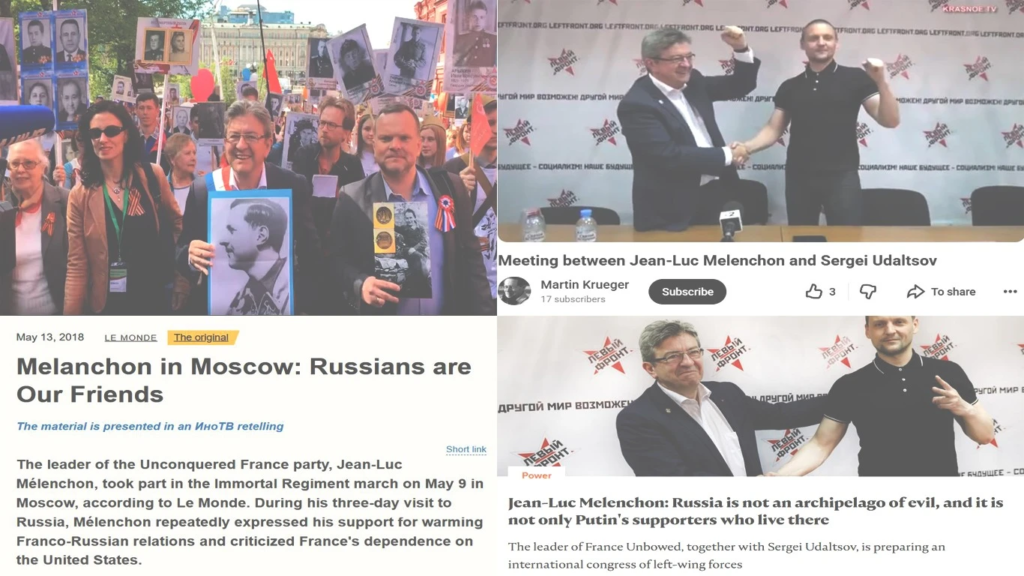
Jean-Luc Mélenchon [33], leader of “La France Insoumise” (LFI), has long sympathised with the Russian leftists of Left Front. In 2018, after the annexation of Crimea and the opening of a Left Front cell in Crimea, Mélenchon cooperated with Udaltsov and planned wide joint international work with him. J. L. Mélenchon also took part in the “Immortal Regiment” [34] action on 9 May in Moscow. At the same time, Mélenchon had as his adviser on international and defence questions Georges Kuzmanovic, a figure in the book Les réseaux du Kremlin en France by Cécile Vaissié. He is currently the leader of the movement “Sovereign Republic” (République souveraine). In 2024 Kuzmanovic took part in the BRICS summit in Kazan, where he spoke of the possibility of France joining that grouping. In 2025 La France Insoumise deputy Sophia Chikirou joined the “Immortal Regiment” in Paris. In the video of the event she stands next to the Russian flag and describes Ukraine’s possible accession to NATO and the European Union as “a provocation”. The “Immortal Regiment” in Paris brings together a range of participants, including from the left spectrum. Representatives of Marxist movements in France are taking part in the march. “I took part last year already. We communists must not forget the contribution of the Soviet Union to the victory over Nazism”, noted a representative of the left movement Pole of Communist Revival in France (PRCF). A woman came to the action with a placard demanding “an end to the war the USA is waging against Russia with the help of Ukraine. The Russians are not our enemies, and I don’t understand why many give in to Russophobia”, Selvi added. The organiser of the “Immortal Regiment” action in Paris is Georgy Shepelev, also head of the Coordination Council of Russian Compatriots in France and a figure in the book on the Kremlin’s networks of influence mentioned above.
Reinforcing international faith in the Soviet project of the “unity” of Russia’s “fraternal peoples”, the Kremlin invests significant resources in the creation of “left organisations” in regions of planned sabotage. Most often, such organisations — for example, the “Union of Left Forces” in Crimea and “Left Front” in Moscow — are built on the basis of old communist infrastructure. However, we also see shorter-term projects created for rapid sabotage reaction: “Borot’ba” in Ukraine, “Antifa” in Moldova, with the same participants as in Ukraine during the Anti-Maidan attempts (Viktor Shapinov, Maxim Firsov). The tasks of these organisations were disinformation campaigns at protests before elections in Ukraine and in Moldova, visibility in the media, provocations in crowds, the organisation of pro-Russian rallies, the draining of protest and, of course, the establishment of international links for building networks of Russian propaganda.
For this purpose, international solidarity campaigns are launched: gatherings, conferences, international political coalitions and supporting alliances. The mechanisms for attracting support from leftists in Western countries vary: often they follow the international delusions and myths about the Soviet Union; in some cases the Kremlin’s long-standing friends in European parties are drawn in, pursuing economic interests; elsewhere the decisive factor is the crypto-infrastructure of the GRU [35] and its external agents of influence.
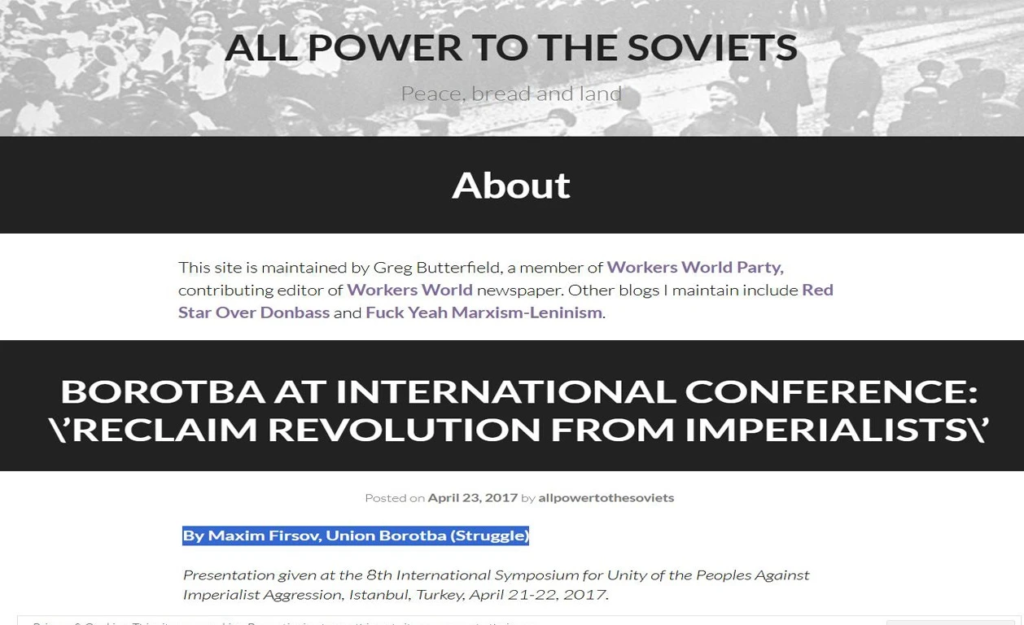
It is important to note how cynically the agenda of antifascist movements is recoded in these staged organisations, and how political aesthetics and symbols are used as form without content by political technologists. [36] [37].
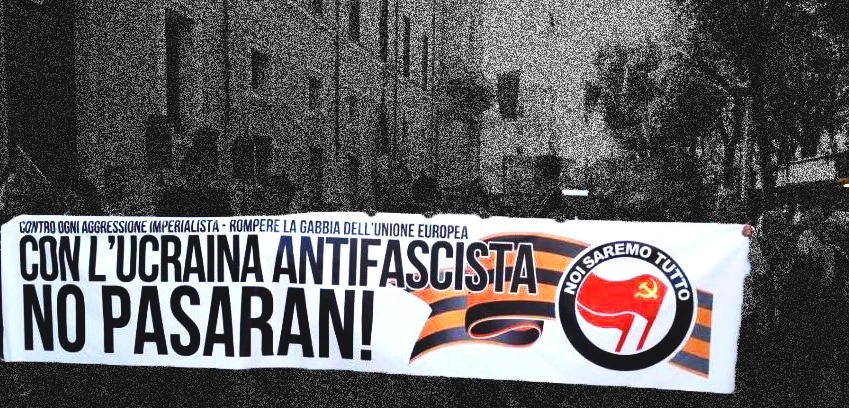
Having completed their tasks, the organisations cease to exist, but their organisers and participants move from project to project, creating new associations and coalitions.
Networks of sites were created for the international left scene, often with cross-references, for an “educational” — propaganda — purpose and for the formation of international networks of solidarity with the “militiamen”. European leftists, supporting “the people” with St George’s ribbon attributes, antifa symbols and the symbols of workers’ unity (hammer and sickle), in fact assist the Office of the President of the Russian Federation.
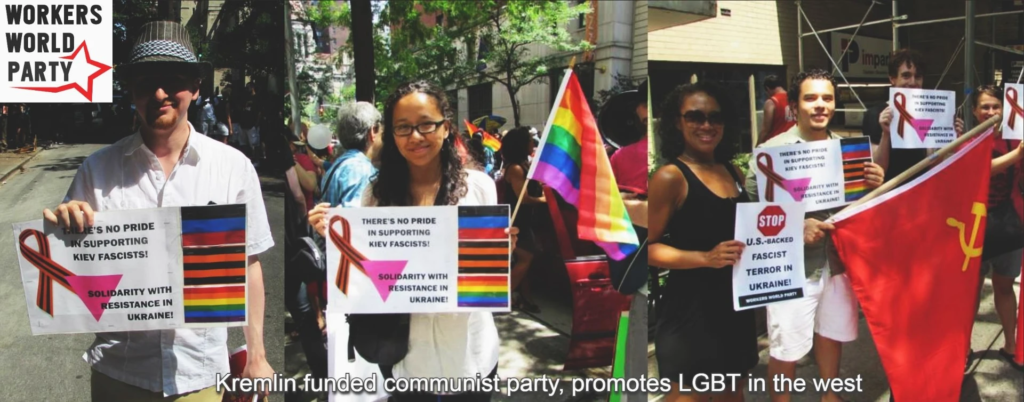
Examples of fabricated networks of “grassroots activism” and campaigns of “antifascist solidarity”

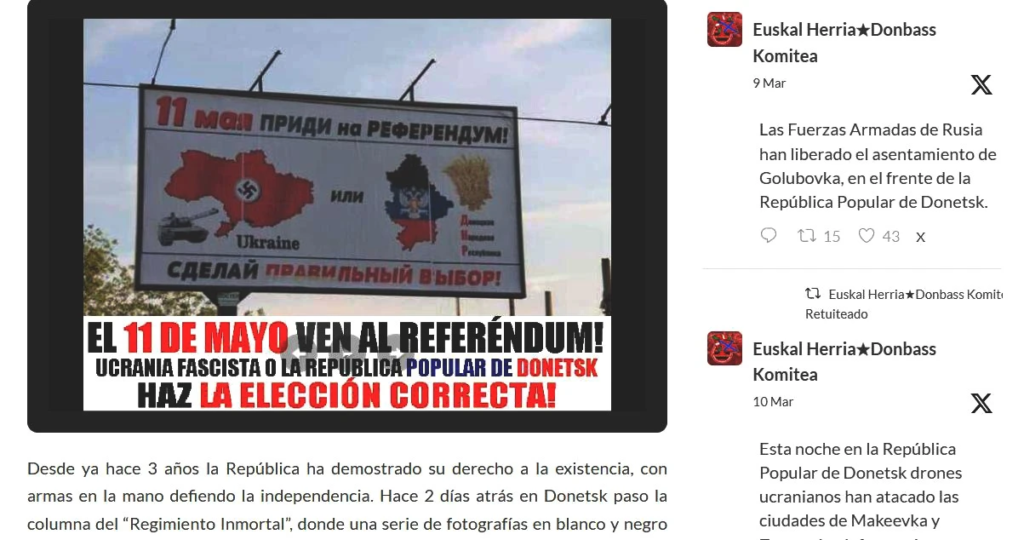
Spain / Basque Country, 2014 to present: Euskal Herria-Donbass Elkartasun Komitea (Comité de Solidaridad Euskal Herria-Donbass). The organisation describes itself on its website thus: “The Committee is, first and foremost, an instrument of help to the workers of Novorossiya. […] Novorossiya describes itself as a Union of People’s Republics and has declared that there will be no place in it for a parasitic oligarchy, since one of its aims is to restore the dignity of workers and the public commonwealth. The Committee recognises these values.”

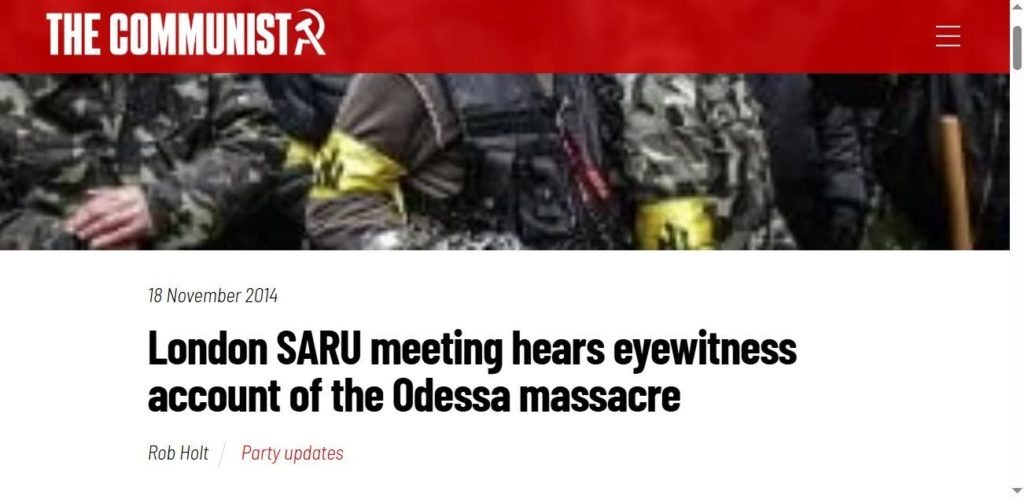
United Kingdom, 2014–2016: SARU (Solidarity with Antifascist Resistance in Ukraine). The aim of the network was to mount an international campaign for the defence of the fighting separatists from the left: “The ’Solidarity with the Antifascist Resistance in Ukraine’ organisation called for a demonstration in protest against the continued cooperation of Great Britain and the EU with the unelected junta in Ukraine.”
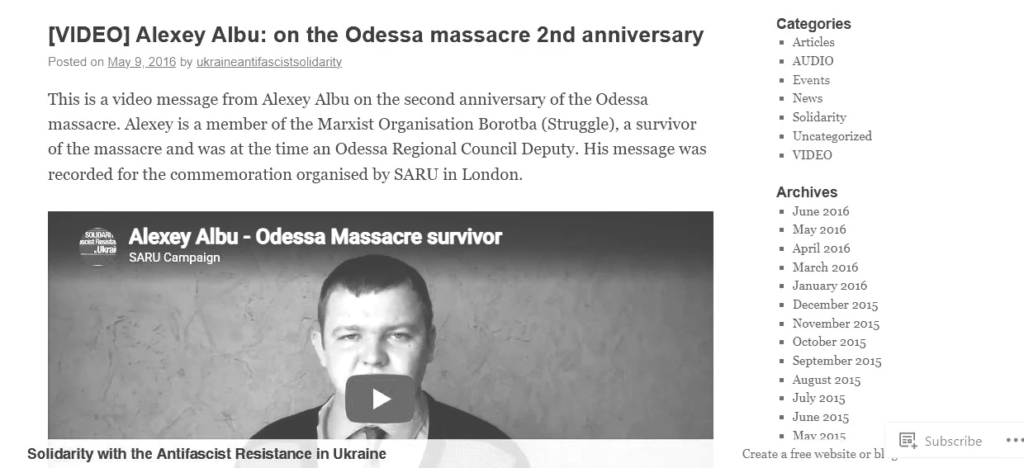
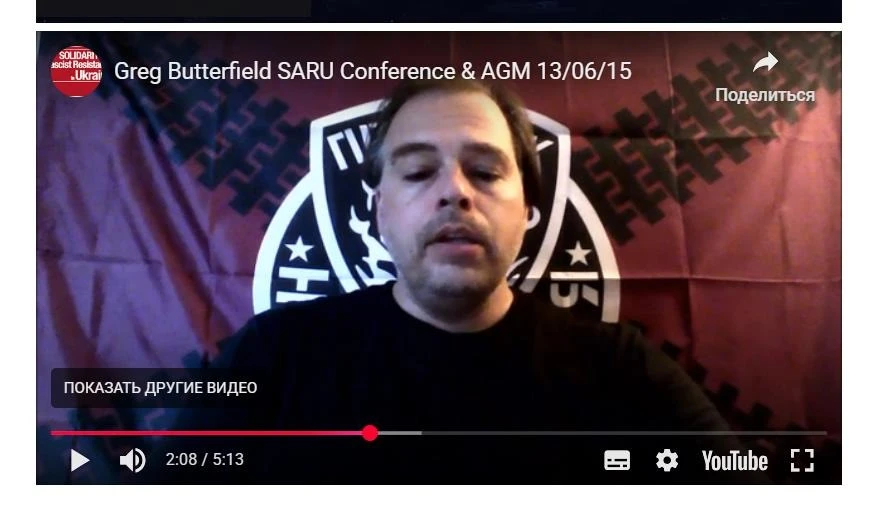
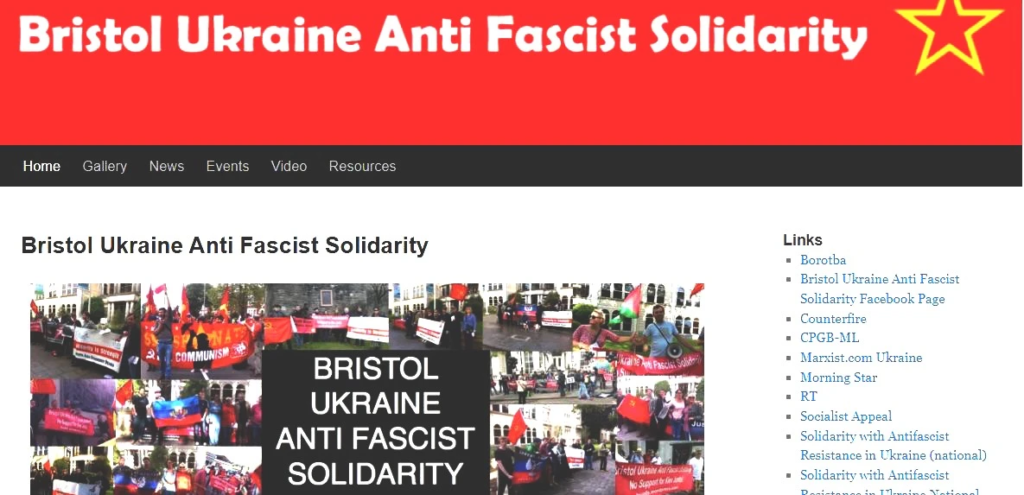
United Kingdom, 2014–2015: Bristol Ukraine Anti Fascist Solidarity: “This site is an information centre for residents of Bristol concerned about the rise of fascism in Ukraine and wishing to express solidarity with the antifascist struggle in that country.”
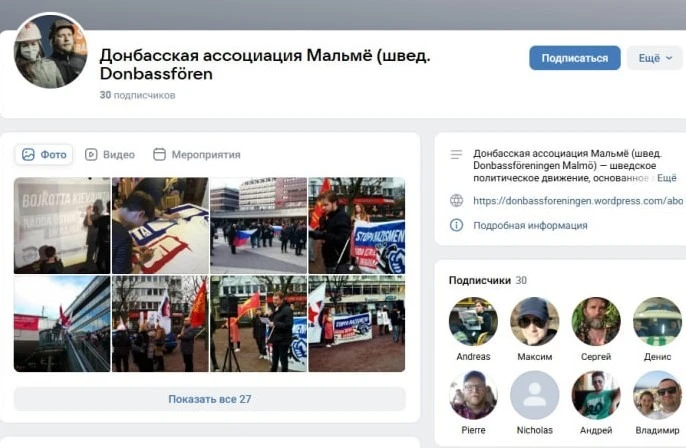
Sweden, 2014–2021: Donbassföreningen Malmö: “We would like to engage in activism at a level addressing such questions as concern about the situation in the east of Ukraine. We do this through various demonstrations, manifestations.”
SLAVYANGRAD.org — a propaganda resource supporting the fighting separatists of the “LNR” and “DNR”, publishing material in English, German and Spanish (2014–2015).
Novorossiya’s Leaders — Strelkov Briefing and Mozgovoi Manifesto: “The oligarchic power in Ukraine must be destroyed. The battle must be brought to a victorious conclusion. There is no other way. A Military Council of Novorossiya must be convened as soon as possible. Its task is to confirm the unity of Novorossiya and to continue the implementation of its revolutionary programme.”
Many media platforms remain current even now, in 2026.
Both these pseudo-forms of popular activism and these solidarity campaigns are not as marginal and invisible as they may seem at first glance. In the wake of their activity, many of the largest international left media resources published statements of support between 2014 and 2016 for the “rebel separatists” and called for solidarity with “repressed antifascists” in Ukraine.
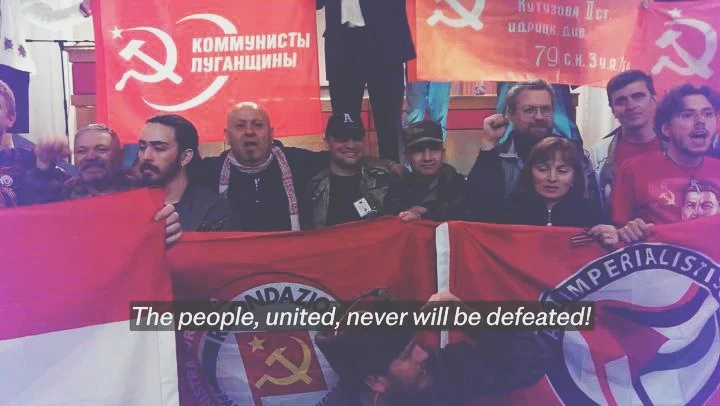
By “antifascist” movement were meant activists opposed to the central authority of Ukraine and acting in the interests of the Russian Federation. This was presented as a struggle against local oligarchic forces, against neoliberalism, inflating narratives about the dominance of the “Right Sector”. Characteristically, solidarity actions took place with the attribute of St George’s ribbons, often against a backdrop of Russian banners and even with the participation of Russian nationalists.
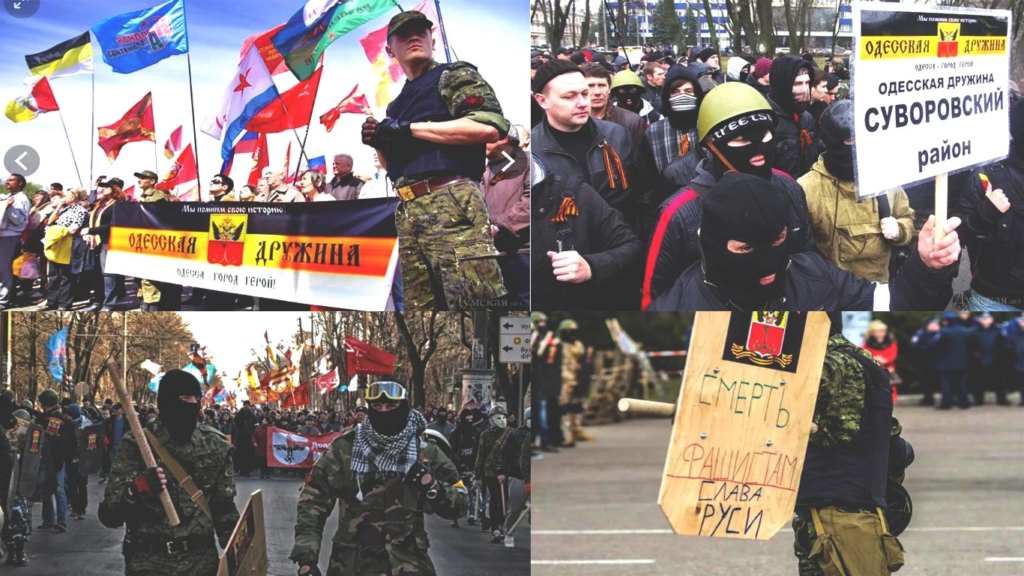
The collaboration of “Borot’ba” and the Russian nationalists of the “Odesa Druzhina” is well-known: jointly they came out to rallies for a referendum on the secession of Odesa from Ukraine. Some “Borot’ba” members belonged to the “Odesa Druzhina”. [38] “Borot’ba” also entered into consistent tactical alliances with nationalists and neo-fascists.
Reaction: examples of international delusions
International Committee of the Fourth International (ICFI) / WSWS — the online publication of the world Trotskyist movement, the International Committee of the Fourth International, and its Socialist Equality Party sections worldwide. “The political character of the Maidan movement rapidly made itself clear. Representatives from Ukraine’s ultra-nationalist and neo-fascist parties took centre stage alongside the country’s super-rich.”
Bolshevik Tendency — the international “Bolshevik Tendency” movement. “Russia reacts to imperialist encroachment. Ukraine/NATO/the United States ignored Kremlin’s red lines”: “We are persistently engaged in the process of international fusion of revolutionary cadre around the programme of genuine Trotskyism as a step toward the long-overdue rebirth of the Fourth International, the World Party of Socialist Revolution.”

Workers World — “Workers’ Party of the World for a Socialist Society”. “Borotba: A Socialist Chance for South-Eastern Ukraine”: “This alliance of oligarchs and Nazis seems straight out of history textbooks, just like the alliance of antifascist and anti-capitalist slogans of the opponents of the Kyiv junta.”
International Marxist Tendency (IMT) — journal of Marxist theory, analysis of current events and the history of the revolutionary workers’ movement. “The IMT took part in launching the Solidarity with Antifascist Resistance in Ukraine (SARU) campaign.”
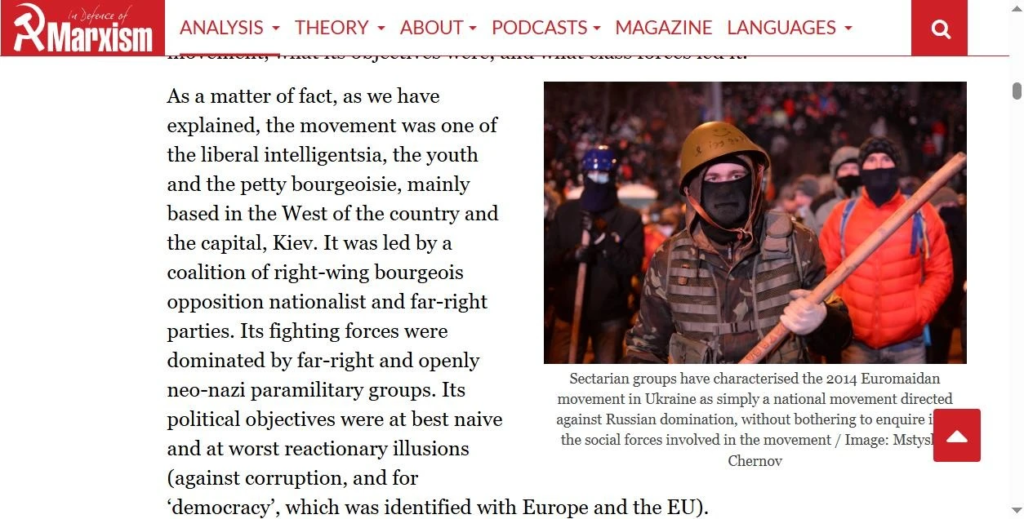
Revolutionary Communists of America (RCA) — a new political party of the American communist movement. Interview with a Borotba activist: “Our struggle for a socialist Ukraine is part of the struggle for a socialist world.”
Revolutionary Communist Party (UK). Solidarity with the Anti-fascist Resistance in Ukraine (SARU) held a supporters’ meeting on 11 November at the Marx Memorial Library in Clerkenwell, London.
Revolutionära Kommunistiska Partiet (RKP) — the Swedish section of the Communist International. The Swedish Communist Party defends “Borot’ba”: “Dirty lies about a Left Party donation to pro-Russian rebels”. “Recently the party has been accused of partnering with pro-Russian separatists and donating money to them. This is merely the latest step in a false campaign against Ukraine waged daily by the American media.”
Socialist Fight — journal of communist and Trotskyist theory. “Marxism and the War in Donbass”: “Borotba is often criticised for supporting the people’s republics of Donbas, for the fact that our comrades fight in the militia and help peaceful state-building in Luhansk (LNR) and Donetsk (DNR). This criticism comes not only from those former leftists who succumbed to the nationalist fever and supported first the Maidan, and then Kyiv’s war of conquest in Donbas. Others criticise us from the positions of ’Marxist pacifism’, calling themselves ’new Zimmerwaldists’.”
marxistische linke — Partner of the European Left. Sergei Kirichuk: “They hate us because we are communists”. The association is named “marxistische linke — ecological, emancipatory, feminist, inclusive”, with the short name “marxistische linke e.V.” The headquarters of the association are in Berlin.
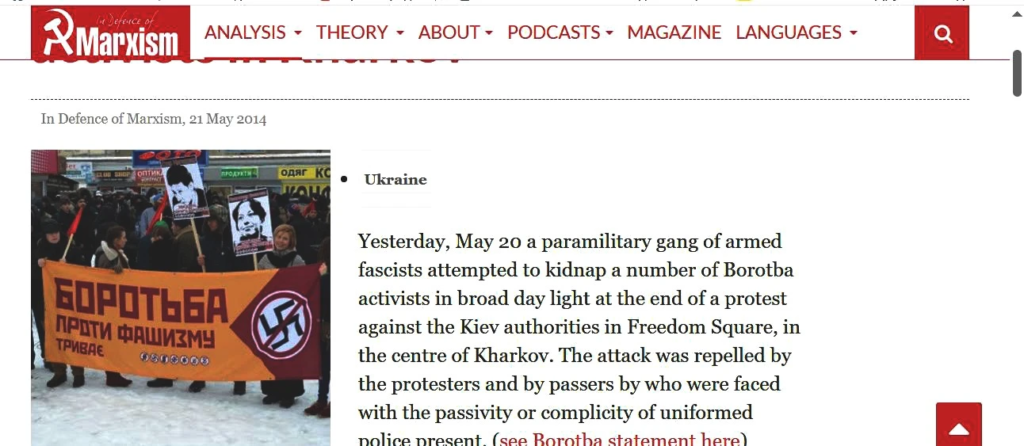
Revolutionary Communist International Tendency (RCIT): “The Ukrainian socialist organisation Borotba has published the following statement. The Revolutionary Communist International Tendency (RCIT) is unconditionally in solidarity with the activists of Borotba and demands the immediate release of their comrades.”
Trotskyist Platform — the Australian Trotskyist Platform: “We speak out against the provocative and hypocritical intervention of Western imperialism in Ukrainian affairs and against sanctions against Russia! No to NATO expansion! No to Western arms supplies to Ukraine!”
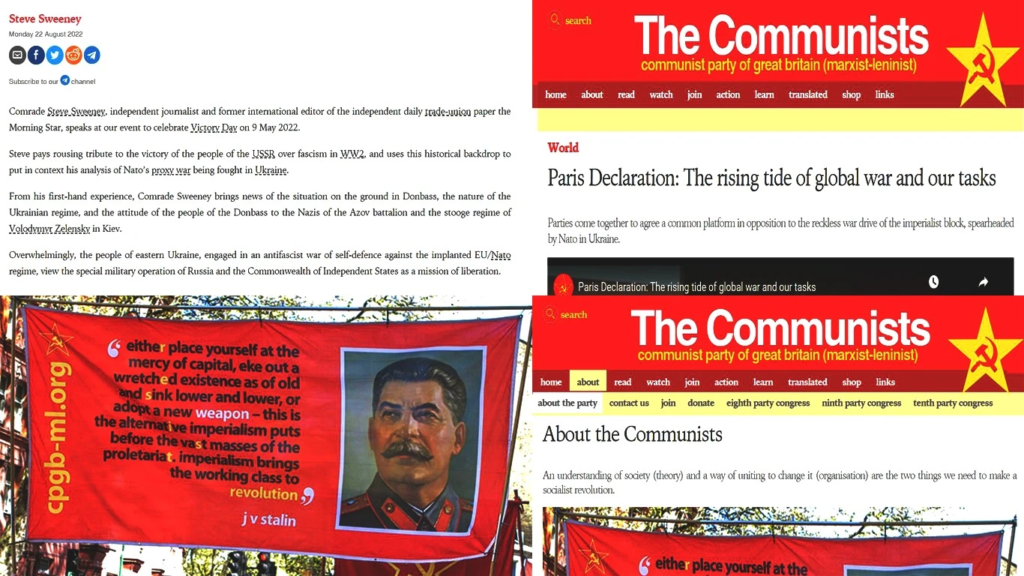
The Communist Party of Great Britain (Marxist-Leninist).
These are only some examples of the main European left platforms which knowingly or inadvertently spread Kremlin narratives. The chains of international left unity described above are a resource for propaganda of pro-Russian ideas in the West.
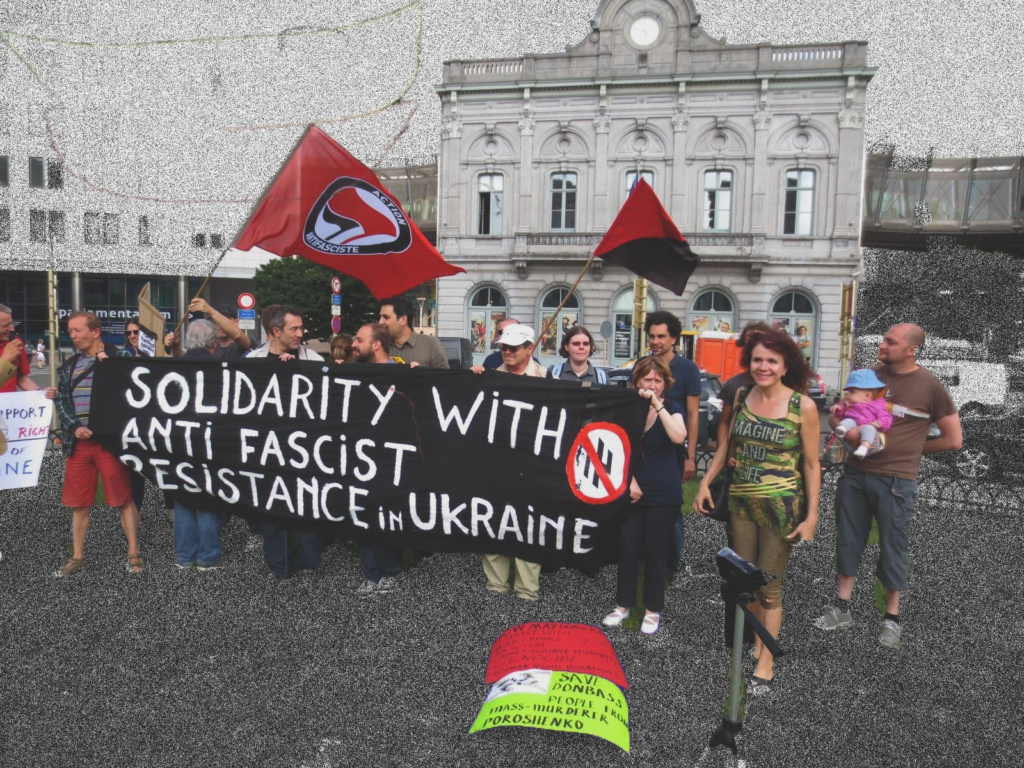
Sham left organisations are lent legitimacy by established local left groups; international solidarity campaigns are launched; the international resonance drums up support among Western leftists; this in turn shapes voting in the European Parliament and ultimately produces European left parliamentarians who relay Kremlin narratives. A more detailed study of Russian influence on European politicians can be found here.
The contemporary situation: problems of pacifist ideas and acts of sabotage in the EU
The KPRF has unconditionally supported the war and actively participates in it.
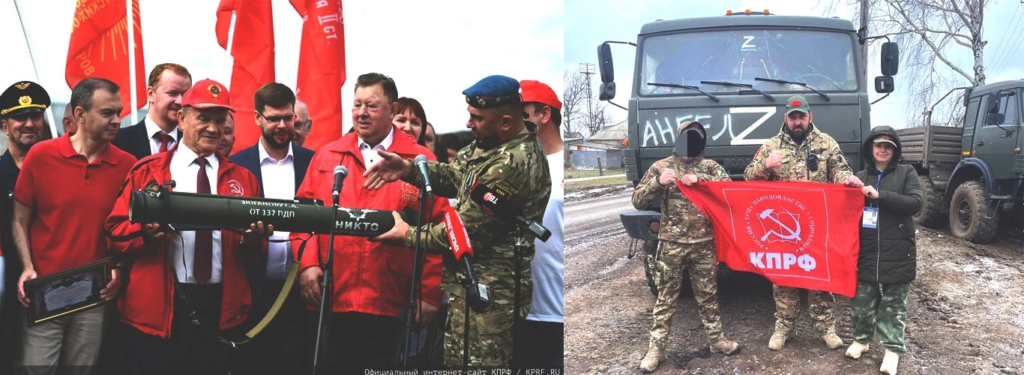
The Russian organisation “Left Front” actively supported the full-scale invasion of Ukraine by Russia. Having experienced a split in opinion, “Left Front” speaks in support of the war and collects humanitarian cargoes.
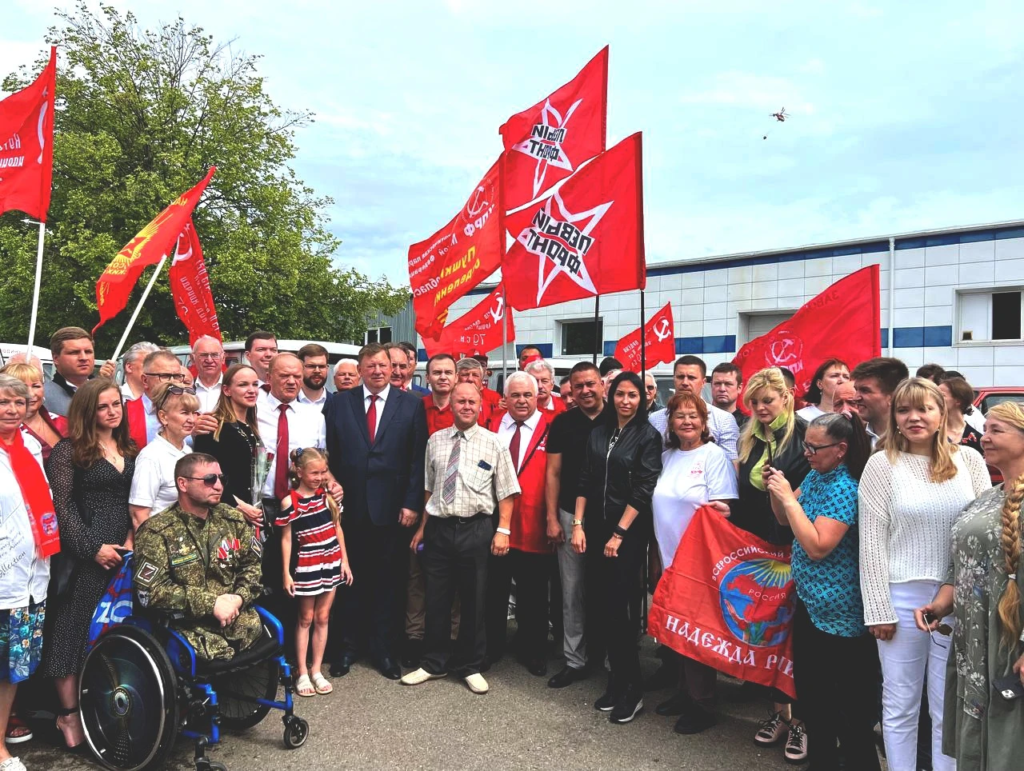
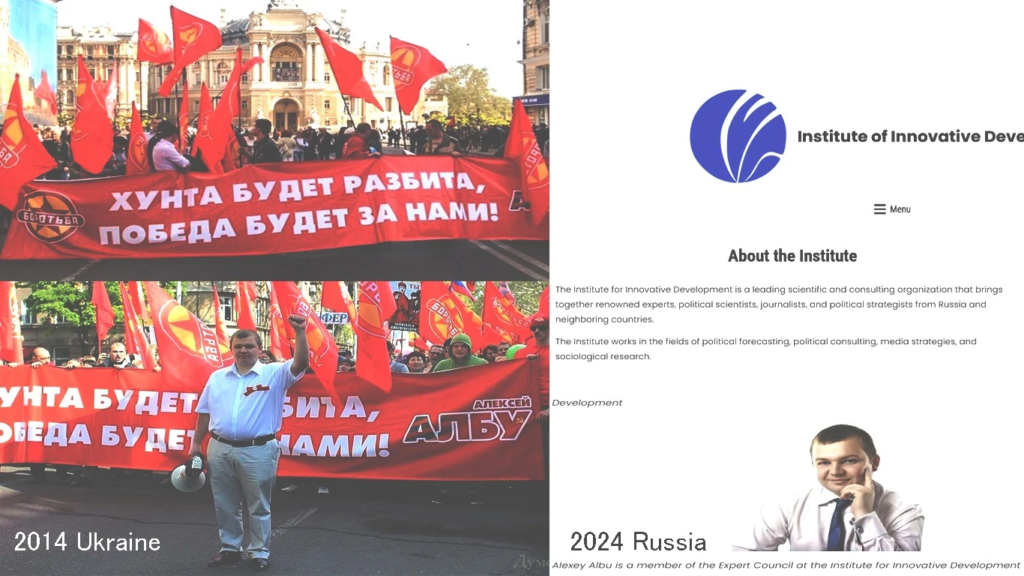
“Borot’ba” collects money and humanitarian aid for the Russian military, having branches of organisational cells in Russia. Persons participating in connected organisations (Left Front, “Borot’ba”, KPU, Organisation of Marxists, “Liva”, etc.) actively work in Russia’s interests:
A. Albu — one of the founders of “Borot’ba”, an active advocate of the secession of Odesa — works in the “LNR” as deputy chair of the “New Labour” trade union, is a member of the expert council of the “Institute of Innovative Development” and heads the centre of political transformations at the “Institute of the New Society”. The “Institute of Innovative Development” is engaged in political forecasting and consulting, media strategy, and sociological research. On the institute’s site one can see several articles by A. Albu about “Banderites” and “Ukrainian fascism”. The “INO” positions itself as “an association of researchers and experts studying Russian and global economic processes”. Both institutes resemble simulacra, working in whose interests is unknown.
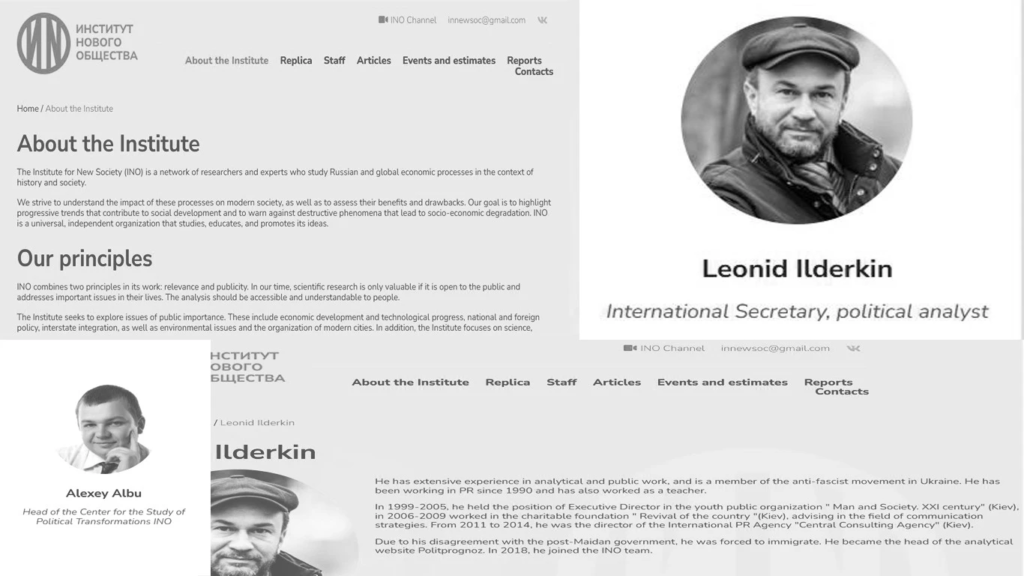
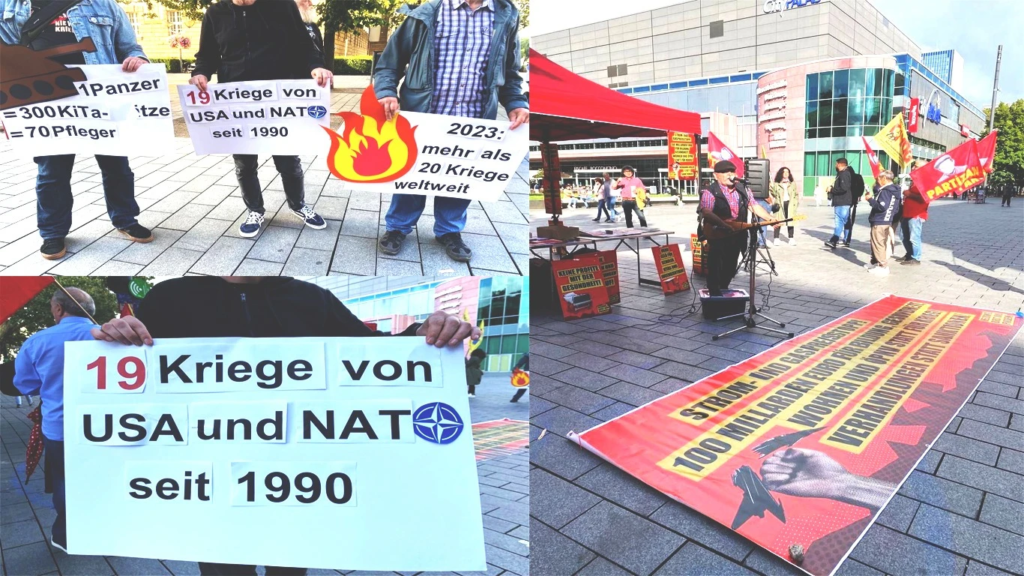
In 2022–2023 “Borot’ba”’s old ties with European leftists were reactivated. A series of “pacifist” pro-Russian-oriented meetings and street actions was held on European platforms with the participation of former “Borot’ba” members, now staff at the “Institute of the New Society” in Moscow. A. Albu and Leonid Ilderkin oversaw and (remotely) participated in actions directed at blocking arms supplies to Ukraine from EU countries. At communist gatherings and rallies in Germany, A. Albu’s direct speech once again sounded forth about “Ukrainian fascism” and the necessity of blocking arms supplies: “The German comrades took interest in the information about the coup in Ukraine in 2014, and about the eight years of preparation by the Armed Forces of Ukraine to attack Donbas and Crimea. Alexei Albu called on the public to renew protests against arms supplies to Ukraine. According to him, this is the only way to stop the war”, writes an Italian military correspondent fighting “for Donbas” and Russia.
In 2024 the Dossier Center [41] published the article “Sabotage from a Safe Distance: Who is behind the new GRU tactics in Europe”, in which, on the basis of official materials connected with GRU Colonel Denis Smolyaninov, it states: “From the memorandum it follows that it was planned to deploy networked work with European leftists on the basis of a certain ’Molotov Club’ and the pro-Russian Ukrainian organisation Borot’ba, which was to ensure contacts with coordinators. We discovered plans to organise left-radical actions against NATO and Ukraine. The next handler promised the colonel to conduct actions of 15 people across Western Europe, from London to Athens, under the straightforward slogans: ’no to dragging our country into war’, ’NATO is our common enemy’, ’for withdrawal from NATO and the closure of military bases’, ’sanctions harm not only the Russian economy but also ours’.”
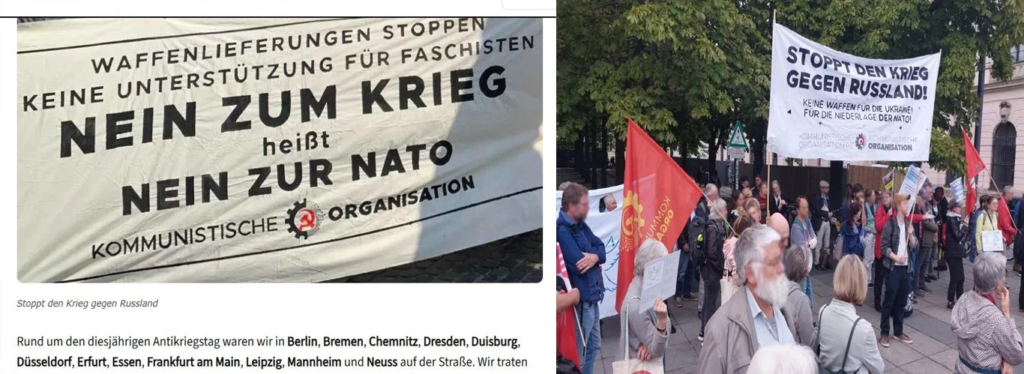
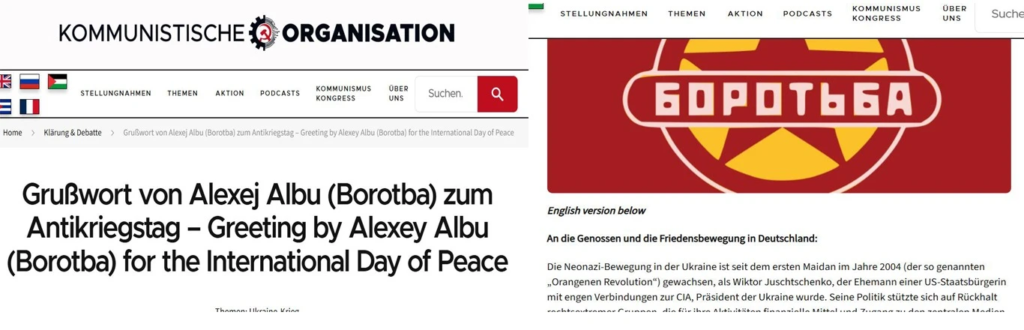
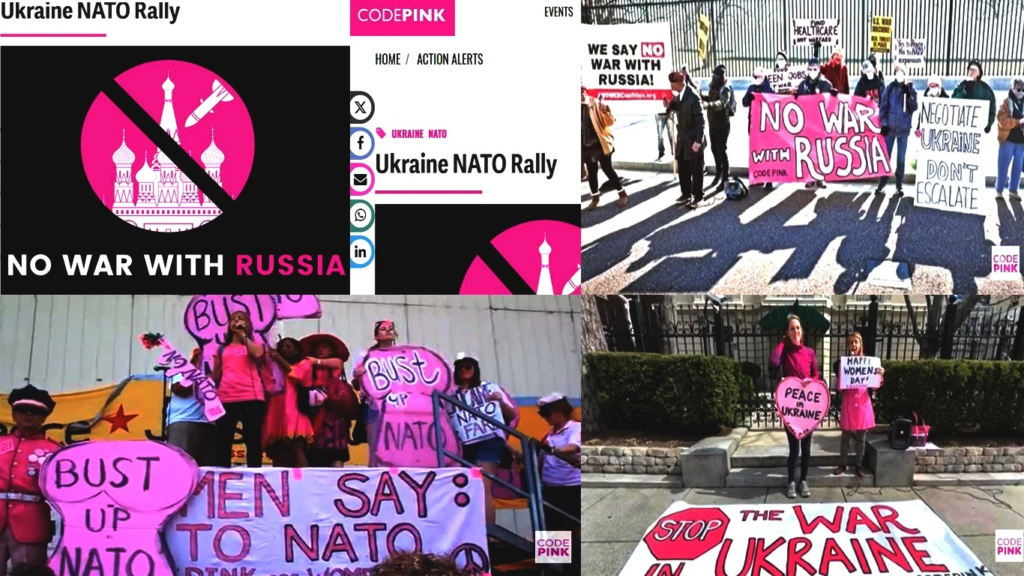
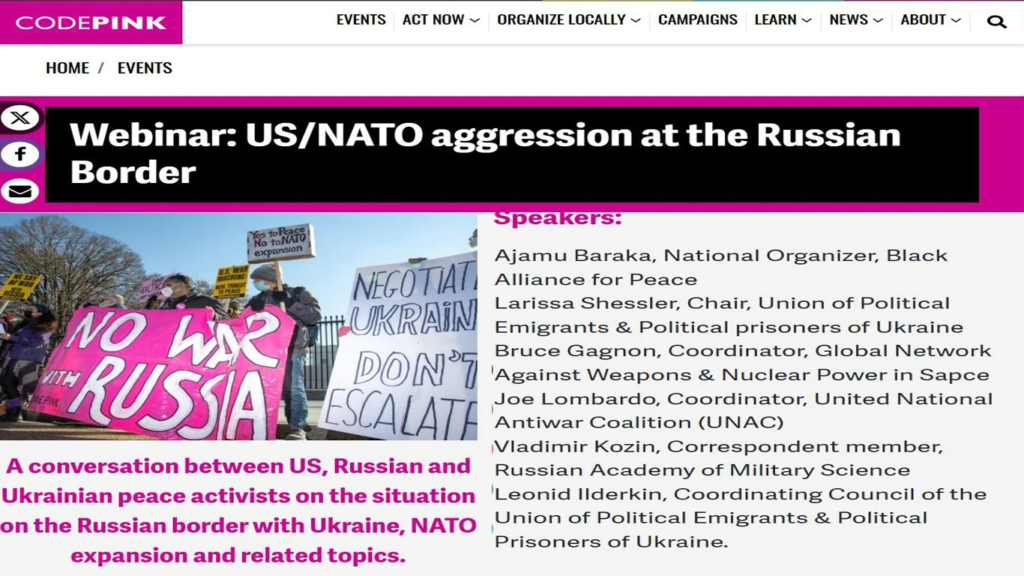
Some reports of GRU-planned actions are visible in the screenshots above. Ilderkin has also been seen collaborating with pacifist organisations such as “CODEPINK” [42]. Leonid Ilderkin is linked not only to the KPU and “Borot’ba” in the past, but at present also to the INO, the Moscow “Union of Political Emigrants and Political Prisoners of Ukraine”, and, as co-organiser, “Red Square — Molotov Club”. The “Molotov Club” describes itself thus: “The Molotov Club is an international Think Tank consisting of many political groups from all around the world.” It is a leftist pro-Russian association including such figures as Daria Mitina and Maxim Firsov from Left Front and other members of “OKP” [43] (Russia).
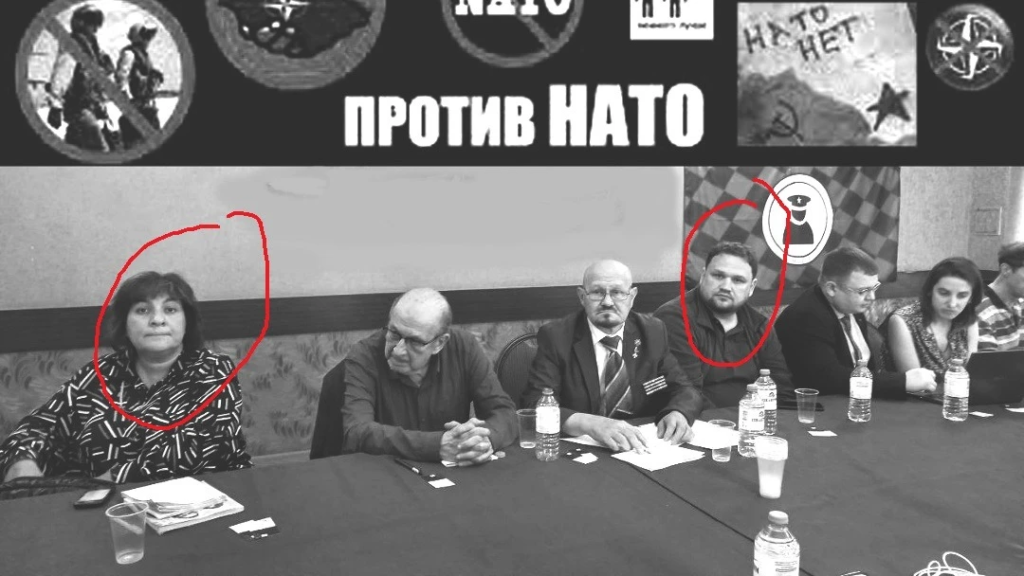
In 2023 the Molotov Club issued a memorandum at its 6th congress in Moscow: “Stop NATO! Peace to the peoples!”, which states, for example: “Over many years, since 2014, the Russian Federation pursued exclusively a policy of peace and negotiations with the Kyiv authorities. By 2022, however, Ukraine had finally lost its political independence, becoming an aggressive enclave of NATO aimed at conflict with Russia.” The memorandum is generally aimed at a call for refusing military aid to Ukraine and lifting sanctions against Russia, explaining the necessity of these actions from socialist, antifascist and anti-imperialist perspectives. In addition to holding gatherings, the Molotov Club has a network of aggressively patriotic communities for shaping a new young generation of communists on VKontakte.
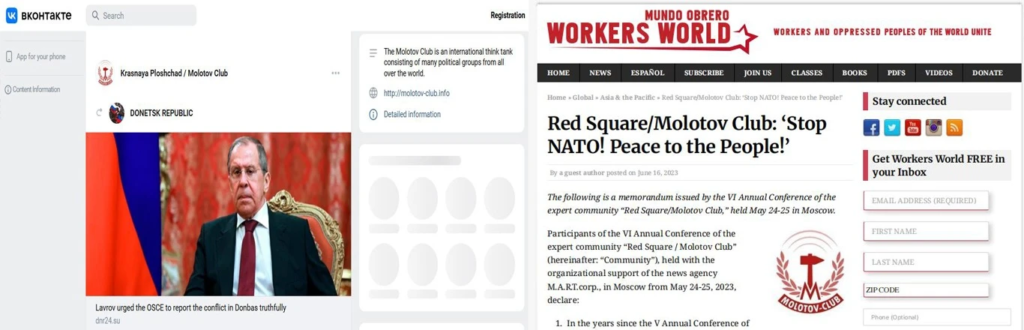
L. Ilderkin remains in Russia, also being a member of OKP. During and after the reorganisation of “Borot’ba”, Ilderkin was known for active propaganda and pro-Russian activity — he wrote texts about “Ukrainian fascism” and spoke about “the Kyiv junta” at congresses and symposia.
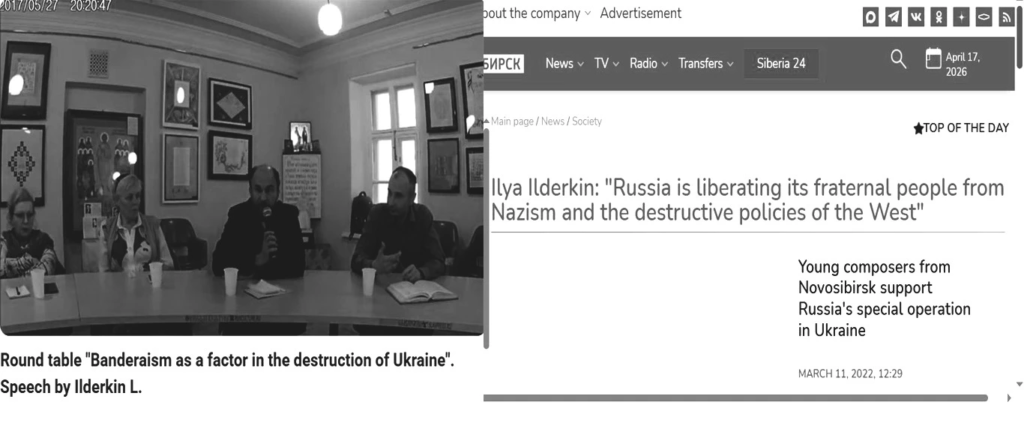
Further, from the Dossier Center report it follows that “for unified coordination of activity across the CIS countries (republics of the former USSR)” the GRU planned to create: “An information-analytical agency, possibly not on the territory of the Russian Federation (options: Kyrgyzstan, Armenia) through which, under various pretexts, the activity of the sub-network could be covertly financed.”
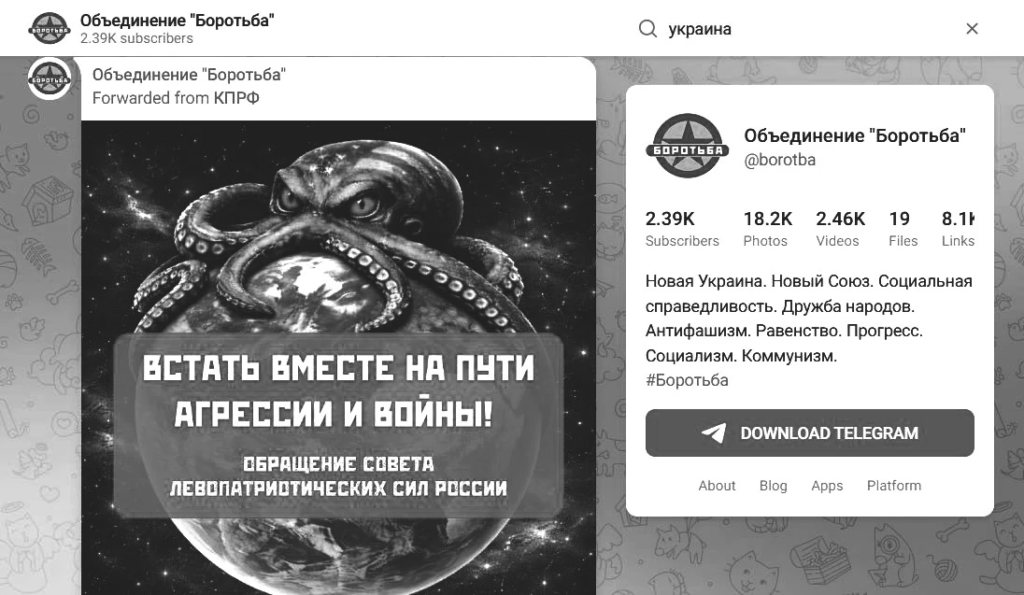
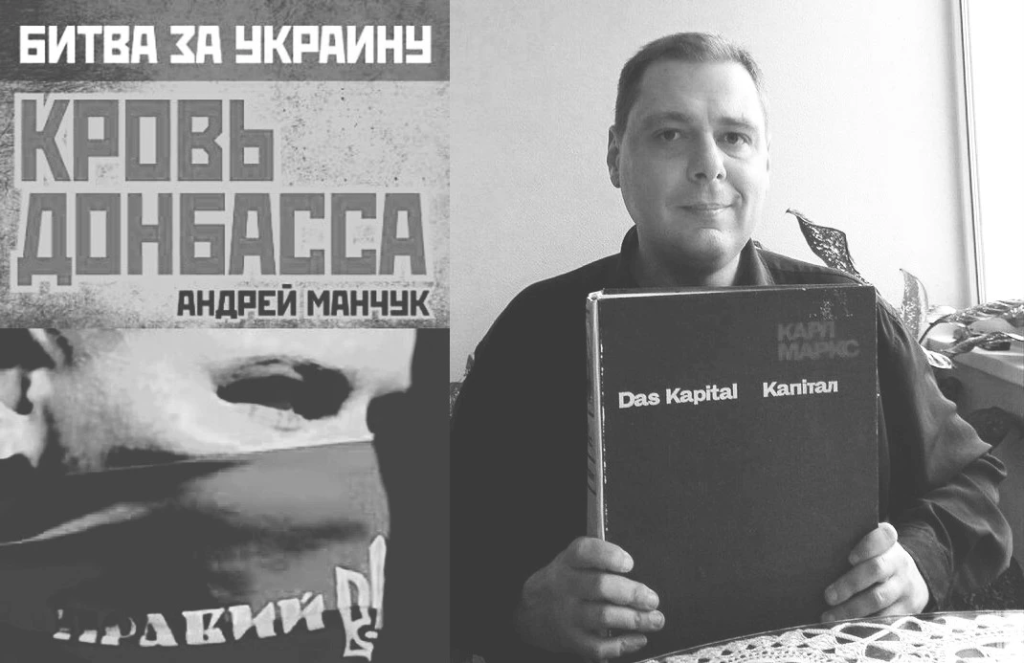
Andrii Manchuk, formerly editor-in-chief of the once-active internet journal liva.com.ua and a “Borot’ba” coordinator who publishes anti-Ukrainian texts and books, is also in Russia.
Some leftists from the “Borot’ba”, KPU and Left Front ecosystem (Alexei Sakhnin, Viktor Sidorchenko), having left both the Russian Federation and Ukraine, organised themselves into the “Post-Soviet Left” (PSL) [44] initiative, which began public activity in 2023. Their agenda comes down to lobbying for the necessity of reducing arms supplies to Ukraine in EU countries, to calls for desertion from the Ukrainian and Russian armies, to defending the rights of men evading military service in Ukraine, and to intensive criticism of all Ukrainian institutions of power, culture and civil society after 2014 (PSL leaders consider them symmetrical to the dictatorial regime of Putin). These theses coexist with attention drawn to the problem of poverty, as a consequence of class inequality, of many Russian contract soldiers. PSL is now active on the same European platforms (the German Die Linke, La France Insoumise — J. L. Mélenchon’s party) to which the traces of the earlier political activity of Left Front, “Borot’ba” and the Communist Party of Ukraine also lead.
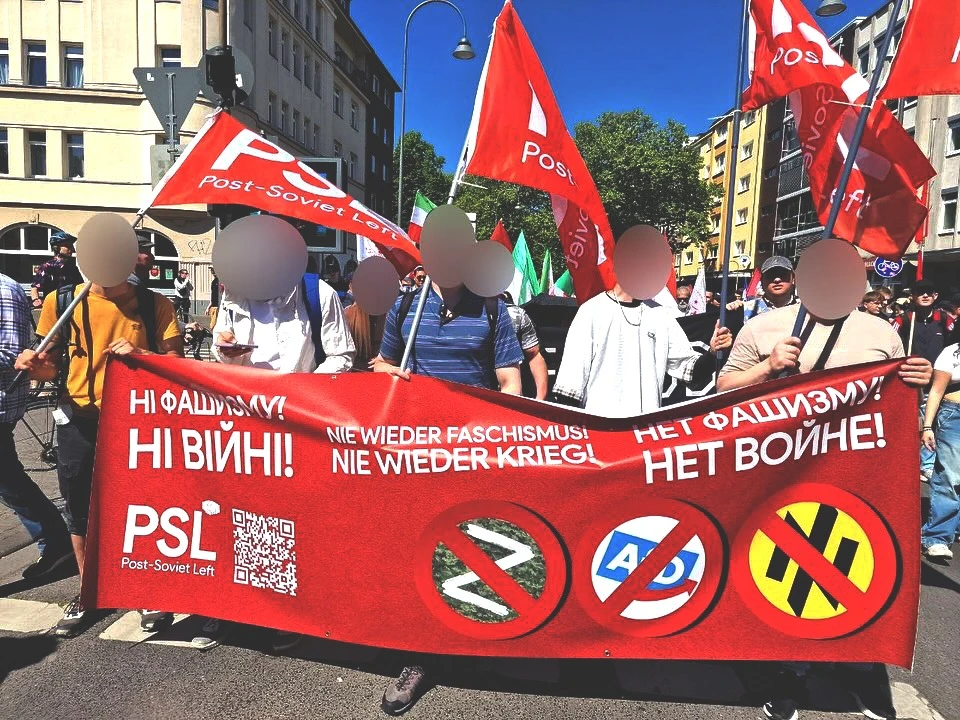
PSL’s allies in Russia are the organisation “Interfront”, whose name refers back to the original “Interfront” — a movement whose aim in the 1990s was the preservation of the Soviet Union as a single Marxist-Leninist state. The original “Interfront” had branches in Estonia, Latvia, Lithuania, Moldova, Ukraine and other independent states, against whose independence its participants spoke out. The current “International Front” describes itself as an organisation united by the goal of building a communist society. It is characteristic that PSL chose precisely these allies. In the direct speech of one PSL participant, Viktor Sidorchenko (former secretary of the Kharkiv city committee of the KPU), he openly speaks of his sympathy for the USSR.
“Peace” movements
To speak of a truce from one’s own safe and non-combat position is a privileged gesture. To deny the right to defence against an aggressor state is to amplify the inequality of power dynamics. Ukraine has the right and must have the possibility to defend itself.
Over the four years of Russia’s full-scale invasion of Ukraine, against a background of news on pressuring Ukraine towards a truce, pacifist summits are being reactivated. They often include world-renowned pacifist organisations as well as speakers providing “expertise” on Russia-Ukraine relations. One obvious intention is to compel Ukraine to accept conditions unfavourable to it. The task of such summits and rallies is to create the appearance of public pressure. Accordingly, new organisations are created for this purpose. Individual media personalities (including bloggers) and bot farms tied to them gain visibility. Public opinion is shaken, intensifying discontent inside Ukraine fuelled by the crisis of forced mobilisation. At the same time, demands for peace almost always come in a package with slogans against NATO, for the cancellation of arms supplies to Ukraine, and slogans such as “enough deaths”, “the people are tired of war”, “TCC arbitrariness” [45], “Zelensky’s terror and dictatorship” and others.
The activation of pacifist movements and the use of the popular and intelligible “pro-peace” narrative is an old and well-known technique of the KGB, and of the official rhetoric of the CPSU.
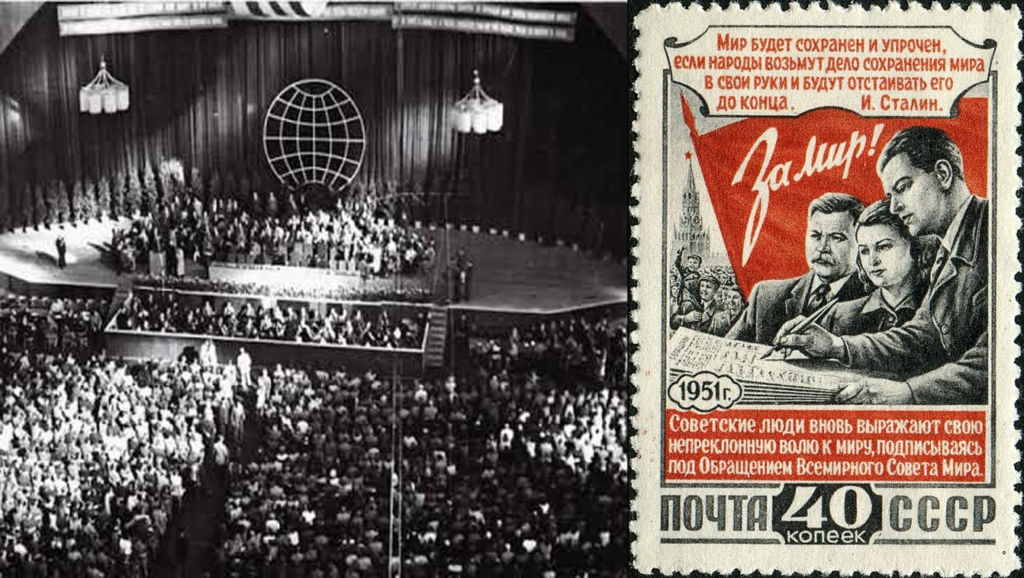
For example, the “World Peace Council” was created by the CPSU between 1948 and 1950 to promote Soviet foreign policy and to fight against nuclear weapons at a time when only the USA possessed them. At a session of the Cominform, Mikhail Suslov [46] stated: “The task of the Communist and Workers’ parties is to lead the struggle for peace of all mass public associations and to give it a purposeful and effective character”, with NATO as the principal target.
The principal aim of the Soviet-sponsored peace movement was opposition to the North Atlantic Alliance. Suslov declared: “Particular attention must be paid to drawing into the peace movement trade unions, women’s, youth, cooperative, sports, cultural-educational, religious and other organisations, as well as scientists, writers, journalists, activists, cultural workers, members of parliament and other political and public figures, men and women who speak in defence of peace and against war.” In other words, particular significance was given to communist-led trade unions, organised into the “World Federation of Trade Unions”. The old unipolarity of the communist world, as preserved in Kremlin narratives, is readily reproduced by leftists on the international stage in the spirit of “Russia opposes NATO”.
The World Peace Council, in its turn, was linked to a network of front organisations (“Communist Front”) created to spread Soviet influence. Soviet armed operations of the time, such as the suppression of the anti-Soviet uprising in Hungary in 1956, were justified by the WPC.
Among contemporary pacifist summits, gatherings and organisations, attention should be paid to those organised by the International Peace Bureau, which cooperated with the USSR and has continued to cooperate with Russia in the interests of the latter’s security services; the Austrian section of the International Fellowship of Reconciliation; the Austrian section of the Women’s International League for Peace and Freedom; the Aktionsbündnis Frieden, aktive Neutralität & Gewaltfreiheit (Action Alliance for Peace, Active Neutrality and Non-violence), financed by the Communist Party of Austria and the “transform! europe” [47] network; and, separately, “Code Pink: Women for Peace” (CODEPINK) — more on how Russia activates pocket pacifists in Europe is here.
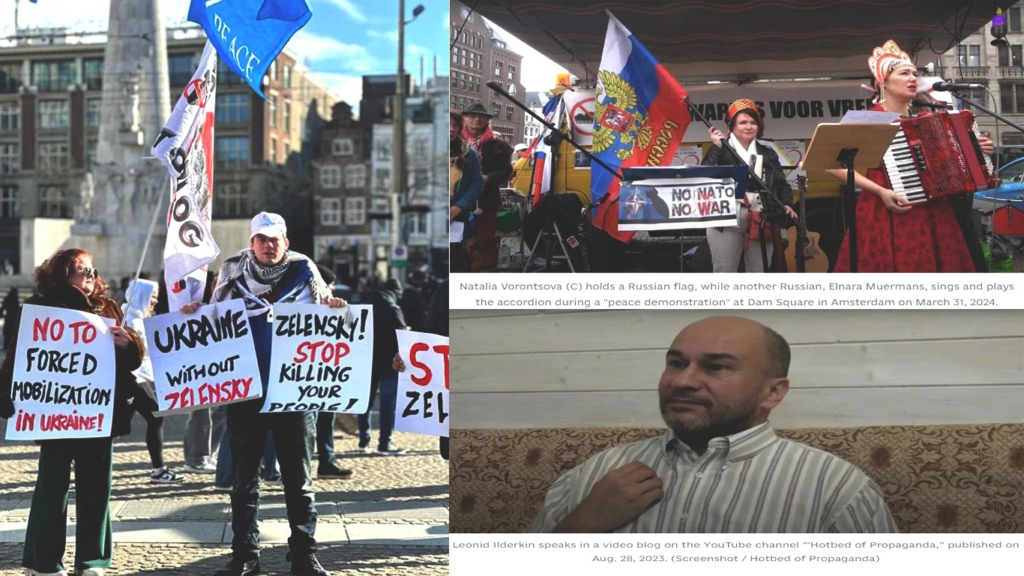
Another telling example of pro-Russian “peace” rallies — the Dutch group “Peace Demonstration” (Vredesdemonstratie), cooperating with the Moscow organisation “Union of Political Emigrants and Political Prisoners of Ukraine” under L. Ilderkin’s leadership. Activists organised a series of demonstrations in the Netherlands demanding “the resignation of Zelensky” and the blocking of military aid to Ukraine.
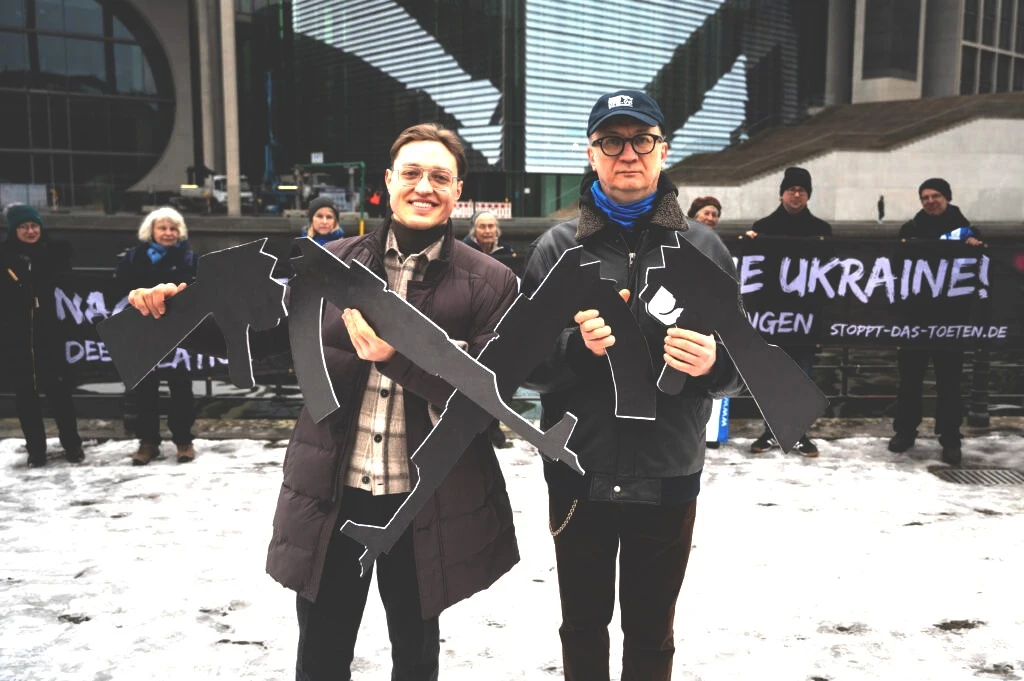
PSL and the associated “Peace From Below” initiative (A. Sakhnin, L. Smirnova) also support the agenda of cancelling arms supplies to Ukraine. The strategy of “Peace From Below” is directed at the “defence of peace between fraternal peoples”. Both organisations are exercised about the rights of “evaders” and about “TCC arbitrariness” in Ukraine. They are supported by Die Linke and La France Insoumise, founded by Jean-Luc Mélenchon. A. Sakhnin and A. Konovalov appear in this connection as experts from Russia and Ukraine. Meanwhile, J. L. Mélenchon’s position on the war in Ukraine is: “NATO bears responsibility for the tensions in relations with Russia.”
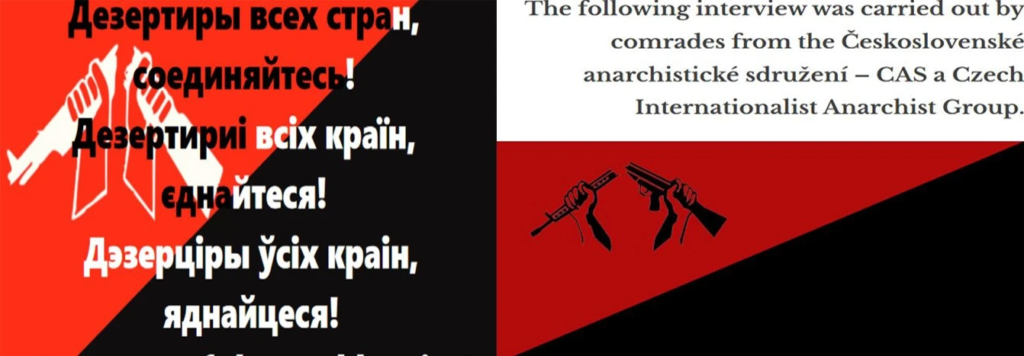
The visible allies of PSL and Peace From Below in the pacifist calls for the disarmament of Ukraine and the propaganda of desertion include the Kharkiv Assembly [48] (Ukraine), the Olga Taratuta Solidarity Initiative [49] (Paris, France), CAS (Czech Internationalist Anarchist Group, Czech Republic), KRAS [50] (Russia) and several European pacifist organisations holding congresses and street rallies “for peace”. Notably, the listed initiatives place themselves in the anarchist perspective.
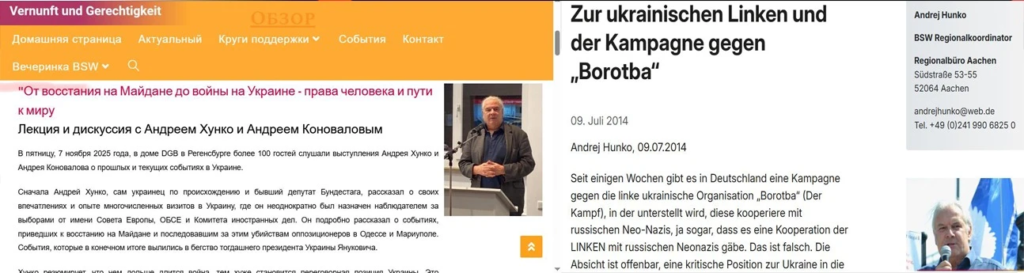
It is worth recalling that the left activists listed above, in the company of many other well-known anti-Ukrainian figures, signed similar resolutions “FOR PEACE” and against NATO in 2014 (“Zimmerwald 2014”) [51] to 2016. For instance, the slogan of the Final Declaration of the Social Forum in Wrocław (2016): “STOP MILITARISATION! DISSOLVE NATO!” Its participants “expressed their particular support for the people of Ukraine, now under the pressure of NATO”. The signatory A. Sakhnin is presented there as an activist from Ukraine. At the gathering, leftists describe the war in Ukraine as a “civil war and military conflict that followed the victory of neoliberals and nationalists at the Kyiv ’Euromaidan’, which has cost hundreds of lives and contributed to an unprecedented rise of chauvinism and xenophobia in Ukrainian and Russian society”. Substantively, such resolutions do not differ from the “pacifist” campaigns of the GRU referred to above.
Kremlin influence on the European left does not end with this list. If we look at the voting reports in the European Parliament, we see that it is precisely the left which votes in Russia’s interests.
The left parties in the European Parliament advocate an alternative foreign-policy approach, often criticising the Western world and depicting Russia as a peace-loving power historically challenging Western military interventions and seeking to reduce the influence of the USA and NATO in the EU.
A group of researchers published in 2024 in the ECPR journal an article “The Foreign Policy of the European Radical Left after Russia’s Invasion of Ukraine: Hardening Rhetoric on Russia”. They studied the reactions of European left parties to Russia’s invasion of Ukraine in 2014 and 2022 and concluded that in 2014 most supported the Russian version of events, according to which responsibility lies with NATO expansion, US imperialism and the EU’s desire to capture new markets. By contrast, during the full-scale invasion of 2022 the percentage of support and loyalty declined. Many left parties openly condemned Russia’s invasion, but did not join the demands for arms supplies to Ukraine.
Against the background of the prospects of 2026 and the obvious threat of war in European countries, there is still no unconditional consensus among the European left on providing full military support to Ukraine. [52].
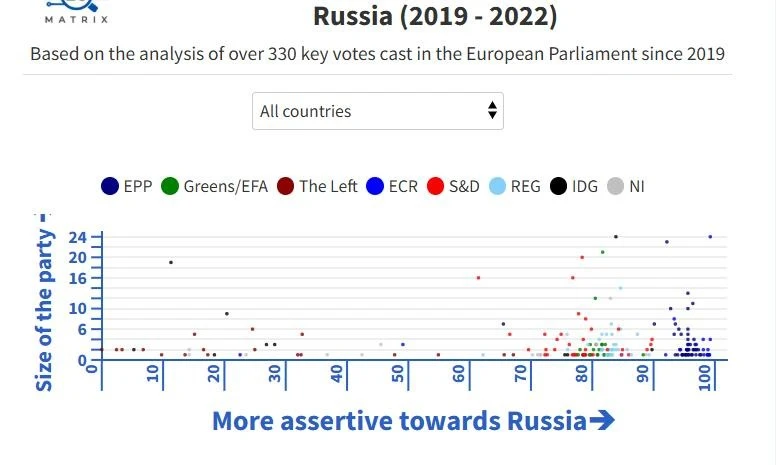
Thus, the influence schemes described above succeed perfectly in their aim of manipulating significant political forces and the decisions they take — as in the case of votes in the European Parliament.
The systemic logic of destabilisation of power and territorial integrity in the post-Soviet space
Russia is a revanchist state, feeling itself “wronged” after the collapse of the USSR. Putin came to power at the height of Russia’s second colonial war in Ichkeria (Chechnya) [53] in 1999 and has consistently developed the military logic begun in Soviet times and continued after the collapse of the USSR: the Chechen wars (1994–1996 and 1999–2009), the war in Syria (2015–2017), the wars in Karabakh (1988–1991, 1992–1994 and 2020) [54], the wars in Sakartvelo (Georgia) in 1992–1993 and 2008 [55], the annexation of Crimea (2014), Transnistria (1992) [56], the war in Donbas and the full-scale invasion of Ukraine (2014 and 2022).
What these military conflicts have in common is that Russia intervenes in the local politics of neighbouring, independent countries with the aim of destabilising the central government, violating territorial integrity, expanding its own military presence and, accordingly, its influence on the region. At the same time, Russia often refrains from calling its military invasions ‘wars’: instead, euphemisms are used — “counter-terrorist operation” (Chechnya), “special military operation” (Ukraine), “special tasks on the territory of the Syrian Arab Republic” (Syria). Or, by introducing Russian occupation troops into a region “to stabilise” the situation (Moldova, Ukraine), it terms the situation in those countries a civil war.
Russia considers it acceptable to interfere in the politics of neighbouring countries by military means, subsequently handing over power in those countries to figureheads controlled by the Kremlin. Often, this pattern of loyalty and regime change is implemented through economic and infrastructural blackmail.
Translator’s notes (by Adam Novak)
[1] Maria Dmitrieva, “Colonialism, decolonialism and the Russian left”, ESSF, 30 January 2025. Available at: https://www.europe-solidaire.org/spip.php?article77693
[2] The Russian term politтехнолог (political technologist) denotes a state-coordinated political consultant whose function is the systematic manipulation of electoral and protest politics, including through the creation of artificial parties, movements and “spontaneous” mobilisations. It is broader and more state-tied than the Western “spin doctor” or “PR consultant”.
[3] The Communist Party of the Soviet Union (Kommunisticheskaya Partiya Sovetskogo Soyuza, KPSS), the sole governing party of the USSR from 1922 until its dissolution in 1991. Several successor parties in the post-Soviet space claim its mantle, most prominently the Communist Party of the Russian Federation (KPRF) and, until its banning in 2015, the Communist Party of Ukraine (KPU).
[4] The self-declared “Luhansk People’s Republic” (LNR) and “Donetsk People’s Republic” (DNR), established in April 2014 on parts of the Luhansk and Donetsk oblasts of eastern Ukraine with direct Russian military, political and financial backing. They functioned as Russian proxies until their formal annexation by Russia in September 2022, alongside Zaporizhzhia and Kherson oblasts. See “How the Ukrainian Working Class Was Born — Discussion with Marko Bojcun”, ESSF, available at: https://www.europe-solidaire.org/spip.php?article61817
[5] Communist Party of the Russian Federation (Kommunisticheskaya Partiya Rossiyskoy Federatsii), the largest of the parties claiming continuity with the CPSU; second-largest party in the State Duma; supported all of Putin’s wars, including the full-scale invasion of Ukraine.
[6] The Kremlin’s propagandistic term for the pro-Russian unrest and Russian-backed armed actions in southern and eastern Ukraine in spring 2014 following the Revolution of Dignity; framed by Russian state media as a spontaneous popular uprising of Russian-speakers, in fact coordinated by the Russian Presidential Administration.
[7] Sluzhba Bezpeky Ukrayiny, the Security Service of Ukraine — its successor to the KGB’s Ukrainian branch.
[8] KPRF, original Russian text. Available at: https://web.archive.org/web/20161104011323/https://kprf.ru/kpss/159489.html
[9] Communist Party of Ukraine (Komunistychna partiya Ukrayiny). Under Petro Symonenko’s leadership, the KPU consistently sought the restoration of the USSR, supported Yanukovych’s pro-Russian foreign policy, opposed the 2004 Orange Revolution and the 2013–2014 Revolution of Dignity, and aligned itself with the “Russian Spring” of 2014. It was banned in Ukraine in 2015 under the “decommunisation” laws. For a contemporary discussion of its character, see Denys Pilash, “What socialists are doing in Ukraine”, ESSF, available at: https://www.europe-solidaire.org/spip.php?article62584
[10] The umbrella term for the loose coalition of pro-Russian and Russian-organised counter-protests against the Revolution of Dignity (Euromaidan) of November 2013 to February 2014, mainly active in eastern and southern Ukrainian cities and culminating in the seizure of regional administration buildings in Donetsk, Luhansk and Kharkiv in April 2014. The KPU, “Borot’ba” and pro-Russian “Cossack” and “people’s militia” formations played a central organising role. See “Political Information on Ukraine on 27 October 2014: elections, Maidan…”, ESSF, available at: https://www.europe-solidaire.org/spip.php?article35714
[11] Russian left coalition founded in 2008 around Sergei Udaltsov, including Stalinist, Marxist and trade-union currents. Initially active in the 2011–2012 anti-Putin demonstrations, it shifted after 2014 to active support for the “Novorossiya” project and after 2022 endorsed the full-scale invasion of Ukraine; collects humanitarian convoys for the Russian military.
[12] Russian Stalinist activist, former Komsomol secretary and member of the United Communist Party (OKP); appointed in 2014 to head the Moscow press office of the so-called “DNR Foreign Ministry”.
[13] Long-time Crimean Communist functionary and former chair of the Crimean parliament (1998–2002), notorious for his pro-Russian and anti-Crimean Tatar positions.
[14] The colloquial term for the unmarked Russian special forces who appeared in Crimea in late February 2014 and seized strategic buildings and infrastructure ahead of the staged annexation referendum of 16 March 2014. Putin initially denied Russian state involvement; he later confirmed it.
[15] The “Maidan”, short for Euromaidan or the Revolution of Dignity: the popular uprising in Ukraine from November 2013 to February 2014, triggered by President Viktor Yanukovych’s last-minute refusal — under Russian pressure — to sign an Association Agreement with the European Union. After three months of mass protest on Kyiv’s Maidan Nezalezhnosti, including the killing of more than a hundred protesters by riot police in February 2014, Yanukovych fled to Russia. For a contemporary leftist account, see Volodymyr Ishchenko (et al.) discussion in “Right Revolution? Hopes and Perils of the Euromaidan Protests in Ukraine”, ESSF, available at: https://www.europe-solidaire.org/spip.php?article31222
[16] “Borot’ba” (“Struggle”) was a Stalinist organisation in Ukraine founded in 2011 on the basis of the youth section of the Communist Party of Ukraine, led by Sergei Kirichuk, Andrii Manchuk, Alexei Albu, Viktor Shapinov and others. The name appropriated that of the historical Ukrainian left “Borotbisty” of 1917–1921 (the left current of the Ukrainian Party of Socialist Revolutionaries), to whom it bore no programmatic resemblance. “Borot’ba” organised the “Anti-Maidan” in Odesa, Kharkiv and Luhansk in 2014; a number of its activists subsequently fought in pro-Russian paramilitary units in the Donbas. It has been the subject of consistent criticism by Ukrainian leftists and anarchists. On the historical Borotbisty, see Ivan Maistrenko, “Borotbism, or the left currents in the Ukrainian revolution of 1917–21”, with foreword by Marko Bojcun, ESSF, available at: https://www.europe-solidaire.org/spip.php?article49200 ; for a recent critical assessment of contemporary “Borot’ba”, see “From Ukraine, an Open Letter to Zarah Sultana”, ESSF, available at: https://www.europe-solidaire.org/spip.php?article76841
[17] Boris Nemtsov: Russian liberal opposition politician, former first deputy prime minister under Yeltsin, leading anti-Putin and anti-war voice; assassinated in central Moscow in February 2015 shortly before publishing a report on Russian military involvement in the Donbas.
[18] Prizrak (“Ghost”) Brigade: a pro-Russian paramilitary unit active in the Luhansk region from 2014, commanded until his assassination in May 2015 by Alexei Mozgovoi. It drew on Russian and international “communist” volunteers alongside Russian neo-Nazi formations including “Rusich”; was incorporated into the Russian army during the 2022 full-scale invasion.
[19] Alexei Sakhnin: Russian political technologist and former leader of Left Front; one of the principal ideologues and “designers” of “Borot’ba”; consistent advocate of the organisation on the international left stage from 2014; co-organiser of the post-2022 Mir Snizu / PSL networks lobbying European leftists against arms supplies to Ukraine. For a critical assessment by Ukrainian comrades, see “From Ukraine, an Open Letter to Zarah Sultana”, ESSF, available at: https://www.europe-solidaire.org/spip.php?article76841 and “As a feminist living in Kyiv, I have nothing in common with the self-styled ’Post-Soviet Left’”, ESSF, available at: https://www.europe-solidaire.org/spip.php?article76858
[20] Russian National Unity (Russkoye Natsionalnoye Yedinstvo), the principal Russian neo-Nazi organisation of the 1990s, led by Alexander Barkashov.
[21] Alexei Mozgovoi (1975–2015): self-styled commander of the Prizrak Battalion; assassinated in the LNR in May 2015. Promoted as a “left” partisan figure (“Che Guevara of Donbas”) in Russian and Western pro-Russian propaganda, while in fact espousing White Russian, imperial and esoteric ultra-nationalist motifs.
[22] Italian rock band founded in Rome in 1987, drawing on ska, punk and folk traditions; associated with the militant Italian communist subculture. From 2014 it became one of the principal Western European “left” propagandists for the “Donbas People’s Republics”, organising the “Antifascist Caravan” of material aid to the occupied territories.
[23] Alexei Albu: former Odesa city councillor for the KPU, founding leader of “Borot’ba”’s Odesa cell. In May 2014 he was filmed calling for the deployment of Russian troops in Odesa; subsequently moved to the “LNR” where he became deputy chair of the “New Labour” trade union and a member of the expert council of the Moscow-based “Institute of Innovative Development”.
[24] Boris Kagarlitsky: Russian leftist sociologist; founder of the Institute of Globalization and Social Movements (IGSO); editor of Rabkor. In 2014 he supported the “people’s republics” project, attended international “antifascist solidarity” meetings with “Borot’ba”, and gave wide international currency to the framing of the war in Donbas as a popular anti-oligarchic uprising. After 2022 he opposed the full-scale invasion; in July 2023 he was arrested by the Russian authorities on charges of “justifying terrorism” and in February 2024 sentenced to five years’ imprisonment. For ESSF’s solidarity statement, see “Criminal case initiated against Russian leftist Boris Kagarlitsky”, available at: https://www.europe-solidaire.org/spip.php?article67281 ; for a qualified appreciation that explicitly names his 2014 mistake, see K.M. Seethi, “’Freedom for Boris Kagarlitsky’: Activists Globally Extend Support”, ESSF, available at: https://www.europe-solidaire.org/spip.php?article67856
[25] Institute of Globalization and Social Movements (Institut globalizatsii i sotsialnykh dvizheniy), the Moscow-based think tank co-founded by Boris Kagarlitsky; classified as a “foreign agent” by the Russian state in 2018.
[26] Igor Dodon: leader of the Party of Socialists of the Republic of Moldova (PSRM), president of Moldova 2016–2020; subsequently prosecuted on corruption charges. Long-time pro-Russian voice in Moldovan politics; on the post-2014 reorientation of Moldovan politics see Alexandru Leşanu, “Spicy political soup of post-Soviet Moldova”, ESSF, available at: https://www.europe-solidaire.org/spip.php?article68277 ; on the 2025 elections, see Lilia Nenescu and Vitalie Sprinceana, “Moldova’s Parliamentary elections were fought and won on Halloween scarecrows”, ESSF, available at: https://www.europe-solidaire.org/spip.php?article76506
[27] Sluzhba Vneshney Razvedki, the Foreign Intelligence Service of the Russian Federation.
[28] Partidul Comuniștilor din Republica Moldova, the Soviet-successor communist party of Moldova, in power 2001–2009 under Vladimir Voronin.
[29] Francisco Louçã, “Internationalism, Campism: The Two Identities of the Label-Driven Left”, ESSF, 22 December 2024. Available at: https://www.europe-solidaire.org/spip.php?article73703
[30] Simon Pirani, “Five questions for the western left on Ukraine and imperialism”, ESSF, 15 March 2026. Available at: https://www.europe-solidaire.org/spip.php?article78328 ; and “Palestine, Ukraine and the crisis of empires”, ESSF, 9 April 2024, available at: https://www.europe-solidaire.org/spip.php?article70416
[31] Sahra Wagenknecht: German politician, formerly the most prominent figure of Die Linke’s “social-conservative” current, founder of Bündnis Sahra Wagenknecht (BSW) in January 2024. Her 2023 “Manifesto for Peace” with the feminist publicist Alice Schwarzer became the principal vehicle for “left” opposition to German arms supplies to Ukraine. For a detailed assessment of BSW, see Manuel Kellner, “Sahra Wagenknecht and BSW”, ESSF, available at: https://www.europe-solidaire.org/spip.php?article70085 ; for the broader crisis of Die Linke produced by her current, see Steffen Lehndorff, “How DIE LINKE prepares the ground for reactionary forces”, ESSF, available at: https://www.europe-solidaire.org/spip.php?article65728 and Paul Mason, “The crisis in Die Linke”, ESSF, available at: https://www.europe-solidaire.org/spip.php?article66359
[32] Andrej Hunko: long-time Bundestag deputy (2013–2025), first for Die Linke and from 2023 for BSW; member of the Parliamentary Assembly of the Council of Europe (PACE) since 2010 and deputy chair of the European United Left group from 2015. Consistent advocate of “dialogue” with Putin’s Russia and of the campist framing of the war in Ukraine.
[33] Jean-Luc Mélenchon: French politician, founder of La France Insoumise (LFI) and three-time presidential candidate (2012, 2017, 2022). Supported the Russian annexation of Crimea in 2014, has consistently opposed arms supplies to Ukraine, and after 2022 lent his platform to Alexei Sakhnin and the PSL network. For an extended critique, see “Why Does Mélenchon’s La France Insoumise Lie about Ukraine?”, ESSF, available at: https://www.europe-solidaire.org/spip.php?article76008 ; on the wider French anti-militarist debate, see “In France, antimilitarist leftists are changing their stance”, ESSF, available at: https://www.europe-solidaire.org/spip.php?article74379
[34] Originally a grassroots commemoration of Soviet veterans of the “Great Patriotic War” launched in Tomsk in 2012, the “Immortal Regiment” was rapidly incorporated by the Kremlin into the post-2014 state cult of “Victory”, providing ideological cover for present-day military mobilisation. Participation by foreign left politicians on 9 May in Moscow has carried clear political significance since the annexation of Crimea.
[35] Glavnoye Razvedyvatelnoye Upravlenie, the Main Directorate of the General Staff of the Armed Forces of the Russian Federation, the foreign military intelligence agency.
[36] Adam Yam, “How Russia Uses ’Antifascism’ to Justify the War in Ukraine”, ESSF, available at: https://www.europe-solidaire.org/spip.php?article74151
[37] Michael Karadjis, “Putin accuses the West of ’Satanism’ to justify Russia’s colonial conquest of Ukraine”, ESSF, available at: https://www.europe-solidaire.org/spip.php?article64229
[38] The fatal Odesa clashes of 2 May 2014, in which more than 40 people died in the burning of the House of Trade Unions after the pro-Russian side opened fire on a march for united Ukraine, have been the subject of extensive subsequent disinformation. For a contemporary leftist account written immediately after the events, see “What happened in Odessa? Maidan, the Government, the Movement on the East”, ESSF, available at: https://www.europe-solidaire.org/spip.php?article31899
[39] Source: “Union boss Eddie Dempsey sang pro-Russian chants”, The Telegraph, 16 January 2026. Available at: https://www.telegraph.co.uk/news/2026/01/16/union-boss-eddie-dempsey-sang-pro-Russian-chants/
[40] “SVO” — Spetsialnaya Voennaya Operatsiya, “Special Military Operation”: the official Russian state euphemism for the full-scale invasion of Ukraine launched on 24 February 2022; its public use as a substitute for the word “war” is enforced by Russian law.
[41] Investigative project founded by the exiled Russian oligarch Mikhail Khodorkovsky and based in London, specialising in research on Russian state structures, security services and influence operations abroad.
[42] CODEPINK: Women for Peace: US-based feminist anti-war organisation founded in 2002 in opposition to the invasion of Iraq. From 2014 it has hosted speakers from Russian-state-aligned networks and has been criticised for amplifying Russian framings of the war in Ukraine.
[43] OKP: Obyedinyonnaya Kommunisticheskaya Partiya, “United Communist Party”, a Russian Stalinist split from the KPRF formed in 2014, supporting the “people’s republics” and the war.
[44] Post-Soviet Left (PSL): network established in 2023 around Alexei Sakhnin and a number of former CPU / “Borot’ba” / Left Front figures including Viktor Sidorchenko, presenting itself as a transnational Russian-Ukrainian left opposition. In practice it lobbies European left parties (Die Linke, La France Insoumise) and trade unions to reduce arms supplies to Ukraine, opposes mobilisation in Ukraine, and promotes desertion. The associated “Peace From Below” (Mir Snizu) coalition with Liza Smirnova was launched in 2023. For Ukrainian left and feminist critiques, see “From Ukraine, an Open Letter to Zarah Sultana”, ESSF, https://www.europe-solidaire.org/spip.php?article76841 ; and “As a feminist living in Kyiv, I have nothing in common with the self-styled ’Post-Soviet Left’”, ESSF, https://www.europe-solidaire.org/spip.php?article76858
[45] Territorial Recruitment Centres (Tsentry Komplektuvannia ta Sotsialnoi Pidtrymky), the Ukrainian agencies responsible for mobilisation; the focus of widespread complaints about coercive recruitment practices, which the pro-Russian and PSL networks systematically amplify.
[46] Mikhail Suslov (1902–1982): Soviet ideologist, Politburo member, principal “grey cardinal” of CPSU foreign policy and ideology under Brezhnev, with direct responsibility for international communist front organisations and the “peace” campaigns.
[47] transform! europe: network of European foundations and think tanks affiliated to the Party of the European Left, partly funded by the European Parliament; influential in shaping the “left” foreign-policy positions in Die Linke, La France Insoumise and allied formations.
[48] Kharkiv Assembly: small émigré platform associated with figures of the former CPU and the Sidorchenko milieu, positioning itself as a “left” Ukrainian voice abroad while opposing the Ukrainian state’s resistance to invasion.
[49] Named for Olga Taratuta (1876–1938), a Ukrainian Jewish anarcho-communist deported and executed in Stalin’s purges; the contemporary Paris-based “Initiative de solidarité Olga Taratuta” is a pro-desertion network linked to the PSL milieu, not to be confused with the historical anarchist tradition whose name it claims.
[50] Konfederatsiya Revolyutsionnykh Anarkho-Sindikalistov (“Confederation of Revolutionary Anarcho-Syndicalists”): small Russian anarchist organisation, the Russian section of the International Workers’ Association (IWA-AIT), which after 2022 has taken positions effectively aligned with opposition to arms supplies to Ukraine.
[51] The reference is to the historical Zimmerwald Conference of September 1915, organised by Lenin, Trotsky and others, which brought together socialists opposed to the First World War on the basis of revolutionary defeatism toward all the imperial powers. The appropriation of the name by pro-Russian “left” gatherings in 2014–2016 — and the self-designation of pro-Russian commentators as “new Zimmerwaldists” against Western arms supplies to Ukraine — inverts the original conference’s anti-imperial logic: in 2014 there was no symmetrical inter-imperialist war, but a colonial aggression by one state against another.
[52] André Frappier, “Porto Alegre: campism, internationalism and the absence of Québec solidaire”, ESSF, available at: https://www.europe-solidaire.org/spip.php?article78593
[53] Chechen Republic of Ichkeria: the independent state declared by the Chechen national movement following the collapse of the USSR; crushed in two successive Russian wars (1994–1996 and 1999–2009) marked by mass civilian casualties and the destruction of Grozny. Putin’s political ascent in 1999 was directly tied to the second of these wars.
[54] The Nagorno-Karabakh wars between Armenia and Azerbaijan, in which Russia consistently played a manipulative role aimed at preserving its leverage over both states. The 2020 Azerbaijani offensive was a strategic defeat for Russian-backed Armenian forces; the September 2023 Azerbaijani operation ended the existence of the unrecognised Republic of Artsakh.
[55] The first war (1992–1993) was the war in Abkhazia, ending in mass expulsion of ethnic Georgians and the establishment of a Russian-backed unrecognised state. The 2008 war saw Russia’s full-scale invasion of Georgia and the subsequent recognition by Russia of the breakaway “states” of Abkhazia and South Ossetia.
[56] The war in Transnistria of March–July 1992, in which the Russian 14th Army intervened on the side of the self-declared “Pridnestrovian Moldavian Republic” on the left bank of the Dniester, establishing the still-unrecognised Russian-backed enclave that persists today.
Maria Dmitrieva is a curator and artist, co-organiser of the autonomous cultural zone Studio 4413 (St Petersburg).
The Russian original of this article first appeared on syg.ma. This English version is based on a translation by Adam Novak, first published on the website of Europe Solidaire Sans Frontières, and a translation by Victoria Kravtsova, first published on syg.ma.
More content from this blog
- On May Day, I Light a Candle for the Silenced and Imprisoned Saudi Workers, by Hana Al-Khamri – 1 May 2025
- Name-calling in Myanmar: on people, by Andrew Selth – 28 February 2025
- Spillover Effect of Trump Administration Felt in Taiwanese Domestic Politics, by Brian Hioe – 12 February 2025
- The Meaning of ‘Genocide’, by Matthew Bolton – 5 June 2025
- China’s Forced Boarding Schools: The Systematic Erasure of Tibetan Cultural Identity, by Tibet Rights Collective – 15 January 2025
Except where noted otherwise, original writing and translations produced by the Left Renewal Blog Collective are published under a Creative Commons Attribution–NonCommercial–ShareAlike 4.0 licence. Republished and translated material remains subject to the licence and terms of its original publication.