Maduro’s kidnapping has exposed Beijing’s powerlessness. Billions invested in Latin America, but when Washington intervenes, China can only talk
The U.S. military operation that led to the kidnapping of Nicolás Maduro and his wife on the night of January 2–3 not only caught the Venezuelan regime off guard, but also its main international allies. China’s official Foreign Ministry statement used language it usually reserves for political assassinations and events with mass casualties. The capture of the Venezuelan leader by U.S. special forces caused what Chinese leadership officials described as “deep shock.” The condemnation was immediate and clear, but behind the diplomatic rhetoric lies a much more complex reality. Only six and a half hours before the American helicopters landed in Caracas, Qiu Xiaoqi, China’s special envoy for Latin American affairs, had shaken Maduro’s hand in the presidential palace to reaffirm Beijing’s support for the regime. The consequent diplomatic embarrassment is obvious.
Despite the condemnations and immediate demands for the presidential couple’s release, the words were not followed by any concrete action. This operational paralysis reveals much more about Beijing’s true global influence than China would like to admit. Maduro’s kidnapping occurred at a moment when China, while displaying military strength with impressive maneuvers around Taiwan conducted only three or four days earlier, is grappling with serious internal economic difficulties and massive purges in its diplomatic and military ranks. During such naval and aerial exercises — which featured the largest display of force ever seen in the Strait — the Trump administration maintained an ambiguous position that left many observers perplexed. The timing could not have been more significant. China today finds itself in a phase of evident structural weakness, with an economy that is losing steam month by month and a leadership that is desperately seeking détente with Washington at a time when many commentators believed bilateral relations were on course for another direct showdown.
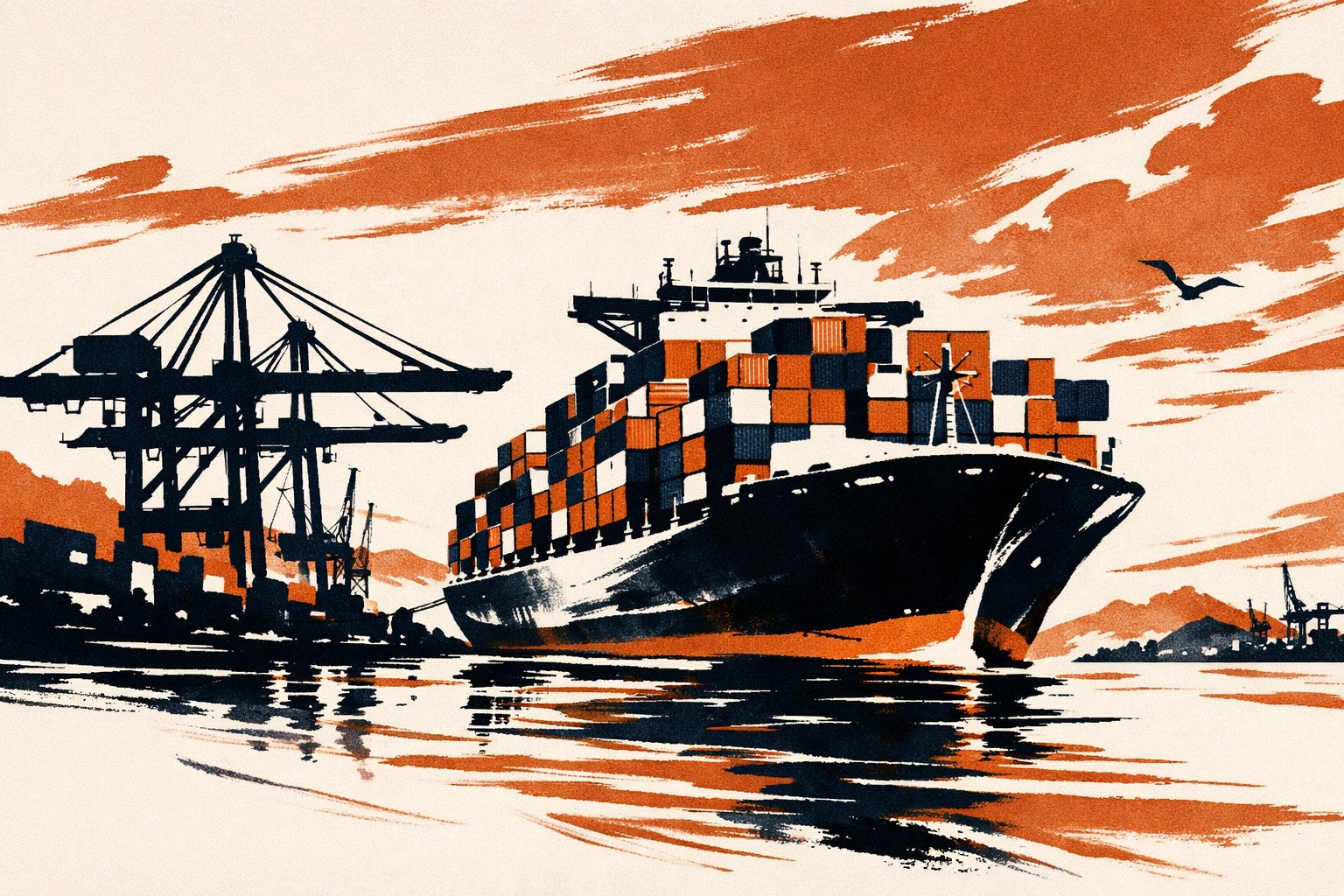
The U.S. military operation fits into the National Security Strategy published by the Trump administration in December 2024, which identifies U.S. dominance in the Western Hemisphere as an absolute priority. The document promises to enforce a new version of the Monroe Doctrine in a Trumpian key, explicitly stating that Washington will deny “non-hemispheric competitors” the ability to position forces or control strategically vital locations in the hemisphere. The reference to Chinese ports such as Chancay and energy facilities controlled by Beijing in Latin America is unmistakable: the kidnapping of Maduro is not an isolated episode, but the opening of a systematic campaign to reaffirm American hegemony in the region.
At the diplomatic level, what emerged in the hours after the kidnapping resembles a pattern we have already seen in other recent circumstances. When Iran suffered military attacks by Israel and the United States, Russia and China offered diplomatic support in words but remained inactive in deeds. When Assad’s regime collapsed in Syria, Moscow could only hurriedly evacuate the dictator without being able to prevent the government’s fall. Now Venezuela is added to this list of allies abandoned in their moment of need. Russia, a traditional ally of Caracas, took hours to react and, when it did, issued three separate statements that revealed hesitation and confusion. Foreign Minister Lavrov limited himself to expressing “strong solidarity” in a phone call with Venezuelan Vice President Delcy Rodríguez, without any mention of concrete measures. Fiodor Lukyanov, a political analyst close to the Kremlin, candidly admitted that “it is unlikely that the Kremlin will disrupt its entire game with a crucial partner like Trump over secondary issues.” Russian military bloggers, often aligned with the defense establishment, expressed frustration that the United States carried out a genuine “special military operation” while Russia “has been fighting in Ukraine for four years” without comparable results. Economic concerns weighed even more than strategic considerations. If Washington were actually to take control of Venezuela’s oil fields, it would control more than half of the world’s crude oil reserves, with direct consequences for a Russian economy that depends almost entirely on hydrocarbon exports.
The lukewarm response from Beijing and Moscow has not gone unnoticed on Chinese social media, where posts about the American operation generated more than 440 million views on the platform Weibo. Many commentators saw the U.S. military action as a possible model for resolving the Taiwan question, with calls for a similar raid on Taipei to capture President Lai Ching-te. However, this interpretation appears more a product of online nationalism than a realistic analysis of China’s military capabilities. Drew Thompson, an expert on Asian military affairs cited by Bloomberg, observed that the People’s Liberation Army lacks all experience in this type of operation, which requires decades of training in hostile environments. U.S. special forces that conducted the raid in Caracas represent the culmination of a long operational tradition that China simply does not possess. Thompson suggested that if Beijing wanted to neutralize Taiwanese leadership, it would have greater chances with targeted assassinations rather than complex capture operations.
Perhaps the clearest analysis is the one published in the Wall Street Journal on November 30, well before Maduro’s kidnapping, in which the newspaper described Venezuela as a laboratory where China is discovering the concrete limits of its global influence. Russia and China have proven essentially powerless in the face of American threats to act against Venezuela. For Moscow, the cost of the war in Ukraine limits any capacity to project power elsewhere. For Beijing, a struggling economy shrinks the room for maneuver precisely when both powers are trying to negotiate deals with the Trump administration. Wasting political capital on Venezuela does not seem to be a priority for either. Trump’s promise to continue selling Venezuelan oil to China and other buyers added further uncertainty. The U.S. president was quick to reassure Beijing by saying, “We’re in the oil business; we’ll sell it to them,” but at the same time he threatened 60% tariffs on goods transiting through the new Chinese megaport of Chancay in Peru. The proverbially erratic nature of Trump’s statements makes it difficult to predict what U.S. policy will actually be, and the situation on the ground remains unclear for now.
Venezuela as a Laboratory of Chinese Influence
The uncertainty about Venezuela’s future and the real capacity of the United States to control the country stands in stark contrast to the certainty of the numbers that tie Caracas to Beijing. Venezuela is China’s largest debtor in Latin America, with about $60 billion in Chinese state loans granted since 2005 — almost double what Brazil owes, the second-largest debtor. These funds have been directed mainly toward energy and infrastructure projects through the so-called “oil-for-loans” program, whereby repayment is made through oil supplies rather than currency. According to data from the think tank Beyond The Horizon, as of December 2025 Venezuela still owed China about $12 billion, while Forbes calculated that this exposure represents the largest commodity-backed position of any single country in China’s entire overseas loan portfolio. This financial entanglement creates a paradoxical situation. China has too much to lose to completely abandon Maduro, yet the sheer scale of the financial exposure limits its ability to risk a direct confrontation with Washington that could jeopardize other more vital interests.
Venezuelan oil flows through the arteries of the Chinese economy with a regularity that even U.S. sanctions have not completely interrupted. China absorbs between 80% and 90% of Venezuelan crude exports, depending on different estimates, at a time when oil represents 95% of the South American country’s total revenues. Before the U.S. quarantine on oil exports, Venezuelan crude accounted for about 10% of China’s oil imports at discounted prices. If Beijing were to lose Iranian supplies due to ongoing internal unrest there, China might need to replace nearly one-third of its crude imports — a devastating blow for an already troubled economy. In March 2025, Venezuelan exports to China reached 400,000 barrels per day, the highest level since 2023. This flow occurs through a network of opaque intermediaries using a so-called “ghost fleet” of tankers — a parallel commercial system that represents one of the largest documented evasion operations of international sanctions, revealing the complexity of the interests involved and the difficulties Washington has encountered in trying to stop the flows.
The China–Venezuela relationship has also assumed a military dimension that goes far beyond mere trade. After the U.S. banned all commercial arms sales to Venezuela in 2006, China became the regime’s main supplier of military equipment. Between 2009 and 2019, Beijing transferred Chinese arms worth $634 million to Venezuela — the largest single recipient among the top five Latin American buyers of Chinese weaponry. Cuba, another close ally in the region, hosted several visits by Chinese naval vessels in recent years. Chinese satellite stations operate on Venezuelan territory as part of Beijing’s global space network, with Chinese technical personnel present inside the country.
The penetration of Chinese technology in Venezuela has taken particularly intrusive forms reminiscent of social control models developed in the People’s Republic. In 2016, the Maduro government introduced the so-called carta de la patria, a digital identity document developed with Chinese technology that activists fear may be used for mass surveillance and systematic privacy violations. This system is part of a broader model of technology export that China has replicated in several Latin American nations, always justified officially as a fight against crime and an improvement in public security.
On paper, the China–Venezuela relationship was elevated to the rank of a “comprehensive strategic partnership,” a designation Beijing uses for its closest allies. Xi Jinping himself publicly defined the tie as a commitment that should withstand any storm. Qiu Xiaoqi, the envoy who met Maduro hours before the U.S. raid, was in Caracas to review the roughly 600 political and economic agreements that link the two countries. In May 2025, Xi personally wrote to Maduro assuring that China would always support Venezuela “in safeguarding sovereignty, national dignity, and social stability,” but when Maduro sent explicit requests to Beijing, Moscow, and Tehran in the months leading up to the kidnapping — seeking arms and military assistance in the face of growing American pressure — these requests were largely ignored. To make matters worse, the Chinese radar systems already installed in Venezuela failed to detect the approach of U.S. special forces, replicating the humiliating failure of Chinese and Russian equipment during Israeli-American strikes in Iran. This public display of military ineffectiveness further undermined China’s credibility as a reliable military supplier. This public demonstration of Chinese military ineffectiveness confirms what had already emerged on the diplomatic front — China has too much to lose to formally abandon Venezuela, but it has even more to lose in a potential confrontation with Washington, especially in its current state of structural weakness. Defending Maduro in earnest would mean putting the relationship with the Trump administration at risk — a price Beijing evidently is unwilling to pay.
Latin America in China’s Orbit: Between Rise and Resistance
The Venezuelan case is not isolated; rather it represents the extreme version of a relationship that China has built with the entire Latin American region over the past 25 years. Trade between Beijing and the region exploded from $12 billion in 2000 to between $450 and $520 billion in 2023 and 2024, with an average annual growth rate of 31% between 2000 and 2008, during the commodities boom. China today is the second-largest trading partner of Latin America overall, after the United States, but it has become the largest for South America taken separately, having overtaken Washington as the main partner of Brazil, Chile, Peru, and others. Between 22 and 24 of the 33 member countries of the Community of Latin American and Caribbean States (CELAC) have joined the Belt and Road Initiative, with Colombia formally joining in May 2025 and Panama leaving under U.S. pressure in the same period. State-owned Chinese banks have extended over $120 billion in loans to Latin American governments since 2005, although new loan commitments have collapsed in the 2020s, dropping to near zero in some periods. In the first half of 2025, despite a global record of $123 billion in Belt and Road Initiative commitments, Latin America received only 1.14% of construction commitments and 0.4% of total investments, signaling a possible decline in the region’s relative priority for Beijing.
Symbolic projects of China’s expansion reveal both the ambitions and the limits of this strategy. The Chancay port in Peru, inaugurated in November 2024 by Xi Jinping in person, required a $3.6 billion investment, $1.3 billion of which came from the state-owned COSCO, which holds 60% ownership. With a projected capacity of 1.5 million containers per year, the port is meant to reduce shipping times between South America and Asia by 10 days. Another major project remains on paper: the Transoceanic Railway that is to connect the Brazilian Atlantic with the Peruvian Pacific, crossing the Amazon and the Andes. With an estimated cost of over $50 billion, the project faces technical, environmental, and bureaucratic obstacles and remains in the feasibility study phase despite being conceptually launched in 2014. At the center of this network of interests stands Brazil, which Xi defined as “the most important regional partner” and “an anchor” for financial integration based on the renminbi. During Lula’s visit to Beijing in May 2025, the two countries signed 37 bilateral agreements and elevated their partnership to a “China-Brazil Community with a Shared Future for a More Just World and a More Sustainable Planet.” A currency swap of 190 billion renminbi (equivalent to $26 billion) was renewed for five years, and cooperation was extended for the next 50 years in sectors ranging from sustainable infrastructure to aerospace, agriculture to technology. Lula openly criticized U.S. efforts to impose taxes globally, while Xi described Brazil as a key partner to co-lead the “global south’s” response to geopolitical fragmentation.
The sectors through which China has penetrated Latin American economies paint a map of Beijing’s strategic interests: In energy alone, $73 billion was invested between 2000 and 2018, particularly focused on lithium in the so-called Lithium Triangle formed by Argentina, Bolivia, and Chile, which contains about half the world’s reserves. In 2023, China spent $3 billion to acquire two electricity providers in Peru, consolidating a near monopoly in the country’s electricity distribution. On the technological and digital front, Huawei dominates 5G networks across much of the continent, despite U.S. cybersecurity warnings, with over half of Brazil’s 3G and 4G networks using Chinese equipment. Cooperation extends to artificial intelligence, smart cities, cloud computing, and big data. In Ecuador, Bolivia, and Venezuela, Chinese surveillance systems including facial recognition have been installed. The military and security dimension, already highlighted by the Venezuelan case, extends throughout the region. A CELAC-agreed action plan includes initiatives for cooperation on cybersecurity, counterterrorism, and transnational crime, proposing mechanisms linking national emergency cyber response teams. At the CELAC forum in Beijing in May 2025, Xi announced a credit line of 66 billion renminbi (about $9.2 billion) for development projects, along with a joint 2025–2027 action plan covering over 50 cooperation domains.
Behind the impressive numbers and grand projects, however, lies a far more problematic reality that is generating growing resistance at the local level. A United Nations report published in 2023 analyzed 18 Chinese projects across five Latin American countries and concluded they systematically violated human rights in local communities. Environmental and social impacts are in many cases devastating. In Peru, the Las Bambas mine has repeatedly faced roadblocks by the Fuerabamba community. In Ecuador, the Rio Blanco mining project sparked mobilization by the Waorani community, whose members charged that “the Chinese are the new colonizers destroying the harmony of our land.” In Argentina, dam construction on the Santa Cruz River was begun without an environmental impact assessment, forcing the Supreme Court to order a halt. In Molleturo, again in Ecuador, residents organized resistance strategies against another Chinese mining project. The fundamental problem, according to field researchers, is that Chinese companies do not regard local communities as valid counterparts, recognizing only national governments as negotiating partners. Companies operate with a “Chinese for Chinese” logic — segregating workers, bringing cooks from China, establishing separate camps, and treating social peace as irrelevant.
The environmental issue intertwines with that of economic reprimarization, a process through which Latin America is pushed back into its historical role as an exporter of raw materials rather than diversifying toward manufacturing and services. China purchases mainly soybeans, copper, oil, and lithium from the region, while exporting high value-added manufactured goods, electronics, and machinery. Instead of acting as an agent of productive diversification, Beijing reinforces long-standing economic dynamics that keep these countries dependent on a narrow range of primary commodities. Chinese companies also bring lower environmental and labor standards than Western ones, operating according to what has been described as a “corrupt model” in which workers’ rights are not respected and segregation is the norm. So-called debt traps represent another critical issue. Venezuela, Ecuador, and Argentina are accused of having fallen into situations of unsustainable indebtedness that may lead to default and the loss of control over strategic assets, with several countries now seeking to renegotiate the terms of their debt with Beijing. Finally, many infrastructures have dual civilian and military uses. The port of Chancay, space facilities in Argentina, and Huawei telecommunications systems could be employed for military or intelligence purposes in the event of conflict. In December 2025 it emerged that the People’s Liberation Army had conducted military exercises simulating combat operations in the Western Hemisphere, with scenarios involving Cuba, the Gulf of Mexico, and the Caribbean. Ports capable of accommodating mega-container ships can also host Chinese warships—an unsettling prospect for local populations.
The overall picture that emerges is a paradoxical one. While China is slowing its commitments in the region due to internal economic difficulties, opinion polls show that in Mexico nearly two-thirds of respondents prefer doing more business with Beijing rather than with Washington, and similar majorities exist in Brazil, Chile, Colombia, and Peru. Yet this public preference contrasts sharply with the reality of Beijing’s relationships with the region. China’s allies are not Latin American populations, but governments—often authoritarian—that find China’s model of cooperation without apparent political conditions convenient. The Venezuelan case has provided a clear answer regarding the nature of this support. When an allied regime came under direct attack, the empire of raw materials proved either unable or unwilling to do anything beyond issuing statements of condemnation. Chinese influence in Latin America thus appears broad but fragile, commercial rather than strategic—capable of eroding American predominance in routine affairs, but powerless in moments of genuine crisis.
Andrea Ferrario is an Italian international politics blogger with a focus on East Asia. He has collaborated with the weekly magazine Internazionale and is co-editor of the website Crisi Globale.
The Italian original of this article was first published on the author’s Substack. This English translation was first published on the Left Renewal Blog.
More content from this blog
- Antisemitism Is Exploding on the Right but the Jewish Establishment Is Focused on the Left, by Jay Michaelson – 16 March 2026
- Hindu Supremacy and the Multiracial U.S. Far Right, by Savera – 30 October 2024
- Mali: Wagner’s Atrocities, by Paul Martial – 24 December 2025
- Pro-Natalism: In Bed with the Right, with Adrian Daub and Moira Donegan – 27 August 2024
- K. Balagopal’s Incisive Essays on Caste, Communalism and Rise of State Authoritarianism in India, by Jairus Banaji – 10 February 2024
Except where noted otherwise, original writing and translations produced by the Left Renewal Blog Collective are published under a Creative Commons Attribution–NonCommercial–ShareAlike 4.0 licence. Republished and translated material remains subject to the licence and terms of its original publication.