The Crackdown on Anti-ICE Activists in Texas Reflects a Pattern of Intensifying Repression
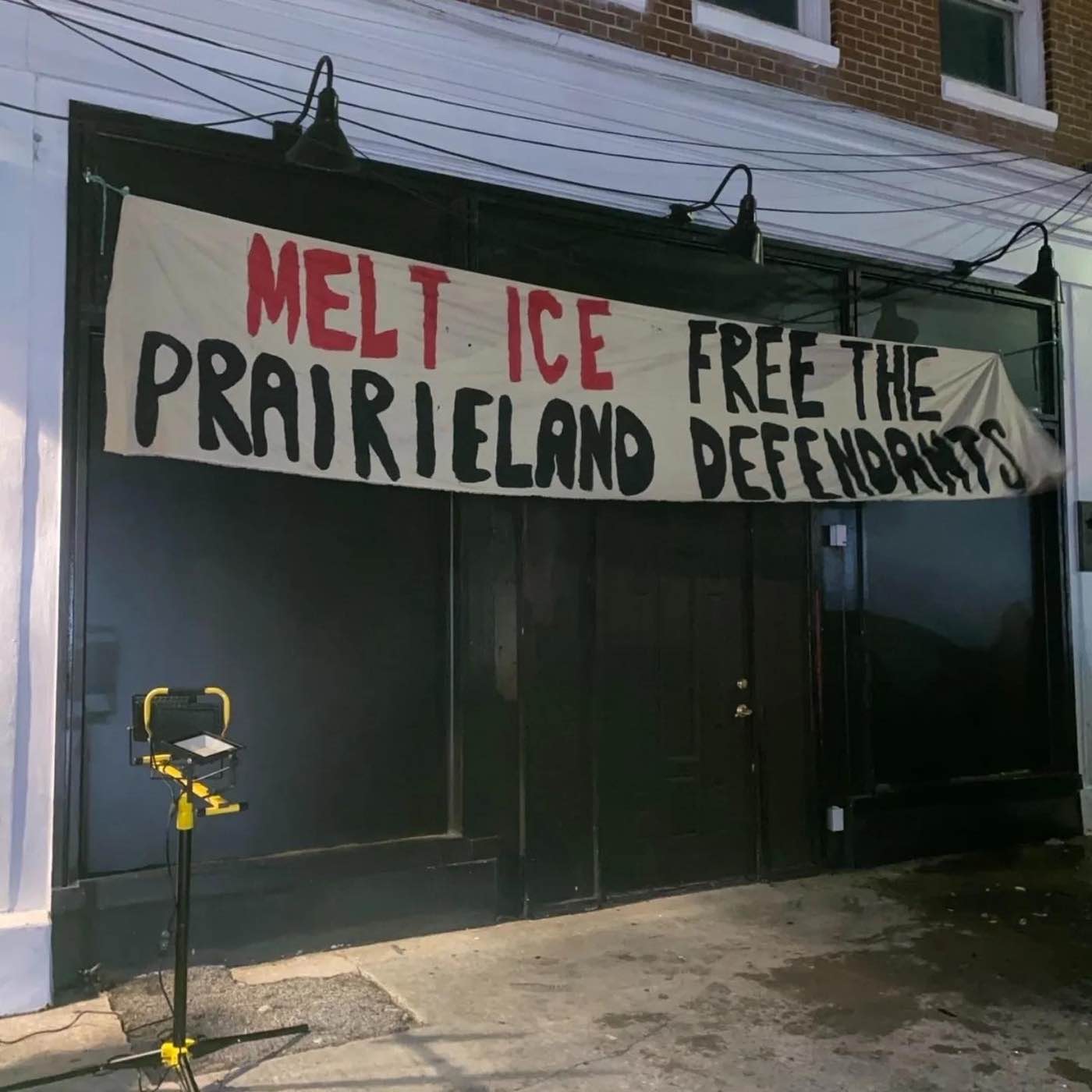
On July 4, roughly a dozen people participated in a demonstration at the Prairieland Detention Center, a facility imprisoning immigrants facing deportation proceedings. When the police responded, gunfire erupted, with one officer reportedly being injured. Today, nineteen people—some of whom apparently neither participated in the demonstration nor set foot anywhere near the Prairieland Detention Center—are accused of “providing material support for terrorism” as well as rioting, carrying an explosive, firearms, attempted murder of a federal employee, and other charges. Eighteen of them remain in jail.
Prosecutors have sought to fabricate a criminal enterprise involving not only the participants in the demonstration but whoever else they could find to target, charging arrestees’ partners and even a member of a support committee. Considering that spreading outright falsehoods is standard policy for the Trump administration and its supporters, it is likely that at least some of the allegations that federal authorities and right-wing media have circulated about the Prairieland defendants have no factual basis.
This case is intended to set a precedent criminalizing protest and intimidating people out of organizing in solidarity with immigrants and defendants. On February 17, jury selection will begin for a trial involving nine of the defendants.
Here, we will explore the what the stakes of this case are for people around the country.
Repression and Resistance
During the fierce protests in response to the murder of George Floyd in May 2020, police arrested thousands of people. Hundreds of thousands responded by donating to bail funds. By summer’s end, the Minneapolis Freedom Fund had taken in nearly $40 million. Other solidarity groups pulled in millions more.
At the same time, overnight vigils sprang up outside jails, where supporters offered arrestees a hug or a cigarette or a ride home. The protests spread across the country while the state’s strategy of repression collapsed into clumsy improvisation. Clerks misfiled reports, delays piled upon delays, courts dropped cases by the thousands. The state retreated.
Over the past decade, grassroots movements have demonstrated that it is possible to disrupt entrenched power structures from police departments and immigration enforcement to university administrations. Institutions that have no cause to fear for their control do not need to charge activists with terrorism, conspiracy, or racketeering. Just as the United States government is resorting to illegal wars, airstrikes, and kidnappings to preserve its global dominance, law enforcement agencies are increasingly turning to outrageous or criminal means to suppress domestic protest movements. While this is frightening, it also indicates these movements’ effectiveness. The government’s desperation is a consequence of popular resistance. The struggles of millions of people have the potential to bring about real change.
When we look back on the last few decades, we can see this story everywhere: communities pushing back against the attacks of the state.
But there is another pattern, too.
What happens when people don’t push back against repression? To see the answer, we need look no further than a current court case against nineteen people in Northern Texas. They face a combination of federal and state charges for their alleged connection to a July 4, 2025 demonstration outside the Prairieland Detention Center in Alvarado, Texas. In the silence surrounding this case, federal authorities are trying to get away with more and more, aiming to take advantage of this passivity to set dangerous new precedents.
This case represents a strategic escalation in a decades-running campaign to expand state repression, criminalize dissent, and lay the groundwork for an all-out assault on grassroots movements.
To support the non-cooperating Prairieland Defendants, start here. To support the 2020 George Floyd rebels still locked up in prison, start here.
The Noise Demo
On January 20, the first day of his second term, Donald Trump signed several executive orders aimed at terrorizing immigrants. These orders handed the Department of Defense responsibility for US border strategy while restricting legal pathways to lawful residency. The government designated several foreign narcotics traffickers as “Foreign Terrorist Organizations” and sharply reduced the number of permitted migrants.
In the year since, Homeland Security, Customs and Border Patrol, and other federal agencies have stalked US cities in balaclavas, kidnapping people at random. They have joined local authorities and agents in raiding workplaces, churches, schools, clinics, farms, and hospitals. They have staged public acts of intimidation and violence, smashing car windows, snatching children from their parents, stopping school buses. While immigration authorities have long conducted themselves this way at the borders, the new strategy focuses on publicly terrorizing immigrants throughout the country, inducing a number of people to “self-deport”—an official euphemism for fleeing the country in fear. Authorities have also set out to criminalize anyone who supports these embattled communities.
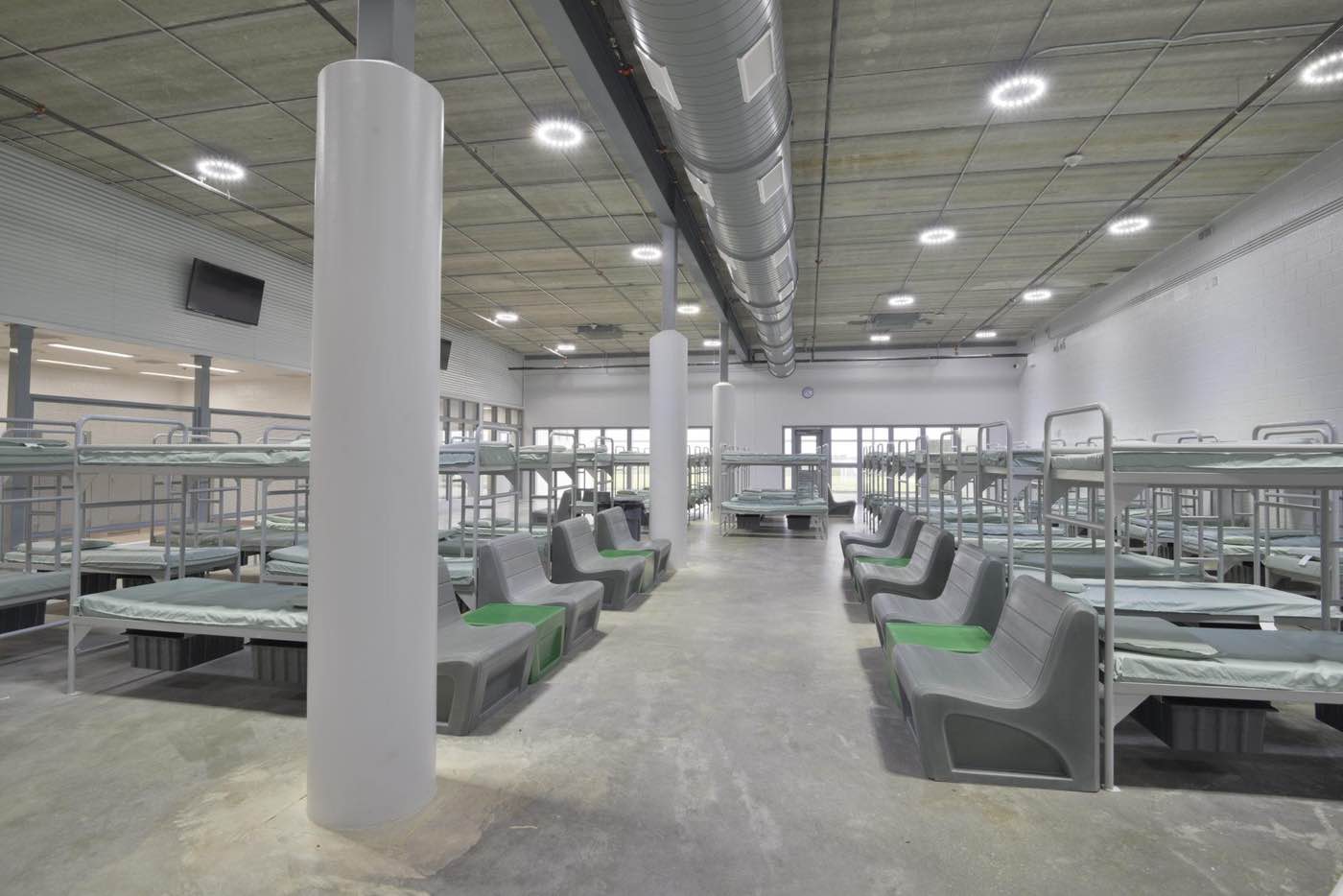
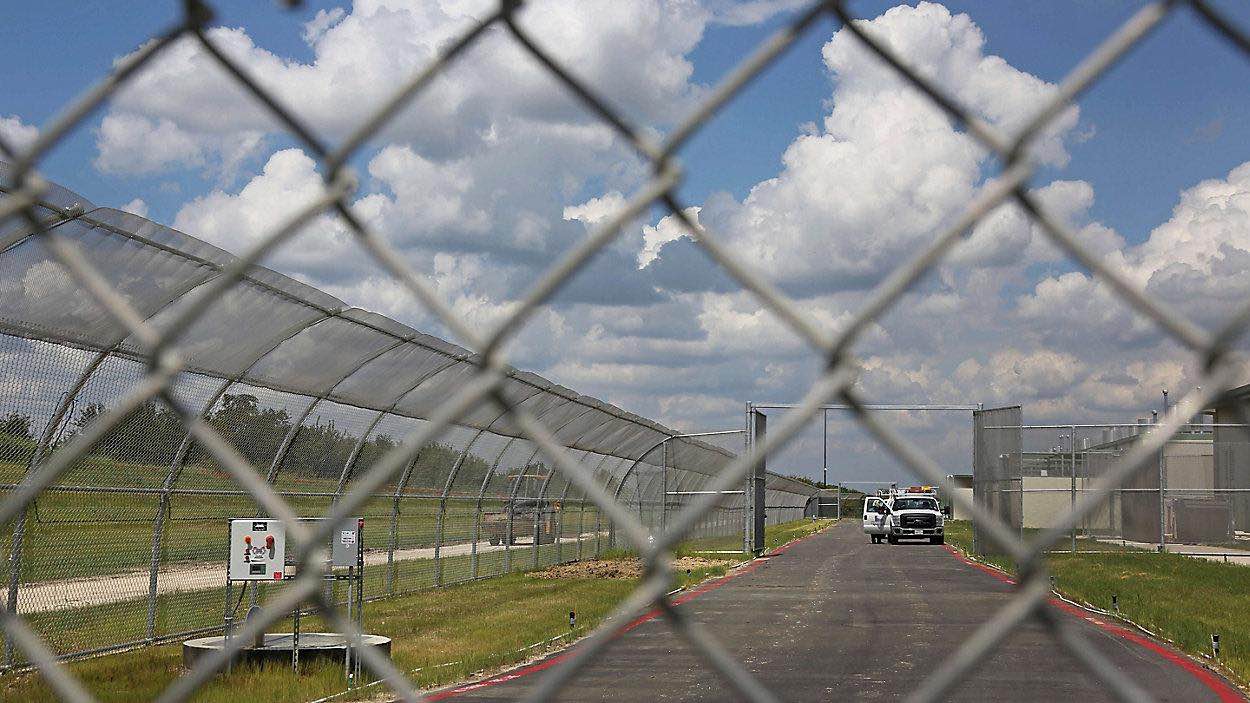
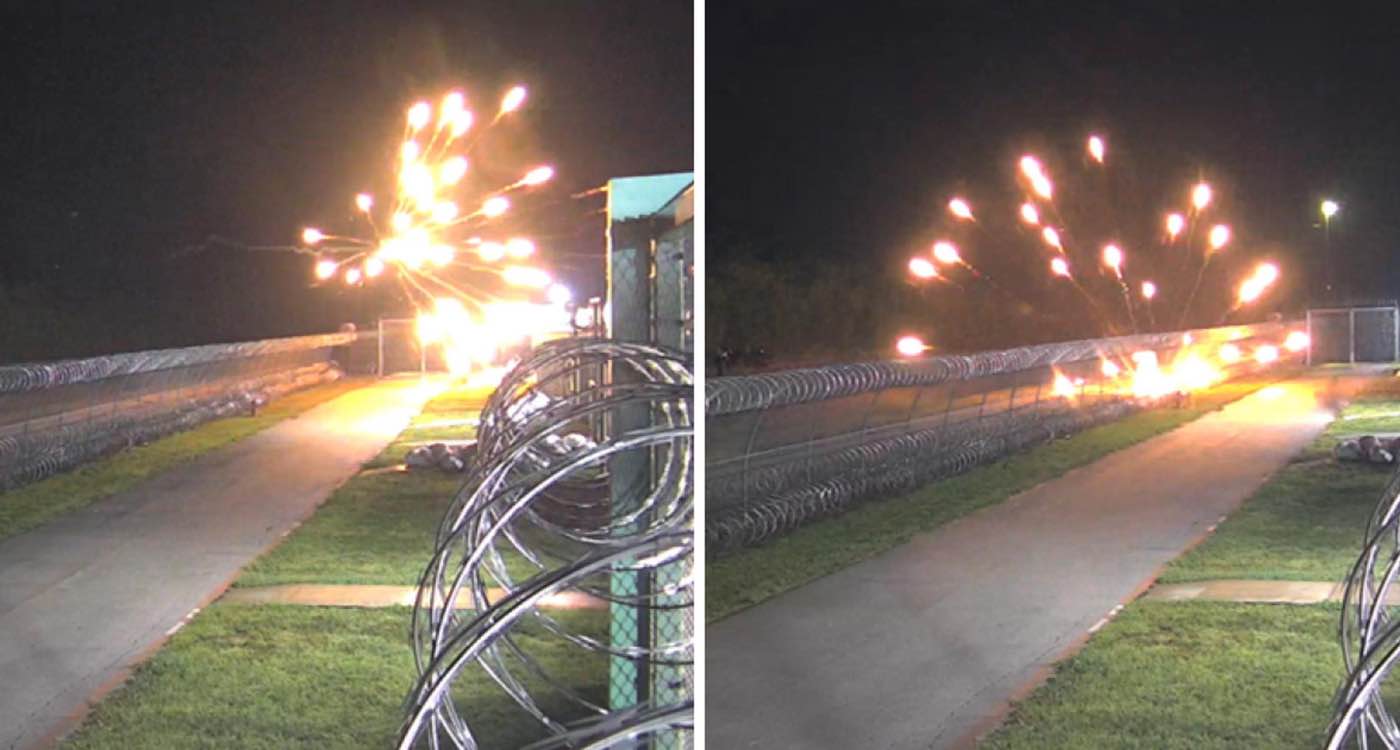
On July 4, 2025, police in Alvarado, Texas arrested nine people near the Prairieland Detention Center. According to a criminal complaint filed on July 7, Federal Bureau of Investigation Special Agent Clark Wiethorn claimed that a dozen protesters assembled outside the facility, shooting fireworks and vandalizing vehicles. Wiethorn claimed that when police arrived, “1-2” shooters fired dozens of rounds at them, hitting one officer in the neck. He later revised this claim to allege that only one shooter fired a much smaller number of shots, with a total of 11 casings being found in the area. They also later clarified that the “injury” to the officer was not life-threatening. The officer left the hospital within a few hours. The court has yet to make the medical records of this alleged visit public.
Subsequently, police raided nine homes connected to the arrestees and launched a manhunt for one of the accused. By July 10, they had arrested Benjamin Song on allegations of firing an AR-15 at law enforcement. More raids followed. They targeted at least 20 homes in connection to the protest.
On September 22, 2025 Donald Trump signed an executive order titled “Designating Antifa as a Domestic Terrorist Organization.” Technically, there is no such designation under US law. Following this executive order, federal agents knocked on doors, raided homes, and launched dragnet-style investigations targeting people across the country. The National Presidential Memorandum 7 (NSPM-7), issued on September 25, orders law enforcement to “disband and uproot networks, entities, and organizations that promote organized violence, violent intimidation, conspiracies against rights, and other efforts to disrupt the functioning of a democratic society.”
The government has repeatedly used the Prairieland case to justify this broader crackdown. Authorities argued that the events surrounding the demonstration in Alvarado represented an existential threat to the United States. They aim to use the Prairieland case to further criminalize protest movements across the country.
The Aftermath of the George Floyd Rebellion
To understand how the Prairieland case became possible, we must look at the years preceding it to see how repression evolved after the George Floyd uprising.
The government tried and failed to stop the 2020 revolt with outright force. Afterwards, it sought to attack the demographics that participated in the rebellion one at a time. In the six years following that uprising, federal, state, and municipal authorities have sought to crush racialized teenagers and youth, anarchists, bail funds, anti-war protesters, immigrants, “anti-fascists,” and gender nonconformists via a variety of means. To see the clampdown in Texas in context, we must review this pattern.
The Repression of the Car Scene
The state tests its tools on marginalized groups, then expands them wherever it can.
A youth car subculture focused around street takeovers and racing spread nationwide in the years leading up to 2020. Participants in this subculture, largely young Black and Latino men, regularly clashed with police who interfered with their collaborative and unmonetized events.
During the 2020 George Floyd riots, this subculture repeatedly played a critical role in protest infrastructure. Participants blocked roads, coordinated large-scale caravans, and enabled rapid movement across metropolitan areas, spreading unrest far beyond city centers. As the protests waned, millions rallied to defend “protesters,” but few came to the defense of “drag racers,” even where these groups overlapped.
Failing to defend this scene has had serious consequences.
Over the last five years, police departments across the country have built dedicated “street racing” units. The repression of the street takeover scene has dragged thousands of young people—many of whom played roles in the 2020 protests—into the carceral system without provoking public backlash. Using this approach, the state successfully piloted a model of mass surveillance and criminalization under the cover of traffic safety and public order. By 2025, Automated License Plate Readers were tracking immigrants and abortion seekers. What began as a crackdown on street racers became infrastructure for monitoring everyone.
Targeting Protest Movements
Every large protest movement in the US since 2020 has faced police brutality and politicized prosecution. New forms of harassment, intimidation, and prosecution suggest that the government intends to suppress all meaningful forms of dissent.
Defend the Forest, Stop Cop City
Between 2021 and 2024, authorities sought to suppress a popular direct action movement resisting the imposition of a police militarization facility on Atlanta, Georgia. As courageous protesters fought against the construction of Cop City, police raided homes, suppressed a local referendum, doxed the signatories on the government website, charged dozens of accused protesters with “domestic terrorism,” and charged bail fund organizers alongside 58 other arrestees with racketeering. They killed one protester, Manuel Esteban “Tortuguita” Paez Teran.
For years, federal officials have sought to create a basis for using these kinds of charges against protest movements. Due to the movement’s robust support and solidarity efforts and the incompetence of local authorities, in Atlanta, this strategy has not gone well for the state. Despite bringing felony charges against over 100 people and RICO charges against 61, the government failed to compel even a single person into collaborating with the police against other defendants.
However, all of this violence and intimidation stymied resistance to the project. This was the authorities’ primary goal: to use police violence, judicial harassment, and punitive charging to suppress a powerful social movement.
Gaza Solidarity Encampments
In spring 2024, protests broke out across the United States against the US-backed invasion of Gaza in which the Israeli military systematically carried out the genocide of Palestinians. Students and community members established a protest camp at Columbia University. Crowds assembled and attempted to establish similar protest camps at campuses around the country. In response, police repeatedly attacked students involved in the Gaza solidarity encampments, using tear gas, pepper balls, flash-bang grenades, tasers, and other forms of violence.
Later that fall, the US and Canadian governments designated the Samidoun Palestinian Prisoner Solidarity Network a “terrorist organization” for its alleged connections to the Popular Front for the Liberation of Palestine. The US government accused Samidoun’s fiscal sponsor, the Alliance for Global Justice, of operating a “sham charity.” This echoed some of the language used to describe the Network for Stronger Communities, the non-profit sponsor of the Atlanta Solidarity Fund, a target of the Cop City RICO case.
When their primary goal is to terrorize the public, the authorities test the boundaries of their power by attacking the most visible targets.
Anti-ICE Protests
In summer 2025, Los Angeles exploded in revolt against the violence perpetrated by Border Patrol and Immigration and Customs Enforcement agents. During the months leading up to this, Mexican, Salvadoran, and other community groups had developed their capacities to coordinate and mobilize people through walkouts, marches, information sessions, and limited strikes, such as the February “Day Without Immigrants.” Agricultural workers from Latin America engaged in a kind of rolling strike, leaving industrial agriculture with skeleton work crews as many stayed home or limited their time in the fields for fear of detention or arrest. This drove up the cost of groceries, sapping Trump’s approval ratings.
On June 13, as riots and confrontations spread across the country, federal authorities arrested Alejandro Theodoro Orellana for allegedly passing out face masks to protesters. Prosecutors charged him with “Conspiracy to Commit Civil Disorders,” though a court later dropped his charges.
As the nationwide protests waned, the Federal government deployed National Guard, Homeland Security, and US Marines to Los Angeles, Chicago, Washington, DC, Memphis, and New Orleans. By July 2025, these experiments in repression had set the stage for the Prairieland case.
Reading the Pattern
The Prairieland case is the latest attempt to stabilize a system that has been unsettled by powerful grassroots movements. It is an effort to normalize treating protest infrastructure as terrorism in order to regain control by terrorizing defendants by means of punitive charging and isolating them by means of pre-trial detention and media scare campaigns in hopes of setting new legal precedents for repression.
The authorities are always attempting to push the envelope. When they fail to criminalize one social movement, they try again elsewhere. Even when they do not set the legal precedents that they desire, they benefit from the ways that their efforts disrupt social movements and frighten potential protesters.
For years, the efforts of the US government to suppress unrest have repeatedly brought anarchists into their crosshairs. The tactics and strategies that anarchists employ tend to be effective, contagious, and easy to reproduce. Consequently, they pose a serious challenge to those who aim to consolidate power over our society.
In the course of their repressive operations, federal authorities have entrapped activists, raided homes, and spread conspiracy theories. They have lied to judges, media outlets, and the general public. They have inflicted indiscriminate violence against protesters and advocates of various social justice issues. Whenever possible, they have sought to establish legal precedents that would give them greater leverage in the future. In 2017, for example, Washington, DC prosecutors pursued a legal case that would make simply wearing black during a protest an act of conspiracy. It failed. During the 2020 protests, prosecutors argued that simply being on the streets was itself indication of criminal intent. For the most part, this failed too. Georgia prosecutors have tried to argue that attending protests against Cop City, donating to bail funds, and fundraisers in general are all acts of rackeetering. This case seems unlikely to succeed, but it marks a considerable escalation.
But the government doesn’t always lose.
In January 2025, Brian DiPippa began a 60-month sentence for allegedly throwing a smoke bomb at a protest against transphobic speakers on a university campus in Pittsburgh. Casey Goonan, an anarchist from the Bay Area, just began a 20-year sentence for burning a UC Berkeley police cruiser in retaliation for police attacks of the Gaza solidarity encampments.
If all of these cases are part of a unitary pattern, if they can be considered within a single general framework, then only an ambitious, collective response can offer an effective answer.
The Long View
“All around the world, states and their police forces choose from the same assortment of tactics to achieve the same ends. The specific choices they make vary according to their context, but the toolbox and the fundamental objectives are the same.”
Maintaining hierarchies and inequality has always required repression. In capitalist societies, where inequality is stark, “crime” and criminalized means of survival have become a major part of everyday life. These criminalized forms of subsistence are, in turn, used by the government to justify broad attacks on struggling communities. Social movements that push back against this pattern of injustice are singled out for repression.
Looking at repression elsewhere around the world in the years leading up to the Prairieland case, we can see how similar patterns have unfolded globally.
In Russia, in the 2017 Network case, the Russian secret police kidnapped activists, planted weapons in their cars, and tortured them with electricity in order to force them to sign false confessions admitting participation in a fabricated terrorist network. These police tactics have since become standard procedure in Russia. In France, the crackdown on the Soulevements de la Terre (“Earth Uprisings”) movement in 2023 shows how states escalate to smear entire movements as “terrorist” after violent repression fails to dissolve them. Similarly, the government of the United Kingdom arrested nearly 2700 people for holding signs declaring support for Palestine Action, a direct action network resisting British support for the Israeli Defense Forces. The fact that a judge later ruled this ban unlawful only underscores the extent to which contemporary forms of repression strain against the limits of the existing legal system.
So the tactics deployed against Prairieland Defendants reflect a worldwide trend of state repression targeting social movements, often by means that stretch or violate existing laws. The Russian example shows what horrors lie ahead if we proceed further down this road.
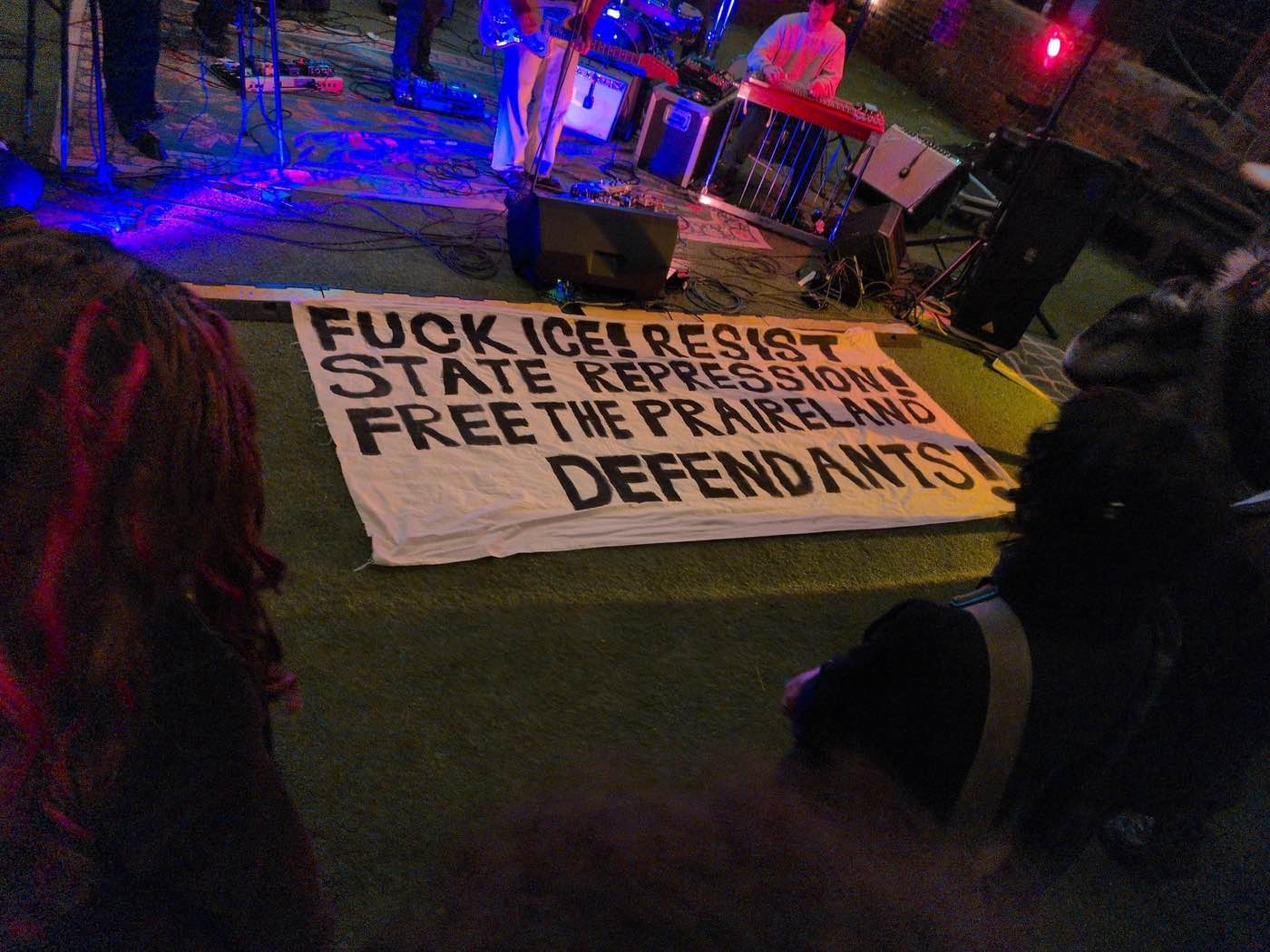
Everyone who has a stake in social change should follow the Prairieland case closely. The prosecutors intend to use this case to criminalize protesting outside of jails, dressing in black clothing during protests, employing fireworks during protests, removing people who have been arrested from group chats, transporting anarchist pamphlets, and refusing to snitch on codefendants. If they are successful, the case could set precedents that will impact protesters for years to come.
As of now, seven Prairieland defendants have been terrorized into signing plea deals with the prosecutors. To varying degrees, these pleas implicate others in crimes. The accused have faced months of solitary confinement, abrupt relocations, punitively high bail set to an average of $5 million, denial of medication, restricted access to lawyers, and intimidation. Several defendants report facing repeated strip searches on a daily basis. As in the Russian torture cases, the practice of coercing defendants into signing cooperating plea deals is aimed at undermining social movements and the very possibility of solidarity itself.
What Lies Ahead
All around the country, federal authorities and state authorities loyal to Donald Trump are testing out strategies to suppress dissent while Democratic state authorities look for ways to collaborate in maintaining this “order” without provoking their voters. In Texas, police, federal agents, and judges are experimenting with methods that they hope to use to crush all who seek social change. Just as dozens of people were indicted on baseless charges in the repression of the Stop Cop City movement, defendants in the Prairieland case are being punitively charged, held without bail, isolated from lawyers and the public, and terrorized into signing guilty pleas.
The murders of Renee Good and Alex Pretti show us what awaits at the end of this road. In these extrajudicial public executions, there is no role for the legislative or judicial branches of government at all: the executive branch chooses the target, pulls the trigger, and afterwards declares the victims to have been guilty of terrorism. The urgency and steadfastness with which demonstrators around the United States responded to these murders should set an example for how we respond to the Prairieland case, as well.
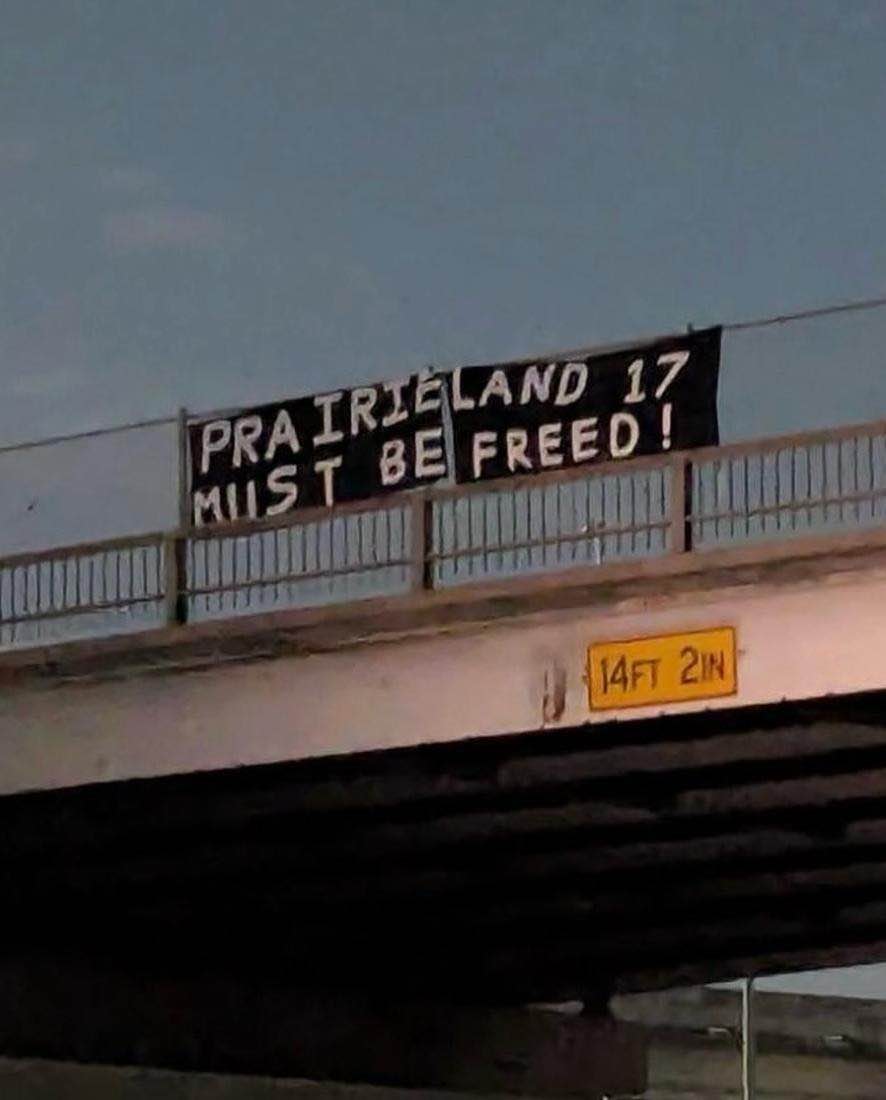
As the trial approaches, we should bring the case to the center of public attention as a fundamental concern of ongoing anti-ICE resistance. To turn the tide of repression, we will have to support all of the non-cooperating defendants.
Trump intends to use all of the forces at his disposal to retain power at all costs—police, judges, courts, federal agencies, and media. If his control is threatened, he will accuse everyone he can of terrorism, as this is a means of giving his government unrestrained power. By defeating ICE in the streets and rallying behind all who take action to resist the rise of authoritarianism, we can redirect outrage against the who are actually terrorizing communities across the country and around the world: politicians, the wealthy, and the armed mercenaries they depend on.
Published by CrimethInc. Read the original, including a timeline of the Prairieland case, here.
More content from this blog
- Victory Day: Three Interventions from the Left, by the Posle Editorial Collective – 7 May 2025
- Disarmament, Ukrainian-style, by Adrian Ivakhiv – 3 June 2025
- Compendium and Syllabus of Non-Campist (Mostly) Left Sources on the War in Ukraine, by Steve Ongerth – 8 October 2025
- The Revolution Nationalists Cannot Join. Interview with Nandita Sharma – 21 June 2026
- To Organize for Peace, We Must First Dare to Imagine It, by Lior Sternfeld – 15 April 2026
Except where noted otherwise, original writing and translations produced by the Left Renewal Blog Collective are published under a Creative Commons Attribution–NonCommercial–ShareAlike 4.0 licence. Republished and translated material remains subject to the licence and terms of its original publication.